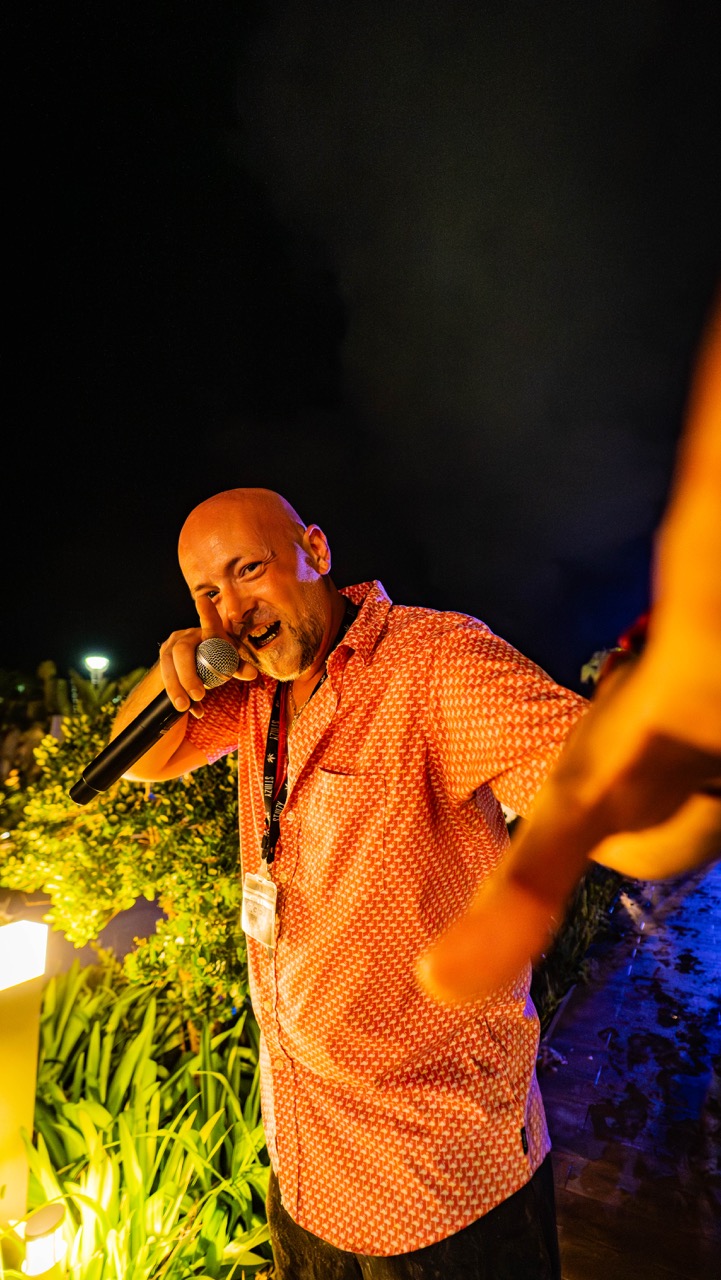
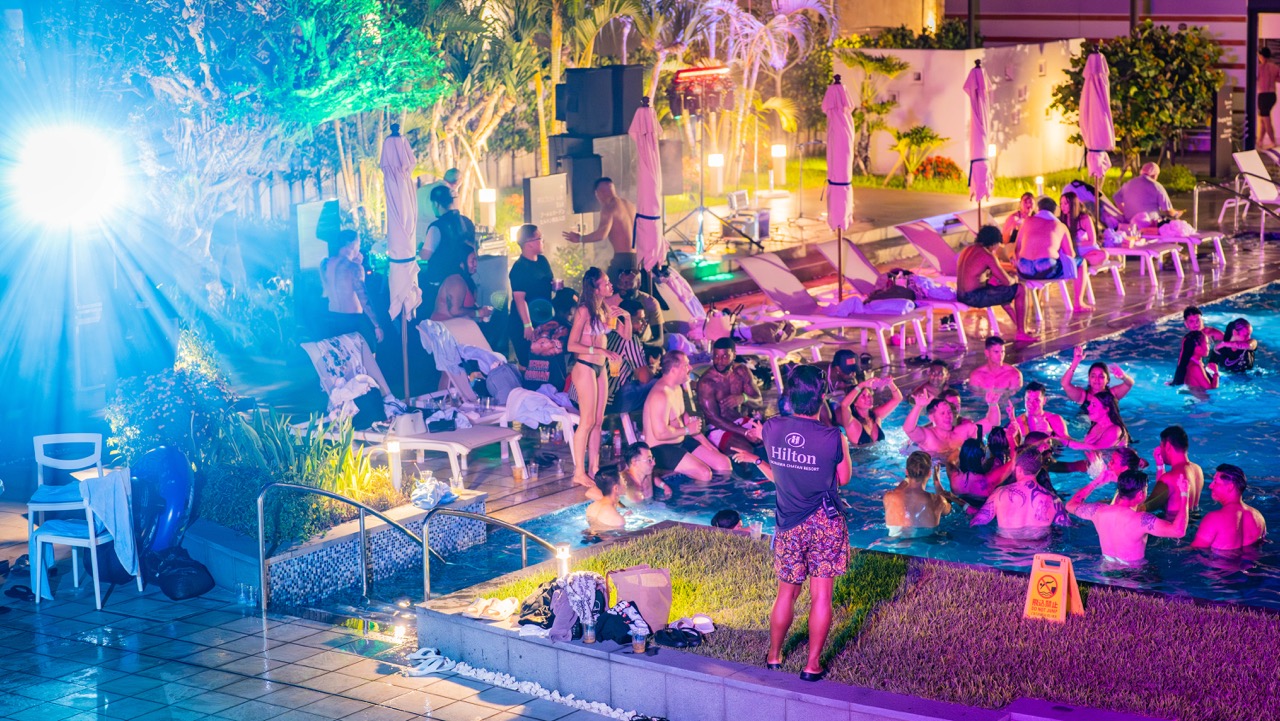
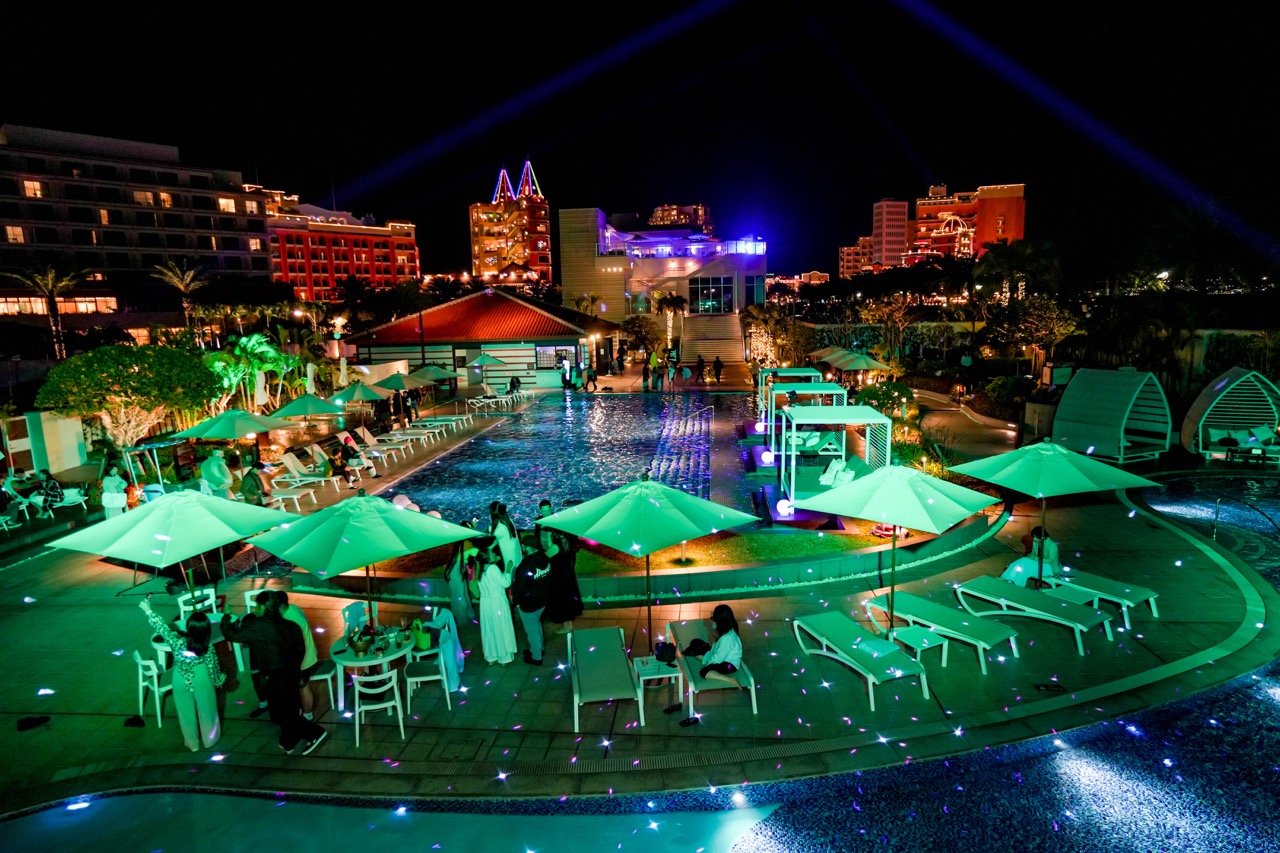
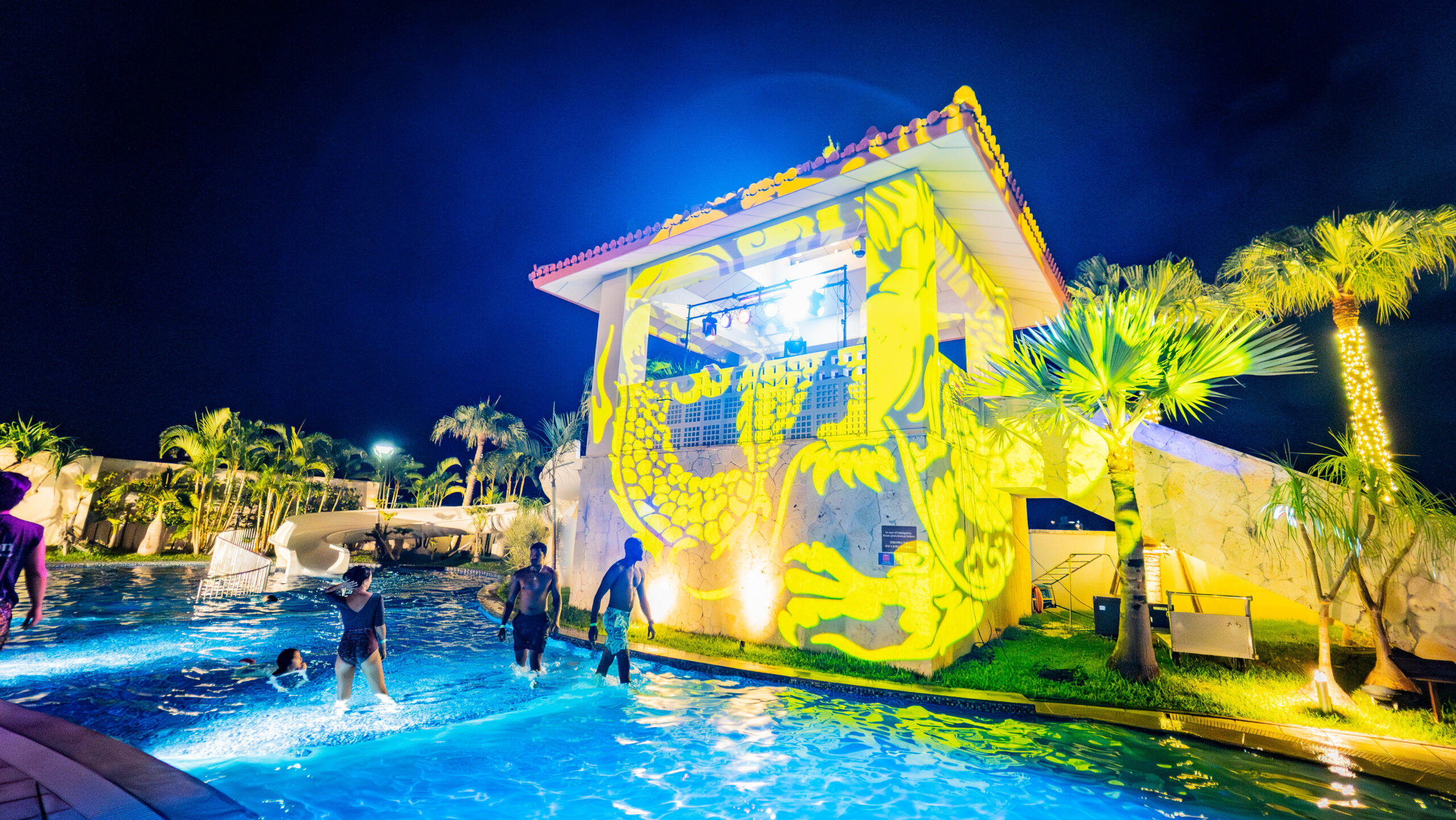
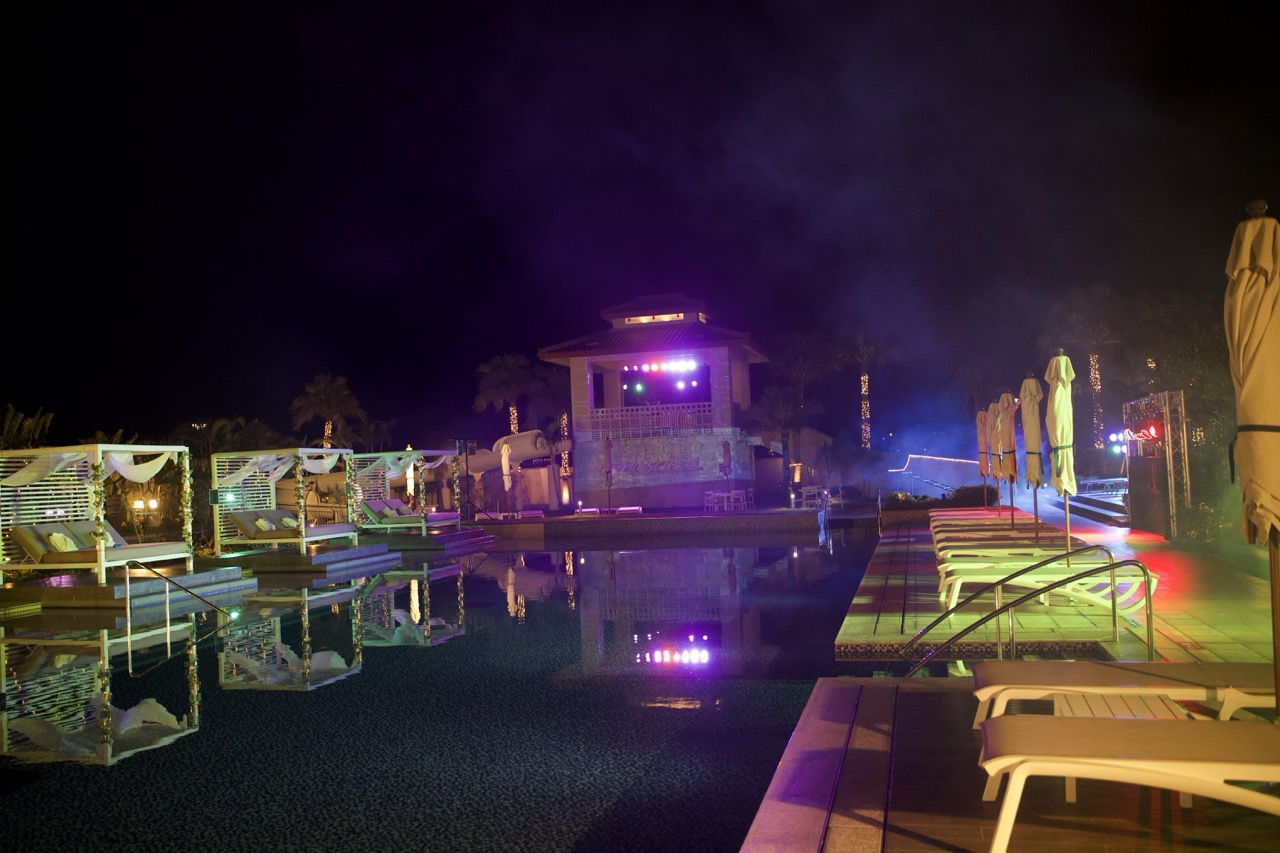
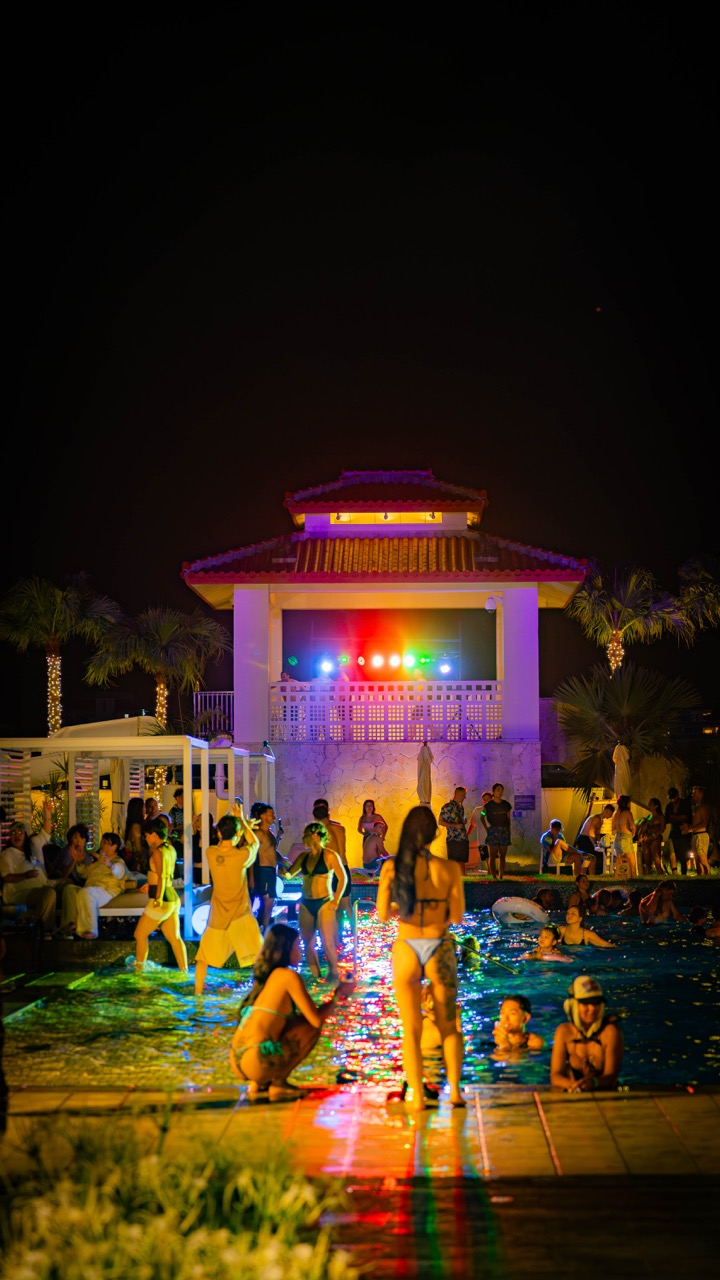
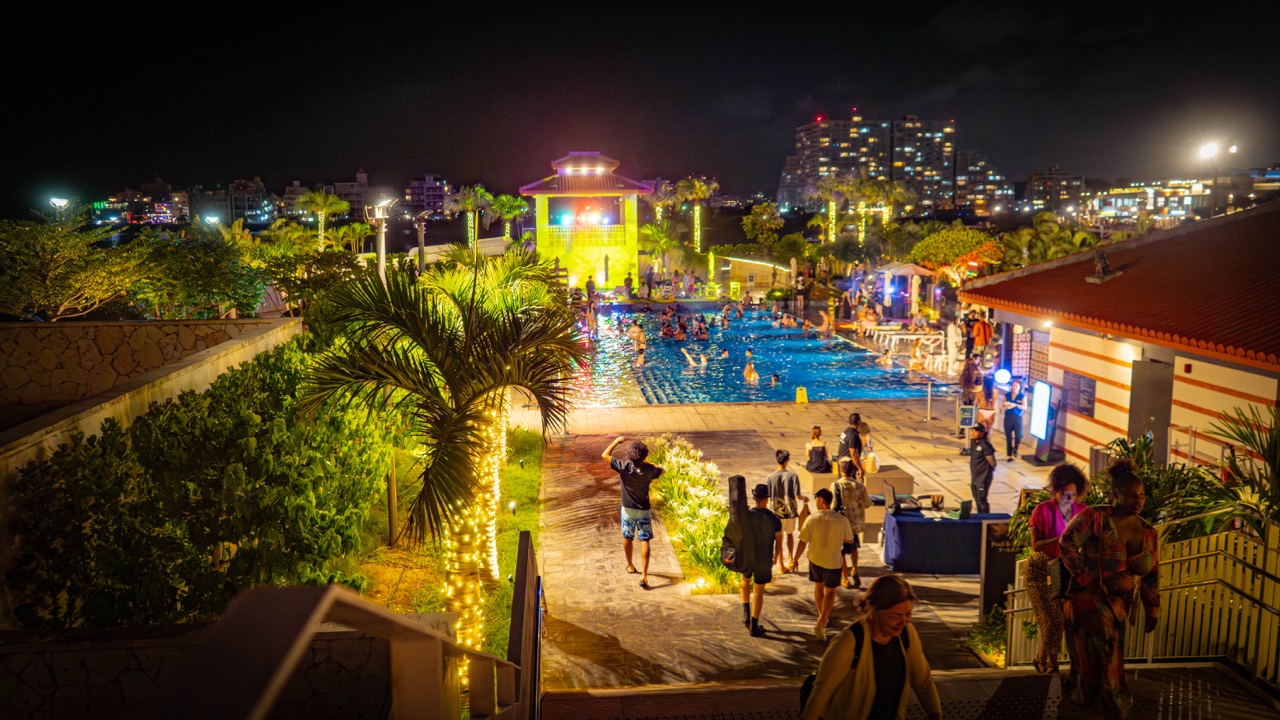
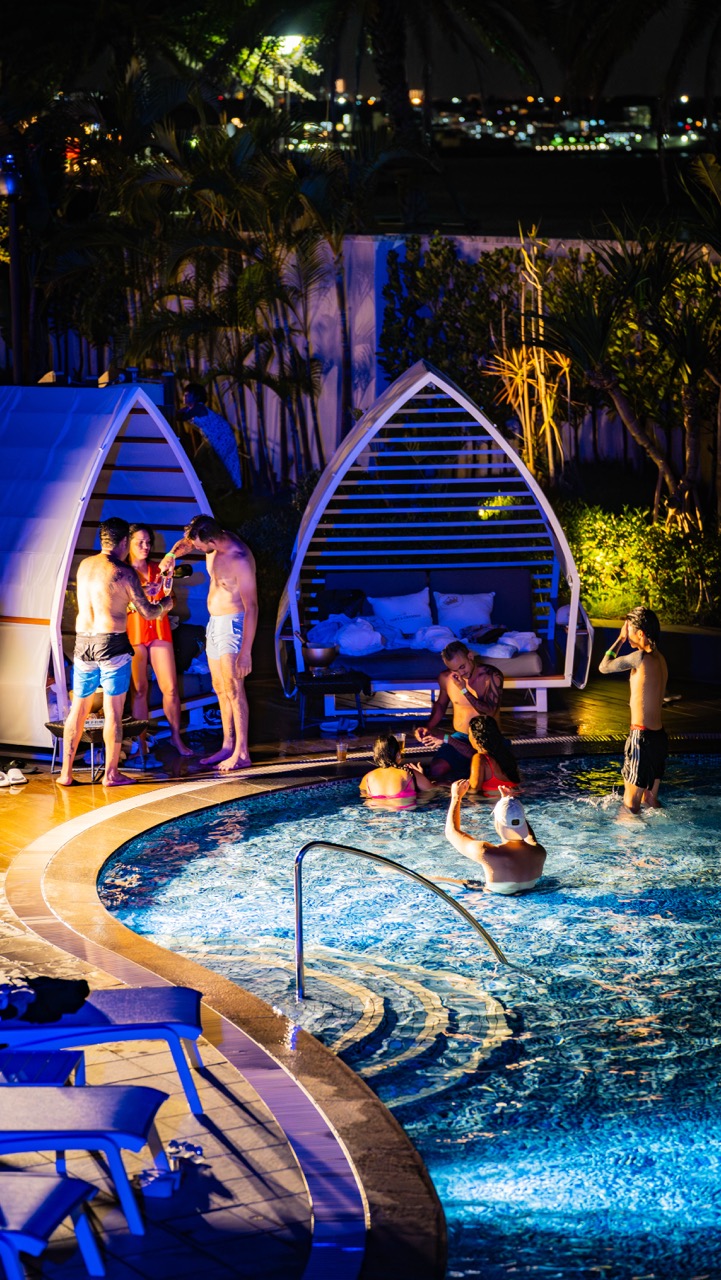
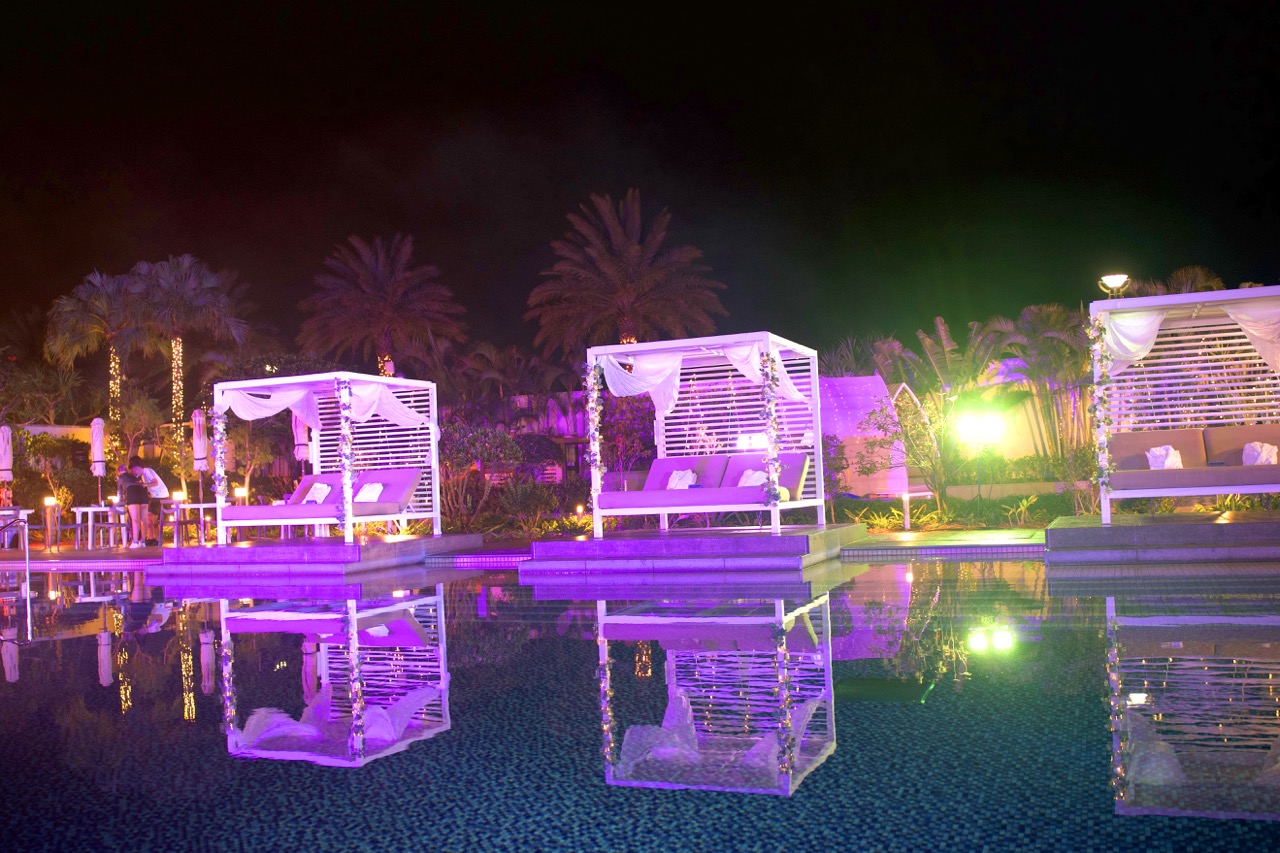
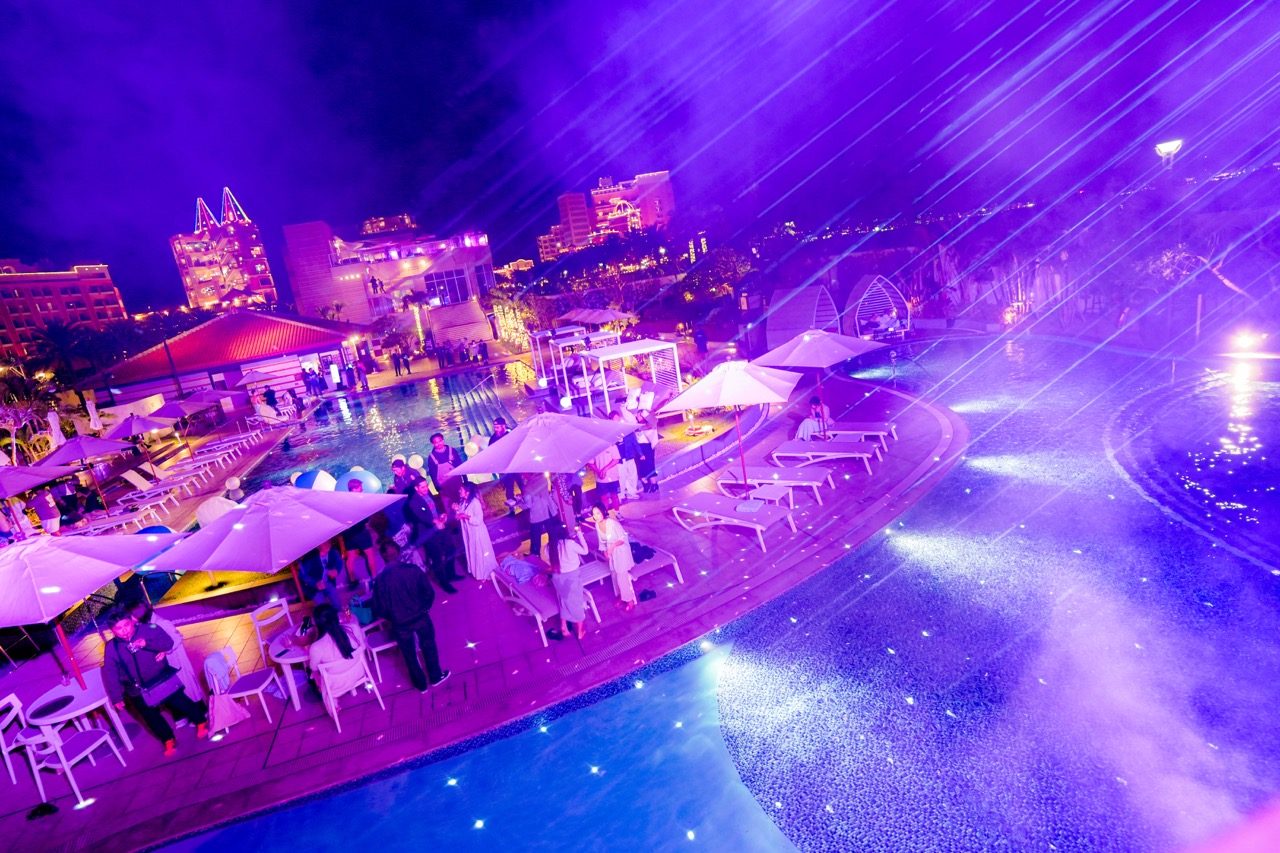
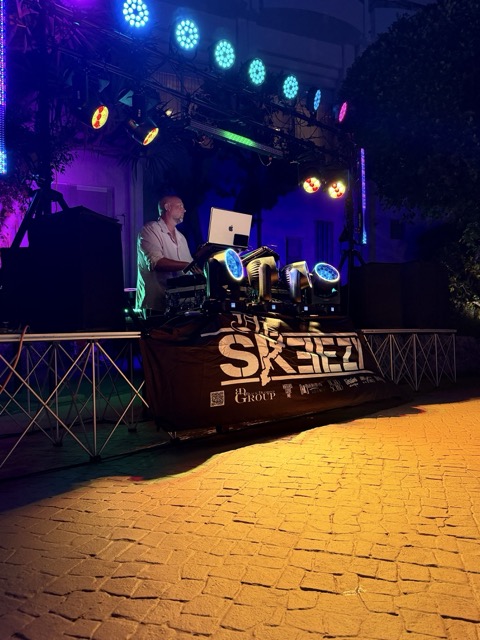
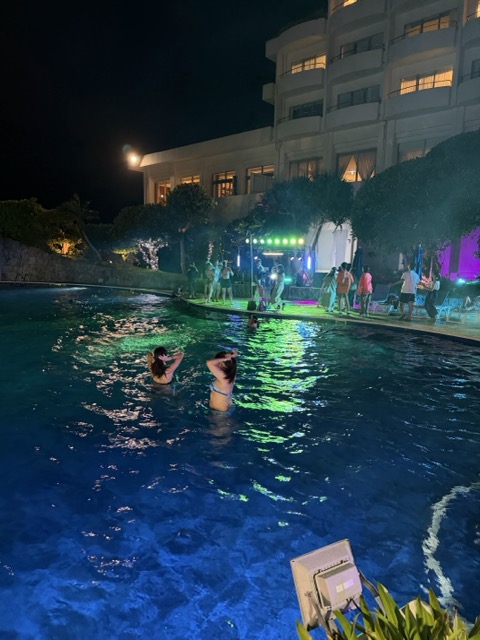
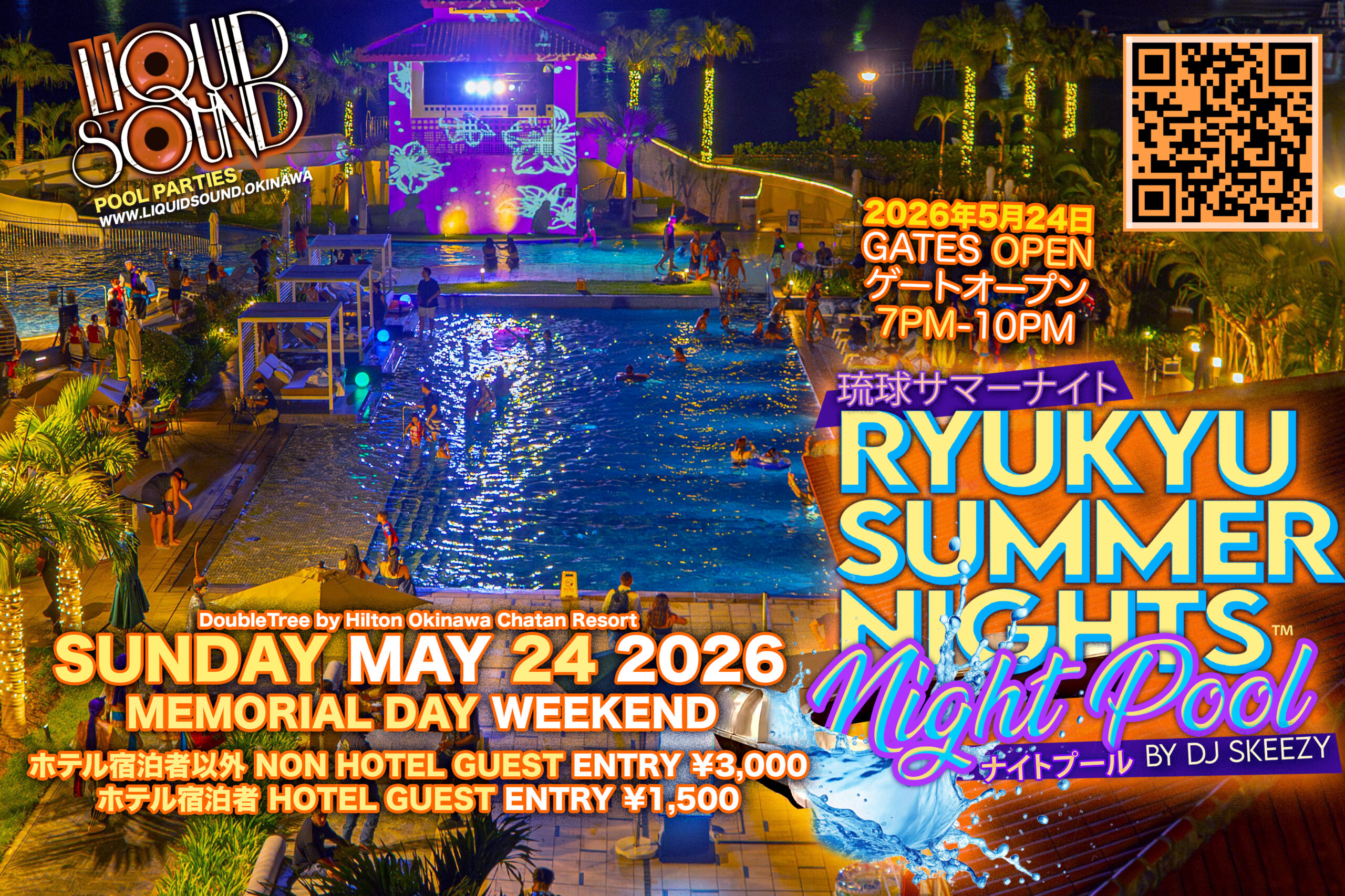
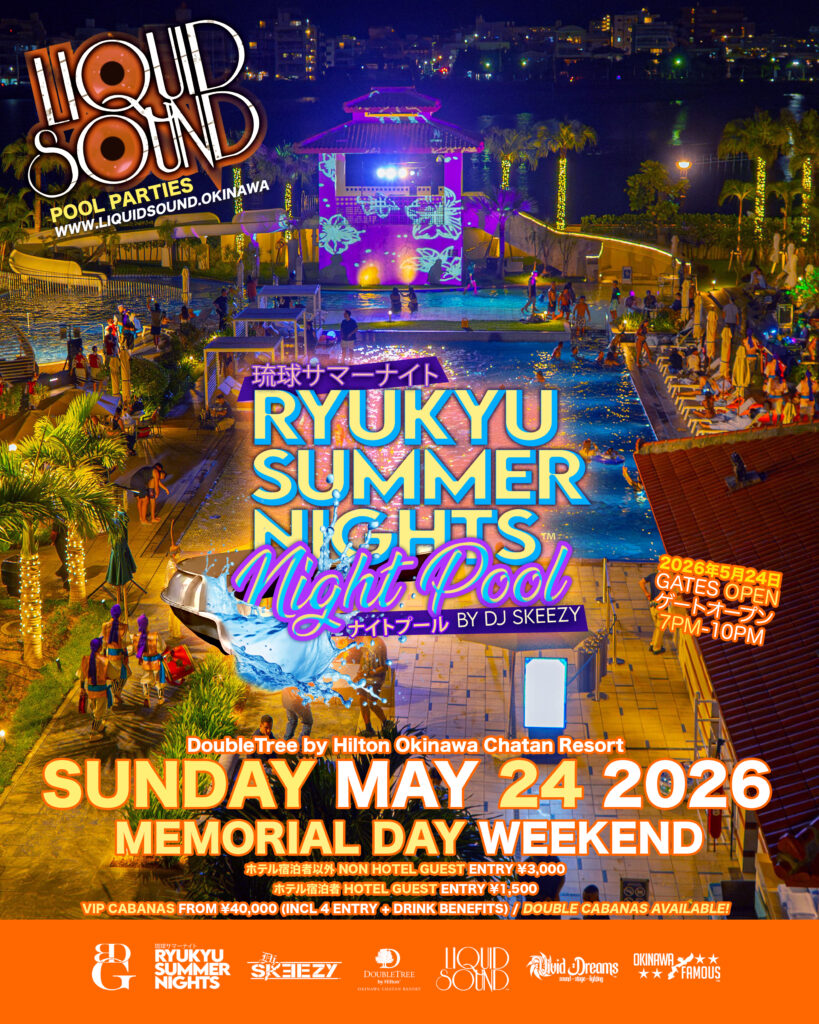
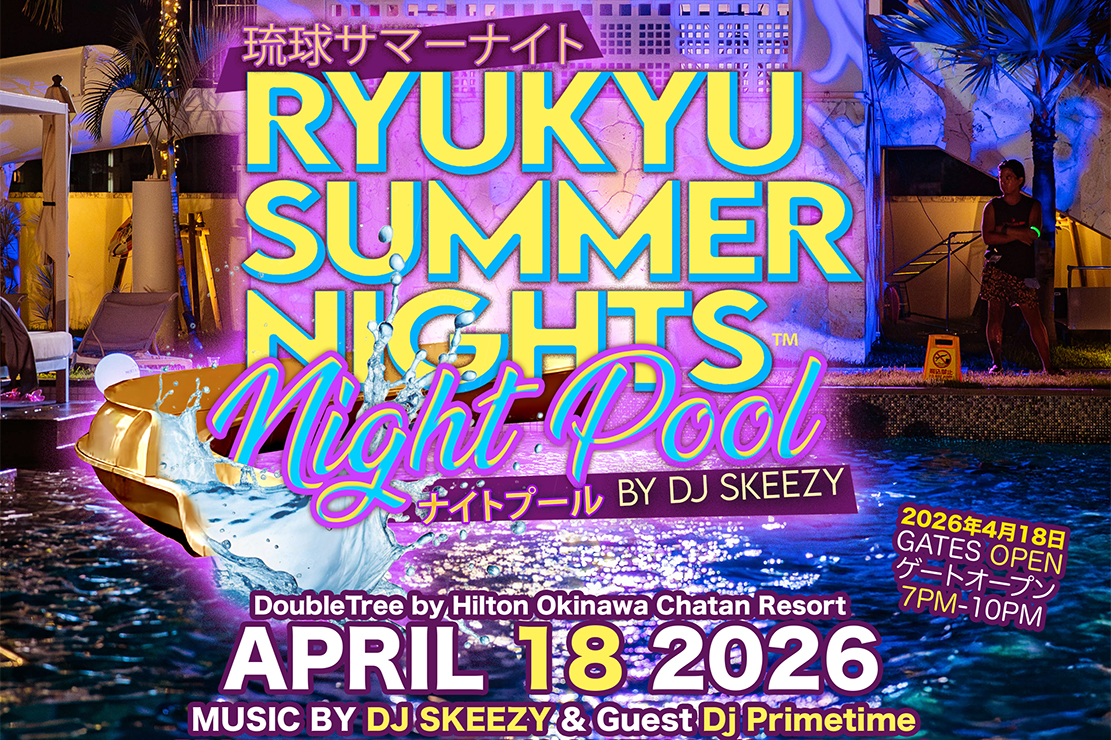
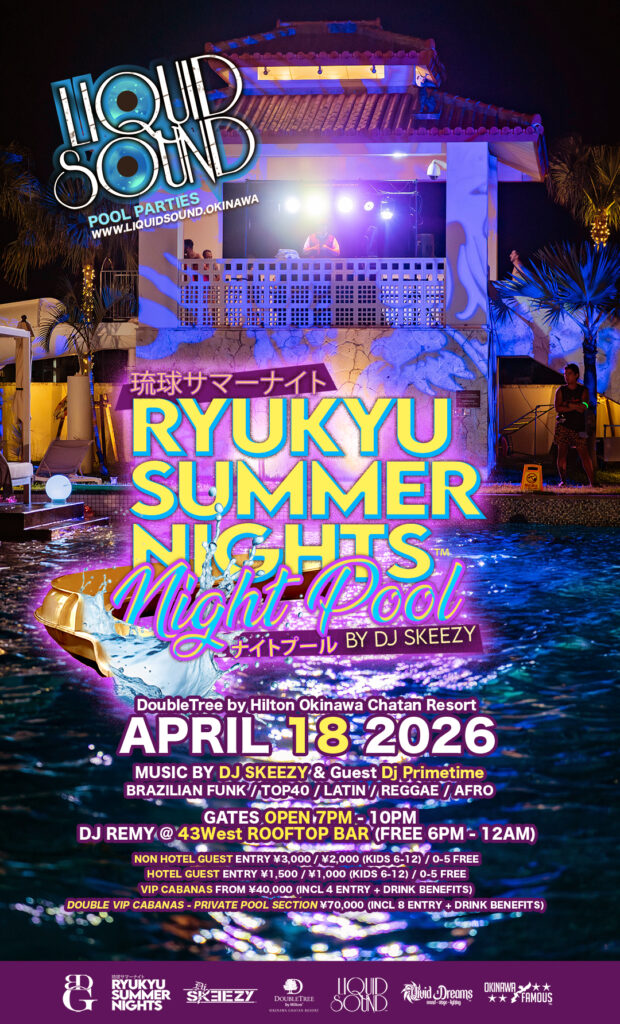
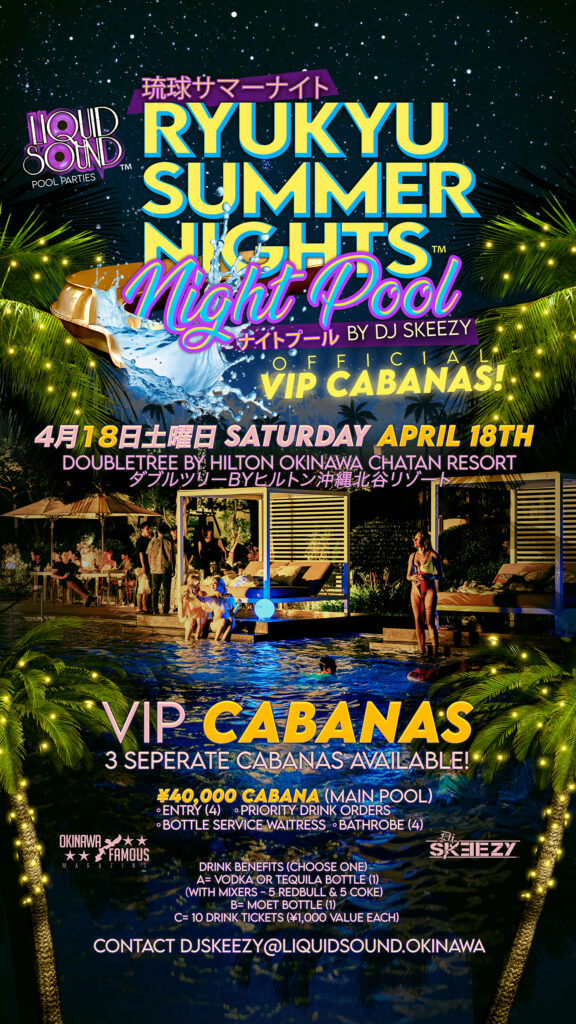
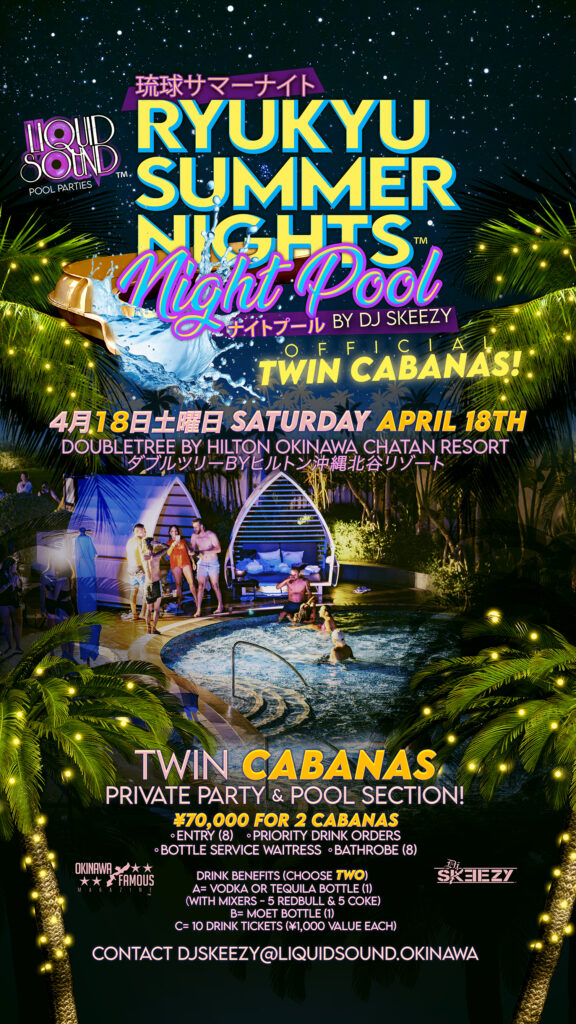
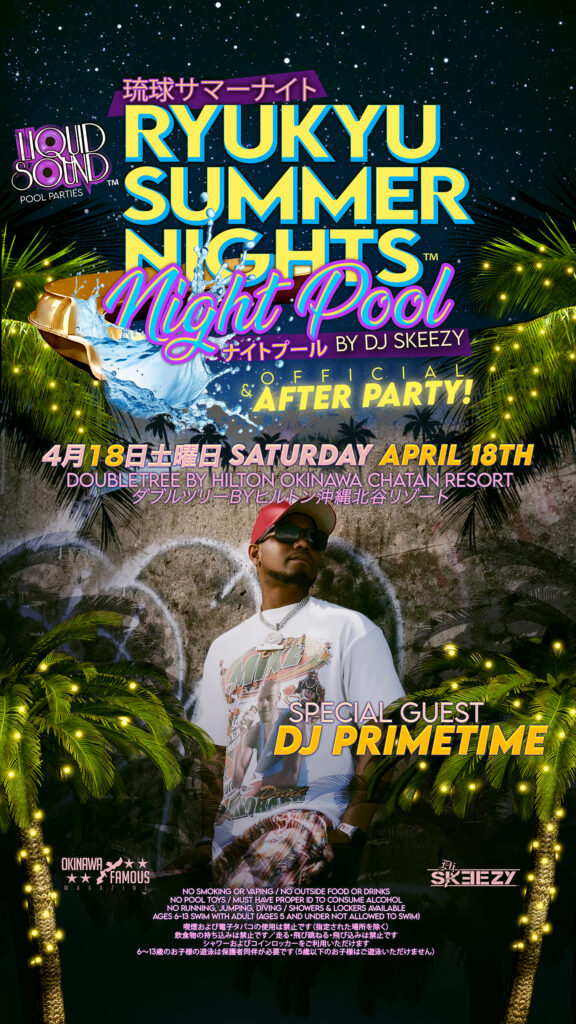
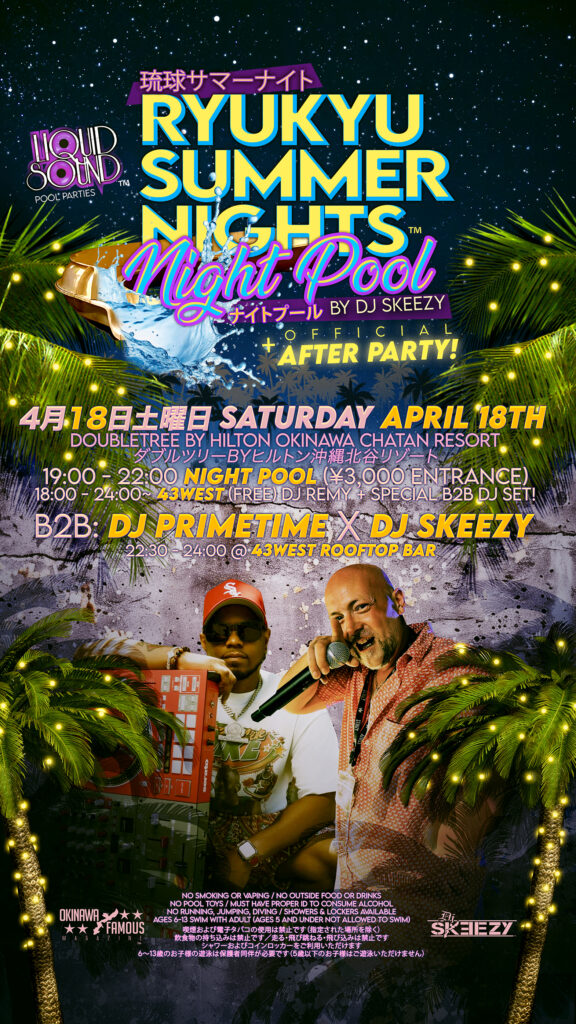
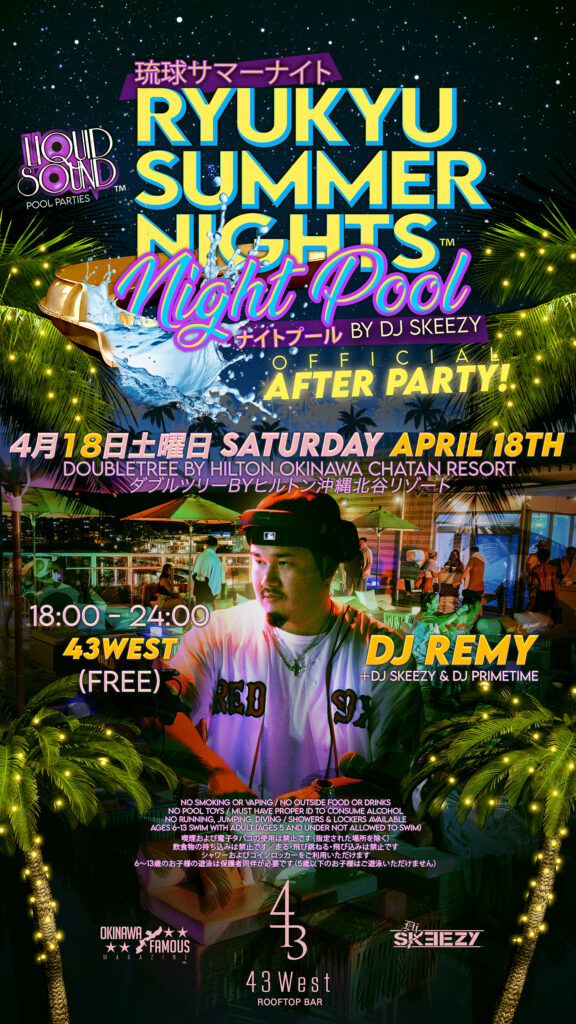
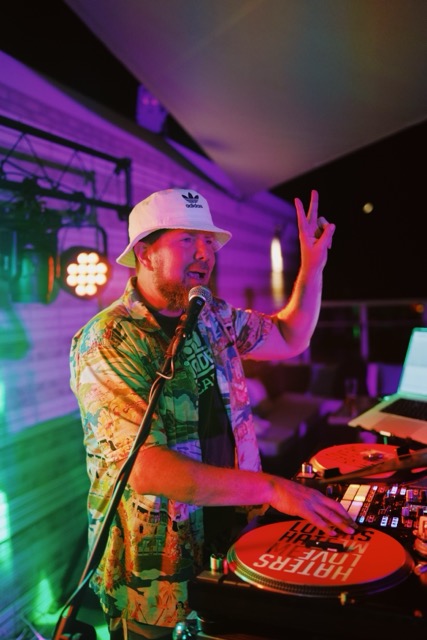
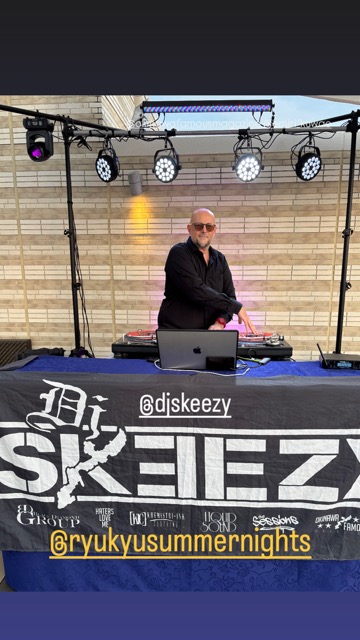
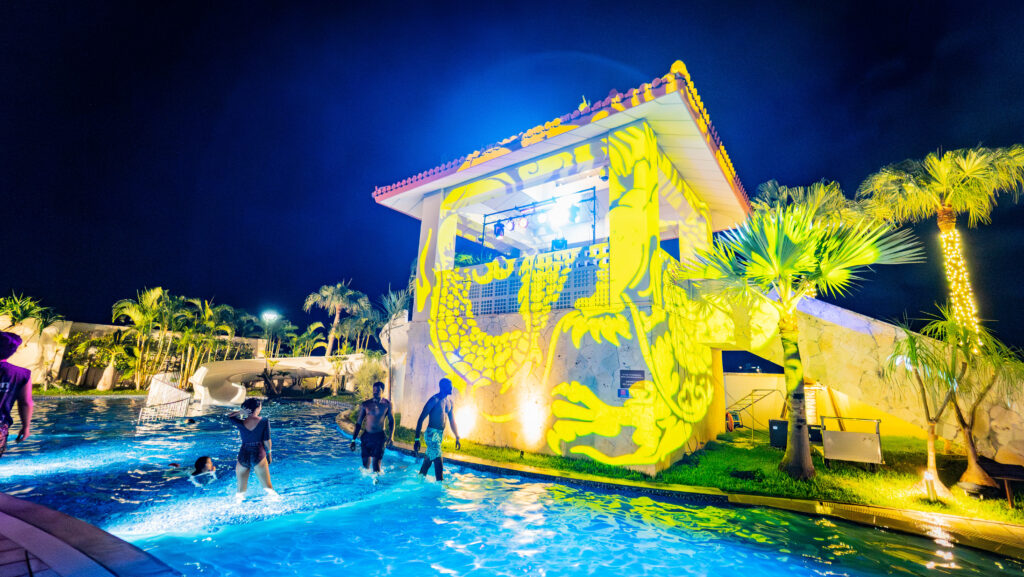
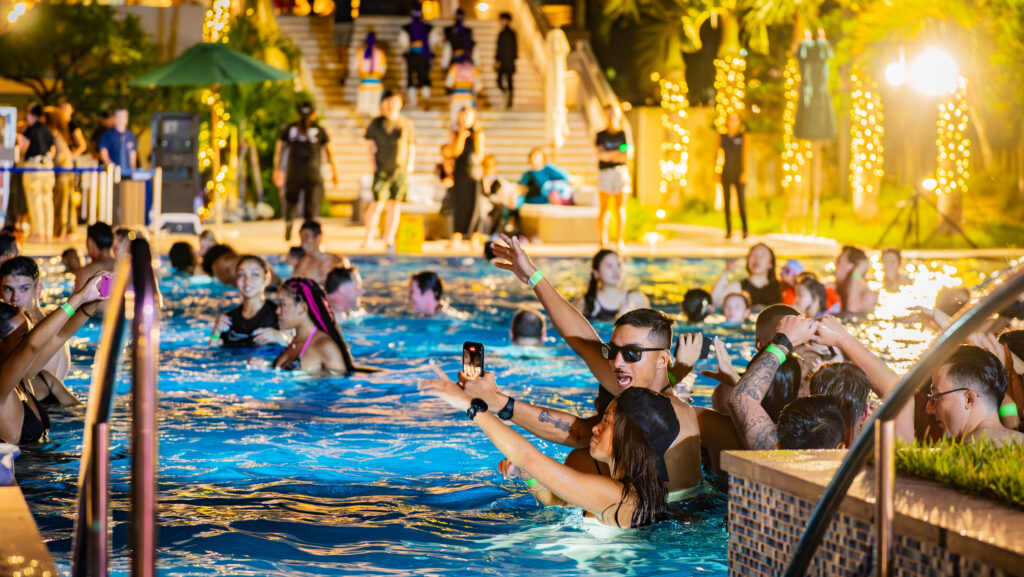
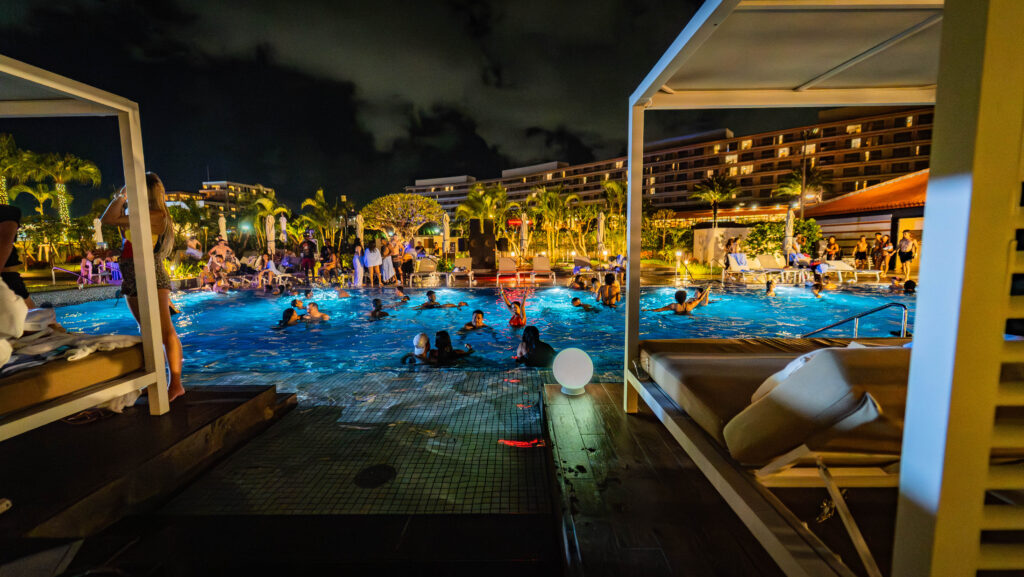
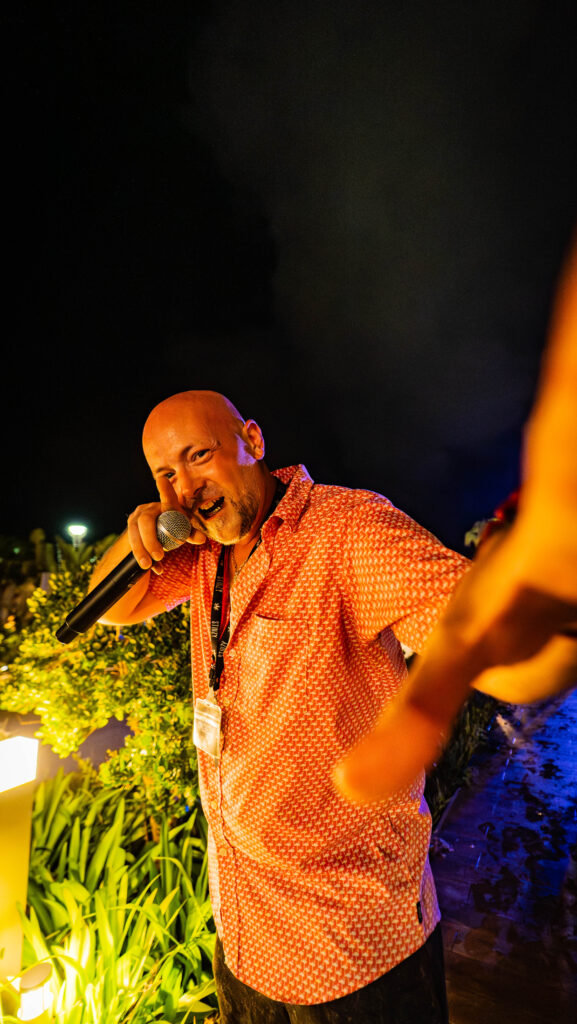
🌴💦 RYUKYU SUMMER NIGHTSTM — NIGHT POOL 💦🌴 9.12 SATURDAY / DOUBLETREE by Hilton Okinawa Chatan Resort @ryukyusummernights X @liquidsoundpoolparty X @djskeezy
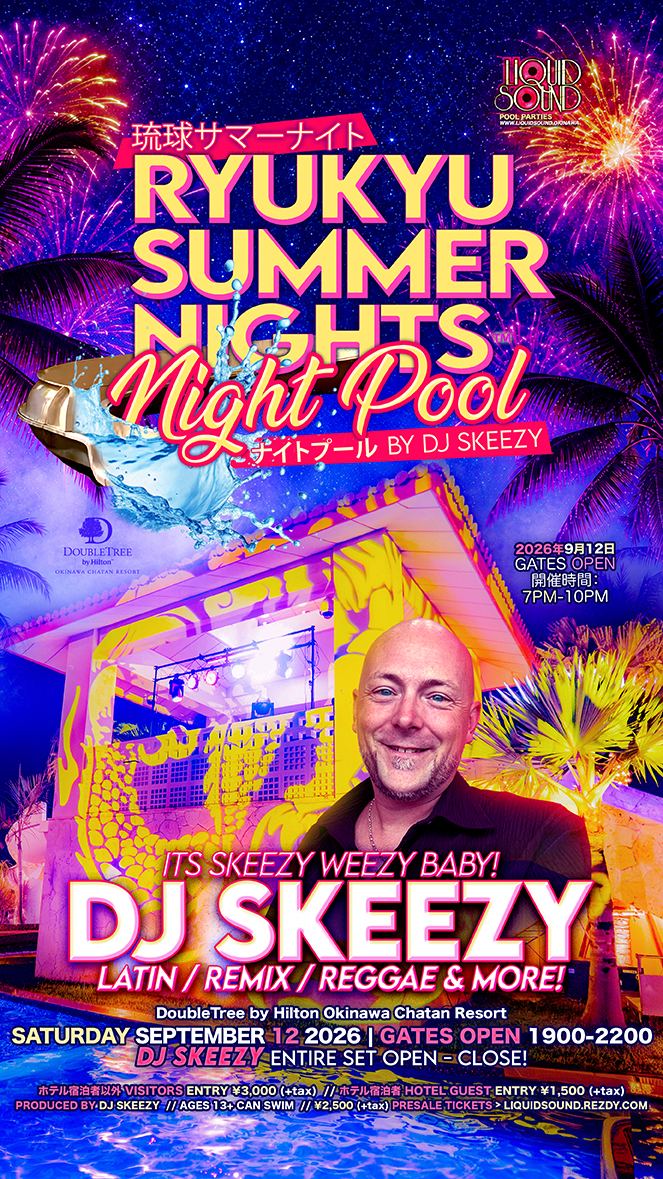
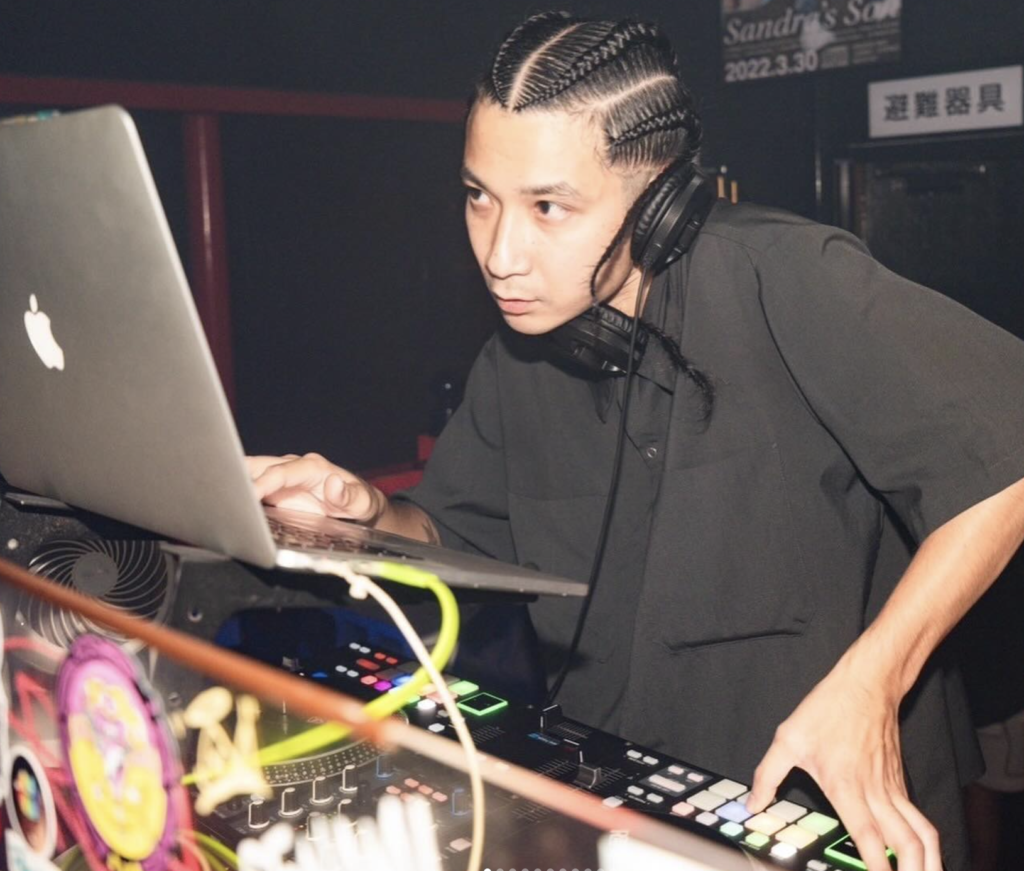
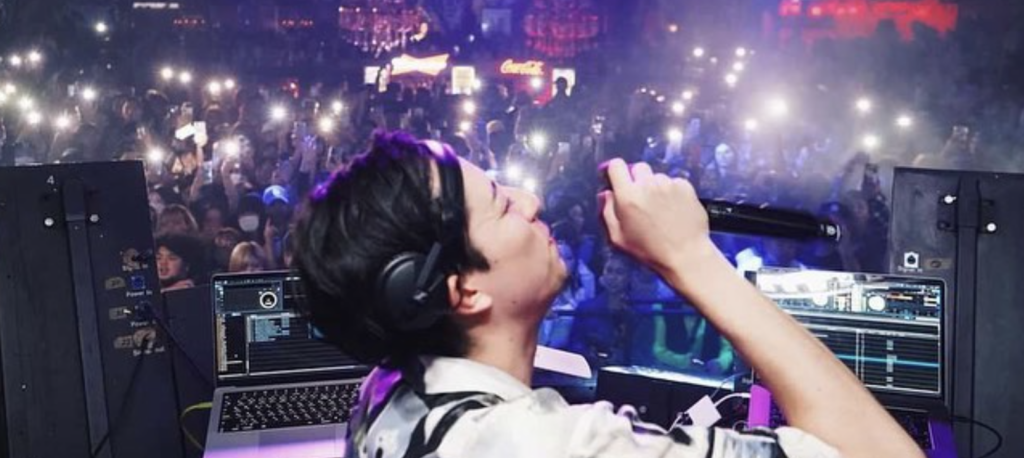
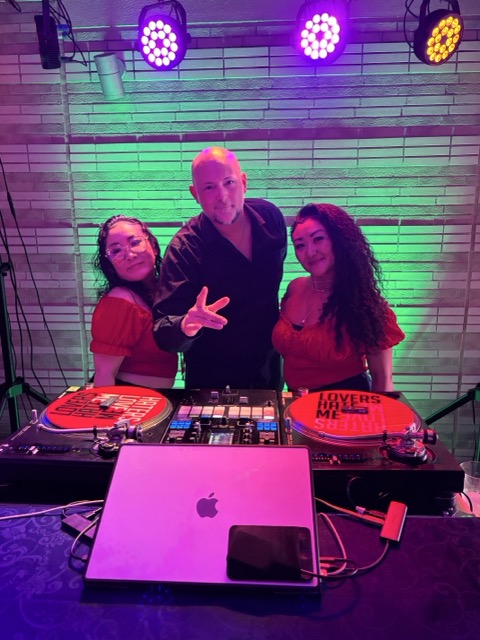
🔥 DJ SKEEZY — OPEN TO CLOSE!! 🔥 今回は最初から最後まで、DJ SKEEZYが3時間ノンストップ! 19:00 → 22:00 ONE DJ. ONE VIBE. ALL NIGHT. 😎🔥 プールサイドにぴったりな LATIN / REMIX / REGGAE & MORE! 沖縄の夜、プール、音楽、そして最高のSUMMER VIBES 🌴🌊 最初の1曲からラストまで、DJ SKEEZY ENERGY全開でいきます!
🎧 DJ SKEEZY ⏰ 19:00–22:00 OPEN → CLOSE 📍 DoubleTree by Hilton Okinawa Chatan Resort 📅 2026.9.12 SATURDAY ️ PRESALE / 前売 ¥2,500 + tax ️ GATE / 当日 ¥3,000 + tax 前売チケットなら ¥500 SAVE! イベント直前はチケット購入が集中するので、お早めにGET!🎫 👨👩👧👦ALL AGES WELCOME / 全年齢入場OK 🏊 SWIMMING AGES 13+ / 遊泳は13歳以上 Summer isn’t over yet. ☀️🌴 まだまだ沖縄の夏は終わらない。 💦 NIGHT POOL 🌴 TROPICAL VIBES 🔥 3 HOURS NONSTOP DJ SKEEZY IT’S SKEEZY WEEZY BABY! 😎🔥
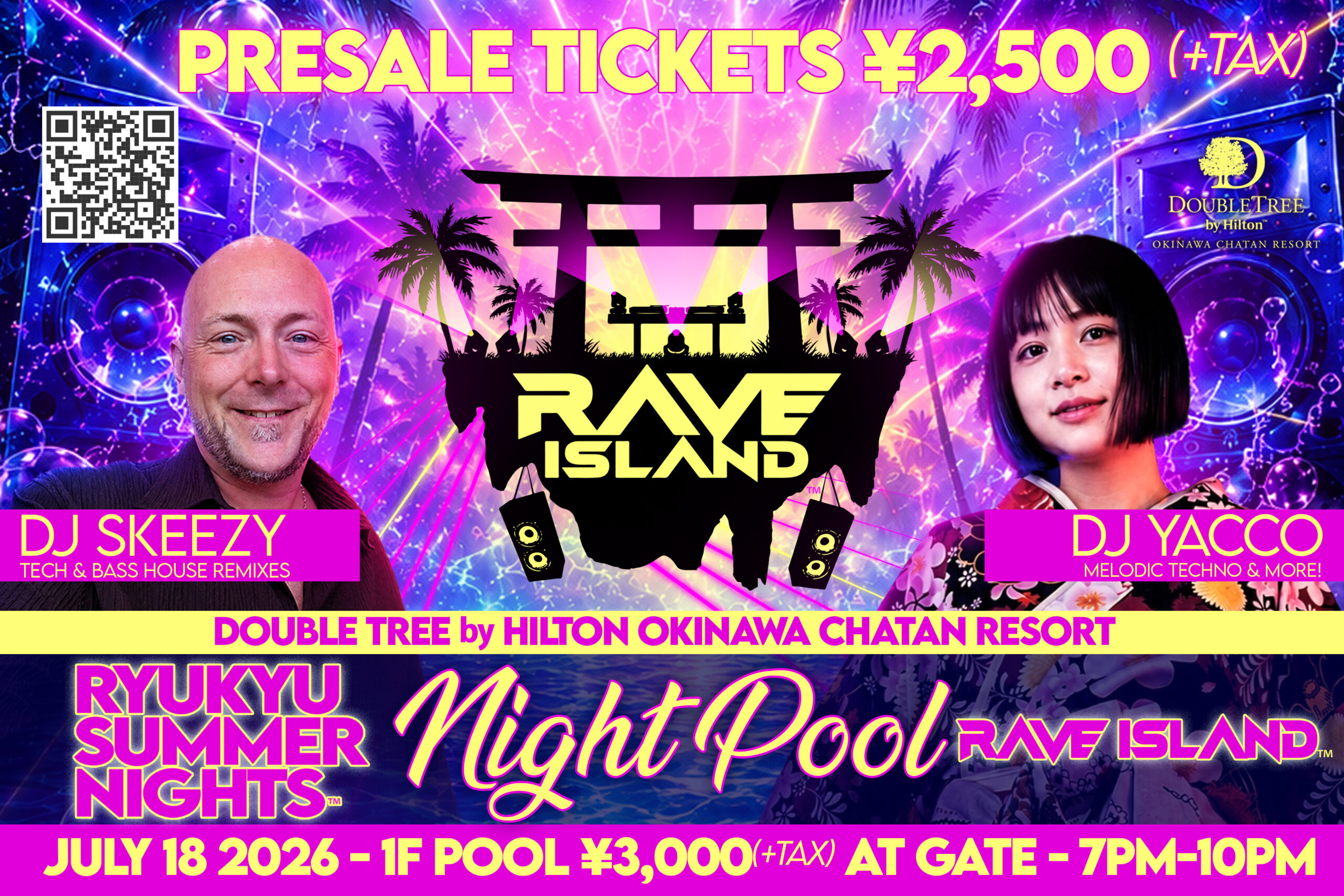
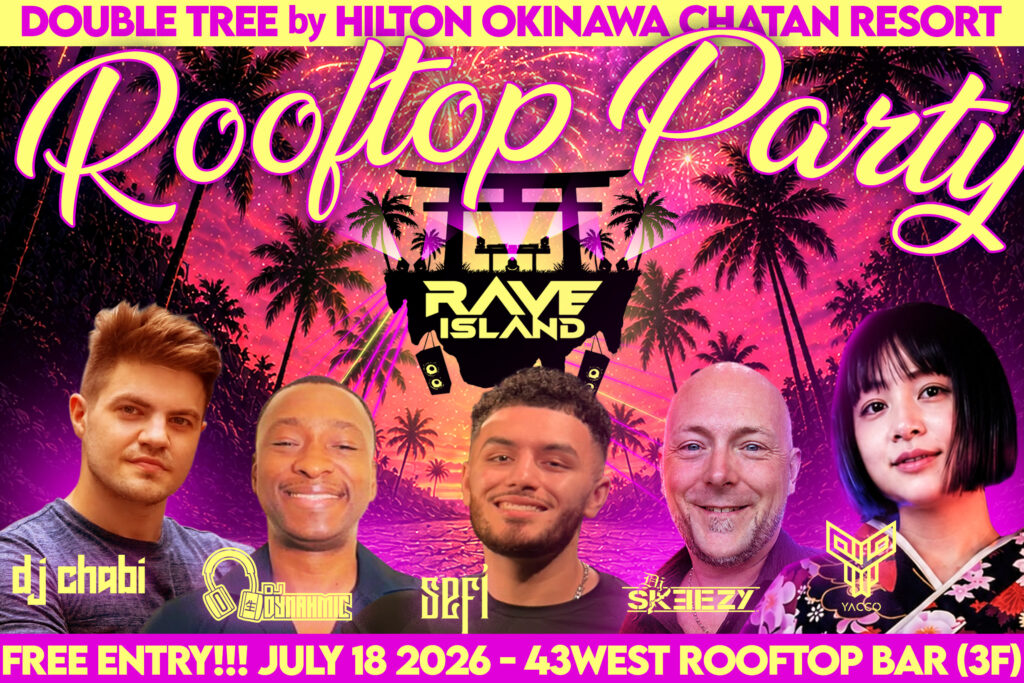
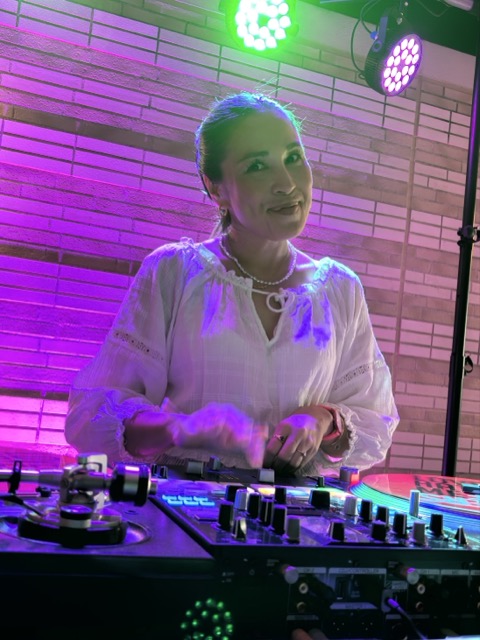
DJ SKEEZYとスペシャルゲストDJ YACCO(名古屋)が、DoubleTree by Hilton Okinawa Chatan Resortで開催される「RYUKYU SUMMER NIGHTS™」特別企画として、RAVE ISLAND™をお届けします。
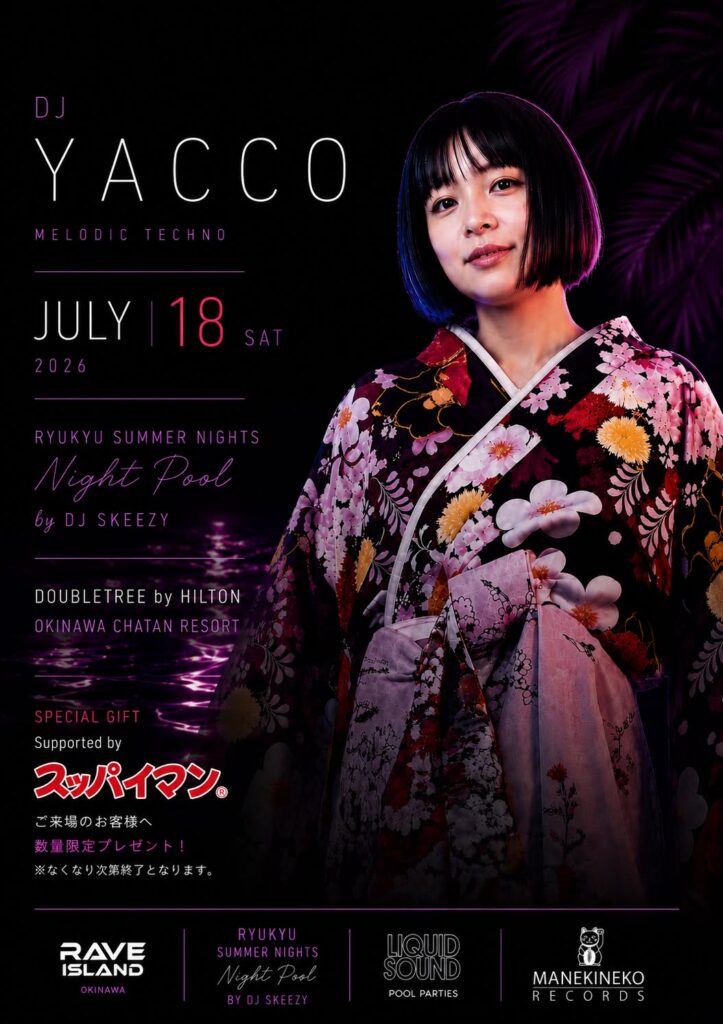
🏆 DJ YACCO はDJaneTop Japanで2022年〜2025年まで4年連続日本No.1女性DJに選出。DJaneTop World Top 100にもランクインし、日本プロサッカーリーグ公式スタジアムDJとしても活躍しています。日本全国をはじめ、フィリピン、タイ、台湾、韓国、ベトナムなどアジア各国で出演。楽曲はアメリカ、ドイツ、フランス、イタリア、スイス、アフリカのレーベルよりリリースされ、AlphaTheta(Pioneer DJ)やSennheiserとのコラボレーションも実現。SNS総フォロワー数は23万人を超え、世界で活躍する日本No.1女性DJです。圧倒的なピークタイム・テクノのエネルギーをぜひ体感してください。
One unforgettable summer night. Two stages. Two completely different vibes. One resort.
Japan’s No.1 Female DJ meets Okinawa’s premier resort nightlife experience.
Join @djskeezy and special guest DJ YACCO (Nagoya) as RAVE ISLAND™ takes over DoubleTree by Hilton Okinawa Chatan Resort for a special Ryukyu Summer Nights™ edition.
🏆 DJ YACCO is Japan’s No.1 Female DJ for 4 consecutive years (DJaneTop Japan 2022–2025), ranked in the DJaneTop World Top 100, official stadium DJ for Japan’s professional football league, and has performed throughout Japan, the Philippines, Thailand, Taiwan, South Korea, and Vietnam. Her music has been released through labels in the USA, Germany, France, Italy, Switzerland, and Africa. She has collaborated with AlphaTheta (Pioneer DJ) and Sennheiser, and has built an online audience of over 230,000 followers.
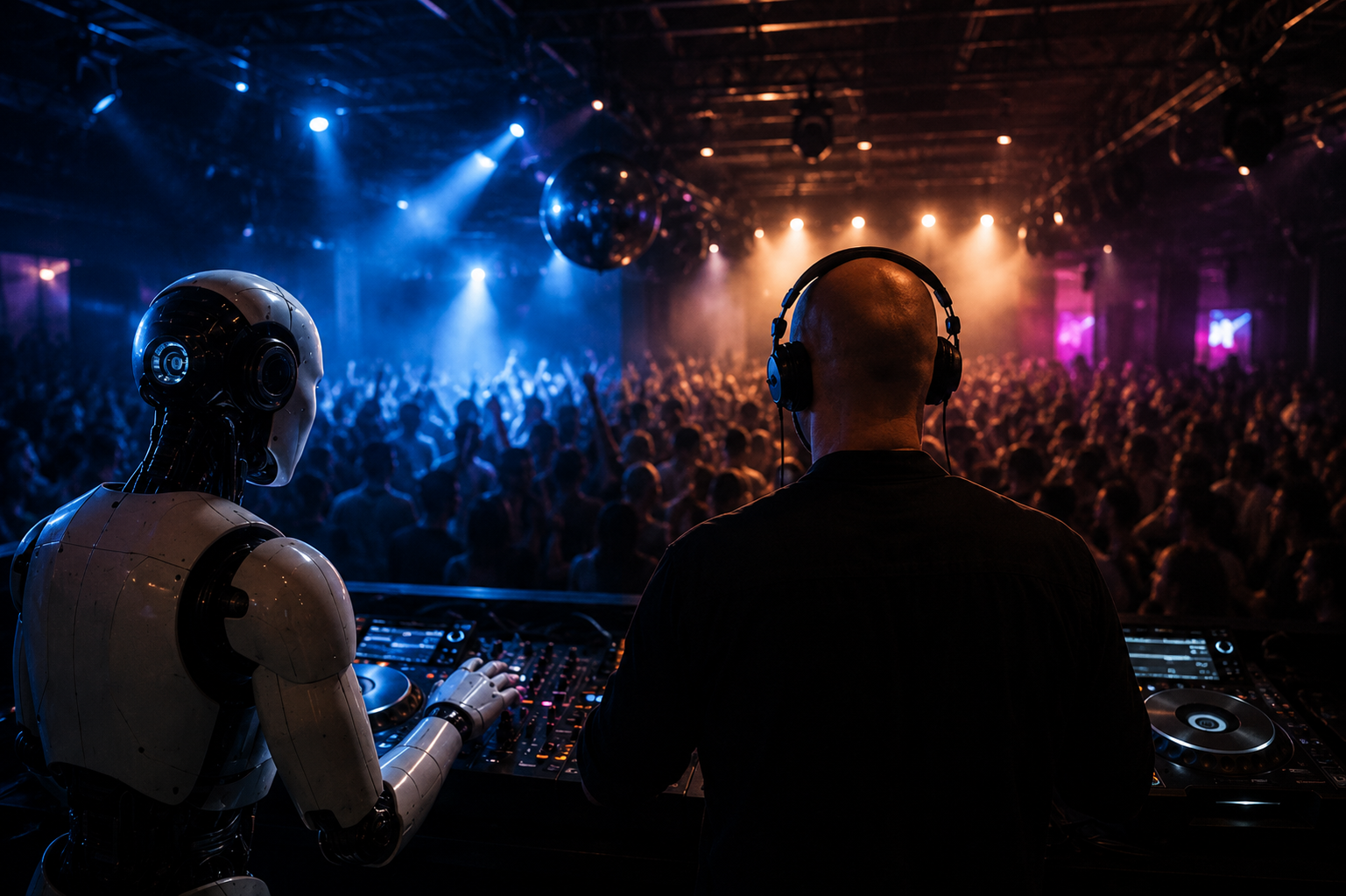
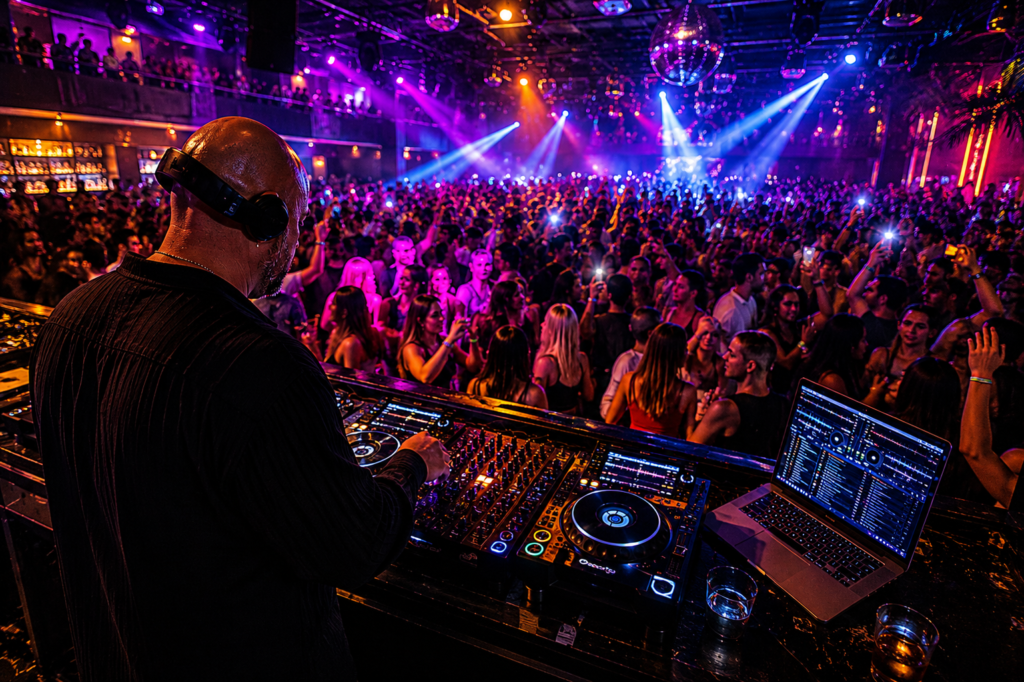
A random bar where the owner only cares that some kind of music is playing and drinks are selling? Sure. An algorithm can probably survive there. Spotify on “Mix Mode” already kind of does that now.
But at a real venue? A proper dancehall? A nightclub? A packed pool party where the energy of the crowd changes every ten minutes?
Nope. Not even close.
People compare AI DJs to automation in general, but I think the better comparison is actually self-driving cars. A self-driving car can function perfectly… until it suddenly gets confused by something unpredictable. A weird intersection. Rain. Construction. Human behavior.
DJing is human behavior.
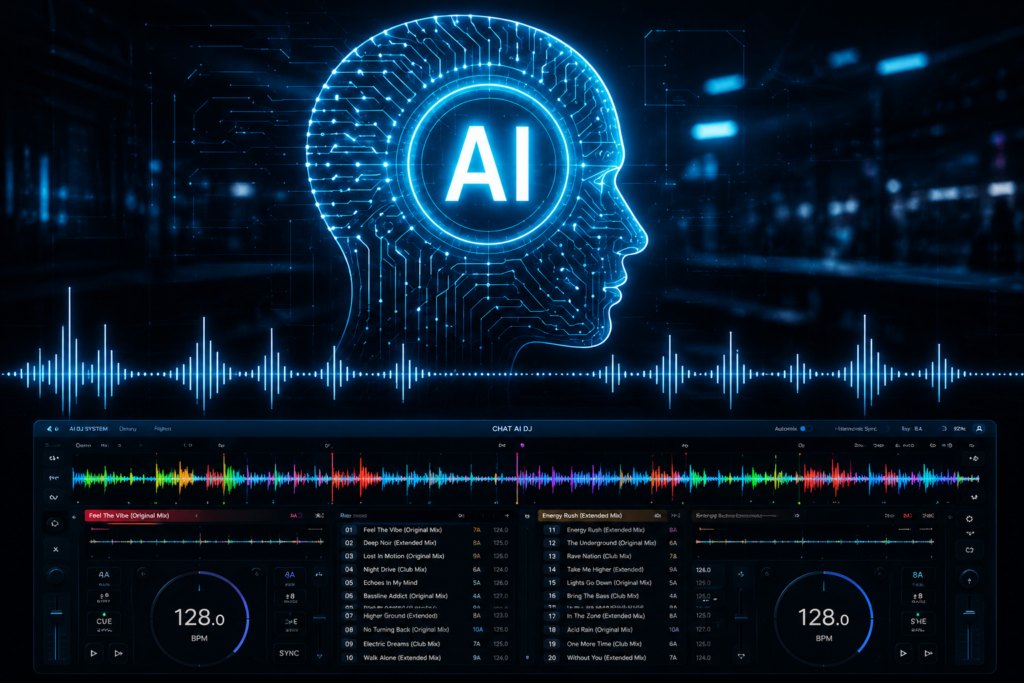
An AI can analyze tempo. It can analyze key. It can detect genre patterns. It can probably transition from one song to another “correctly.” But does it know when a mix felt wrong even if it was technically perfect?
That’s the difference.
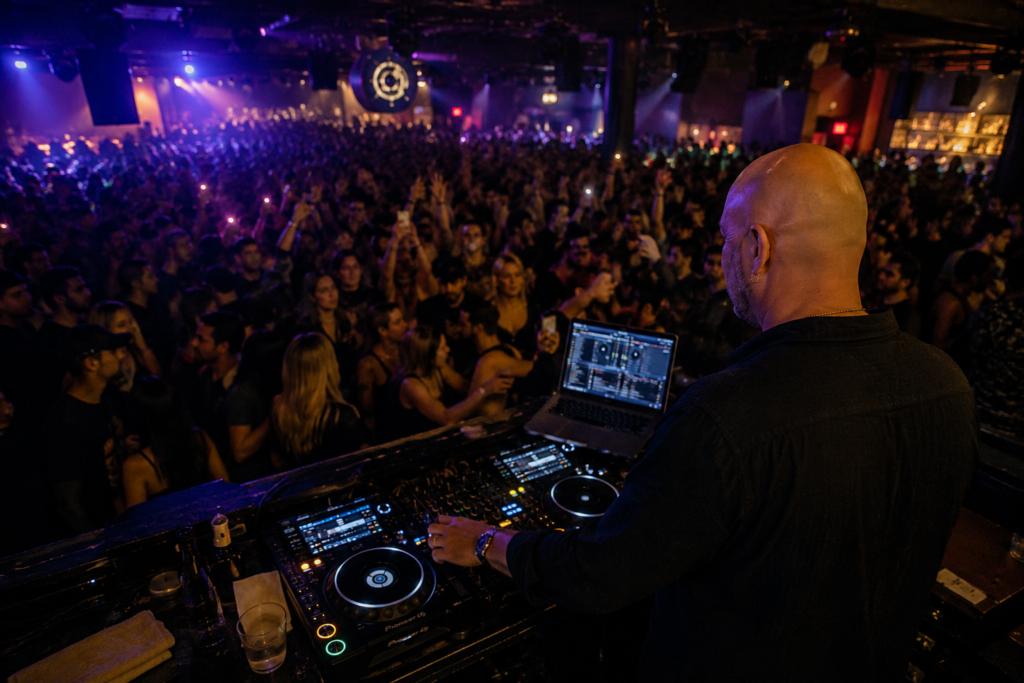
A real DJ knows when something didn’t work — even if the crowd doesn’t consciously realize it yet. We can feel tension drop in the room. We notice when people stop moving their shoulders. We notice when the girls who were in the center suddenly drift toward the bar while the guys form that awkward circle around the dance floor pretending they’re still vibing.
AI can analyze data.
Humans analyze energy.
And energy is messy.
A DJ is watching everything at once:
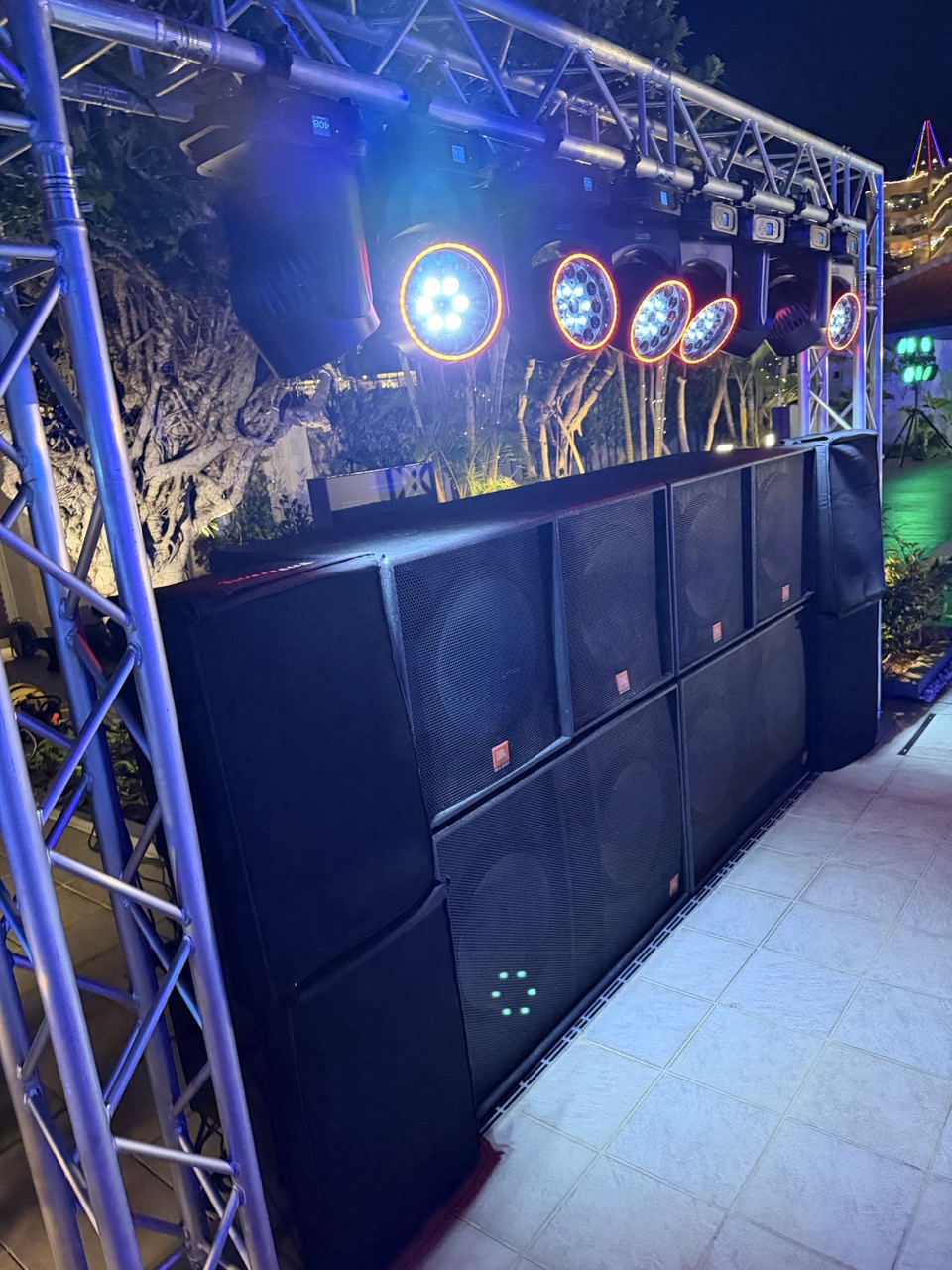
The SPL and physical impact of the sound system
The bartender suddenly getting slammed with orders
The security guards dealing with traffic flow
The exact moment the crowd wants familiarity versus surprise
Whether people are dancing harder to nostalgia or novelty
Whether the room needs aggression, melody, tension, release, or silence
That isn’t just playlist management. That’s crowd psychology.
Now, with that said, I do think something else is happening — and this is the part that DJs don’t always want to admit.
The consumer is changing.
The scary part isn’t that AI becomes amazing.
The scary part is that audiences may stop requiring excellence.
That trend is already happening in music itself.
Listen to the evolution of mainstream hip-hop. The barrier to entry is dramatically lower now. Beats are easier to make. Distribution is easier. Exposure is easier. Studio access is cheaper. Viral moments matter more than technical quality.
The industry shifted from craftsmanship toward accessibility.
And DJing followed the same path.
There was a time when being a DJ meant dealing with actual physical limitations:
Needles skipping from bass vibrations
Warped vinyl records
Wind ruining outdoor sets
Beatmatching entirely by ear
Carrying crates of records everywhere
Fighting the environment itself just to maintain a clean mix
You needed real technical skill just to survive a set.
Now? A beginner controller costs a couple hundred dollars and can beatmatch automatically. You match BPM numbers on a screen.
Actually… scratch that.
You don’t even need to do that anymore.
SYNC exists.
So naturally, the audience standard changes too.
If consumers become comfortable with “good enough,” then yes — lower-level DJs absolutely become replaceable by lower-level AI systems.
That part feels inevitable.
But even then, there are still layers AI doesn’t fully understand yet.
For example, DJs know that BPM analysis itself can be deceptive. Throw on a dubstep or drill track labeled at 140 BPM and a beginner system might try to blend it with a 132 BPM pop record because the harmonic key “matches.”
Except experienced DJs know that 140 is often functionally counted as 70 BPM depending on phrasing and rhythmic feel.
That understanding isn’t mathematical. It’s cultural. It’s instinctive. It’s learned through experience, failure, bad transitions, recovery moments, and thousands of hours in front of real people.
And honestly, a lot of modern DJs already misunderstand that themselves.
Which kind of proves my point.
AI won’t replace great DJs anytime soon.
But it may replace the expectation of greatness.
And that’s a much bigger conversation than technology.
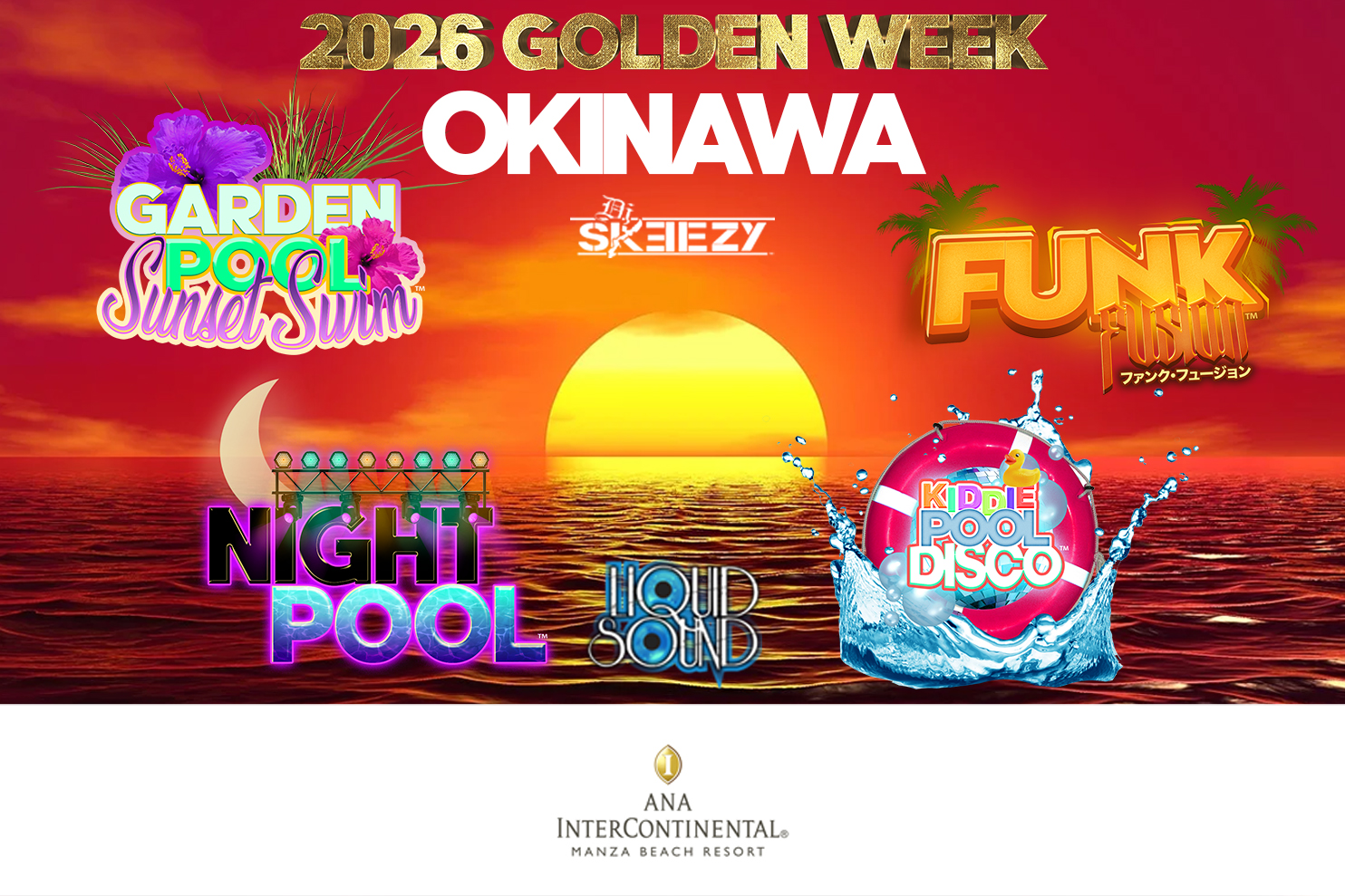
Golden Week 2026 transformed ANA InterContinental Manza Beach Resort into a vibrant oceanfront celebration of music, family entertainment, nightlife culture, and unforgettable resort experiences. Across four straight days and nights, guests experienced an atmosphere where luxury resort relaxation blended seamlessly with immersive audiovisual production, live performances, themed family programming, fireworks, bubbles drifting through the air, and music echoing across the poolside under Okinawa’s tropical skies.
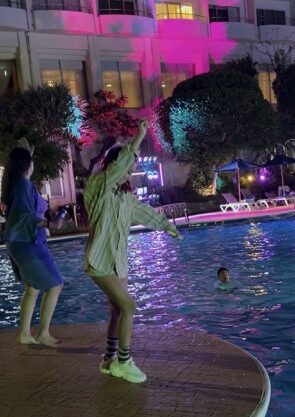
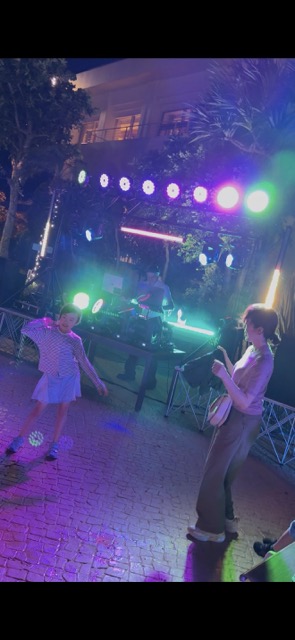
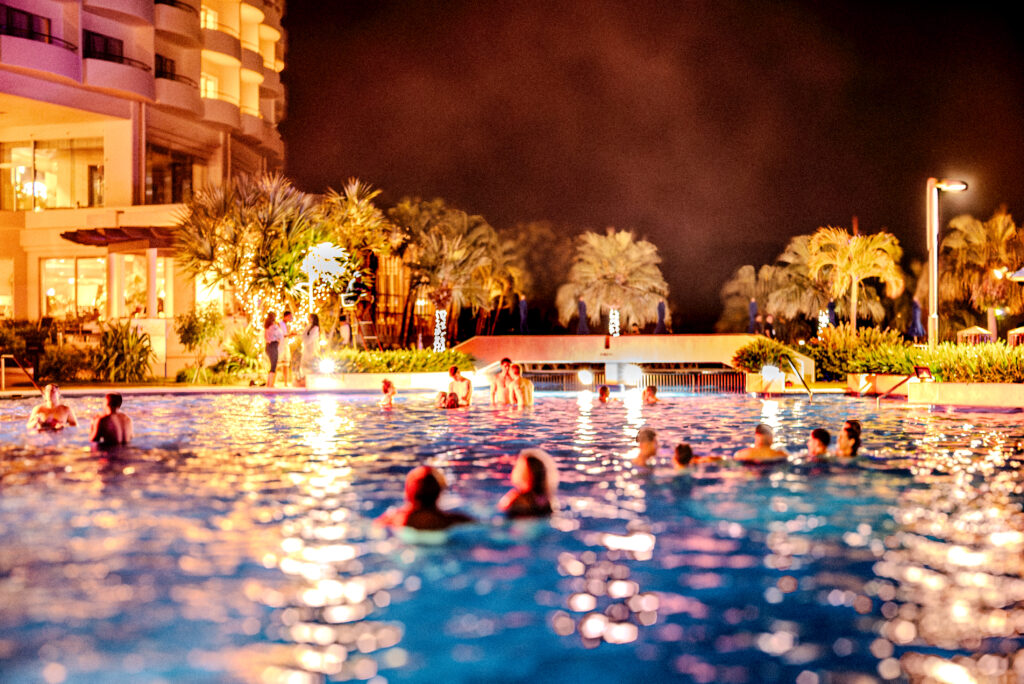
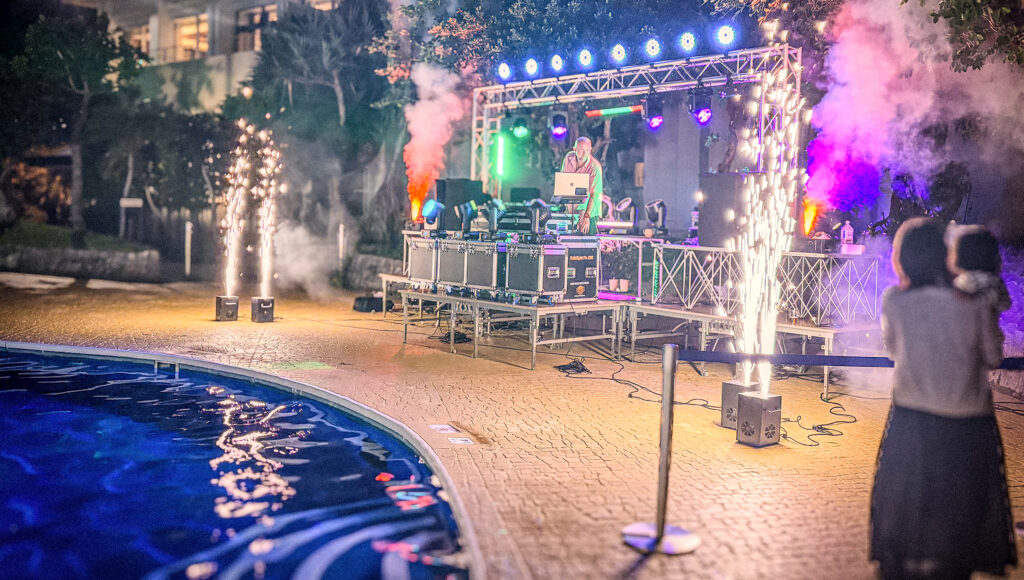
Families spent their afternoons watching children dance through clouds of bubbles beside the pool while parents relaxed to carefully curated music and sunset ocean views. As evening approached, the atmosphere evolved into an illuminated Night Pool experience filled with moving light beams, atmospheric haze, festival-scale sound systems, and energetic performances from internationally connected DJs and live artists. Every day carried a completely different energy, creating an experience that encouraged guests to return again and again throughout the holiday weekend.
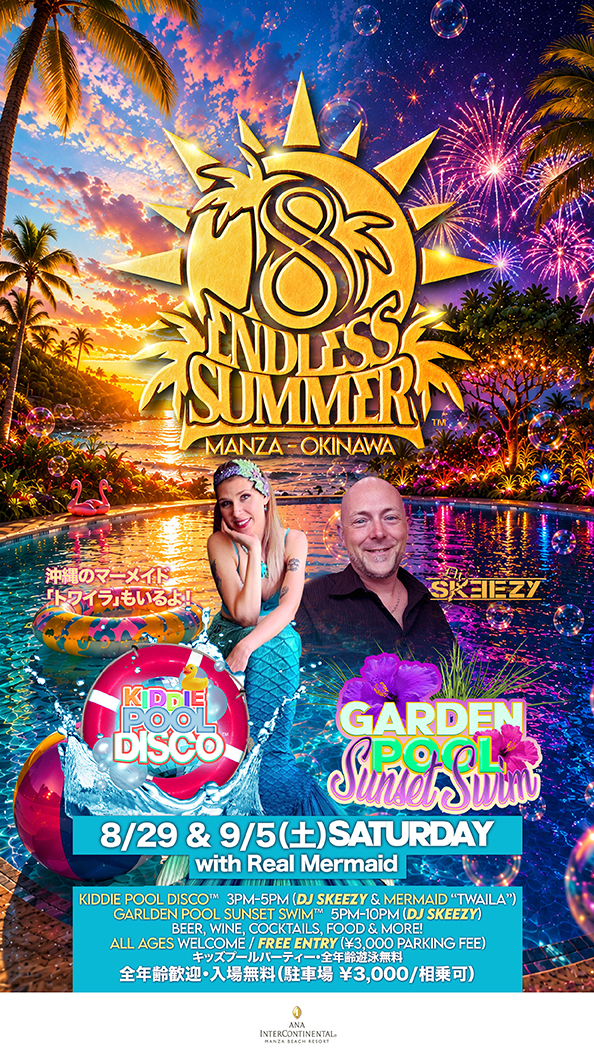
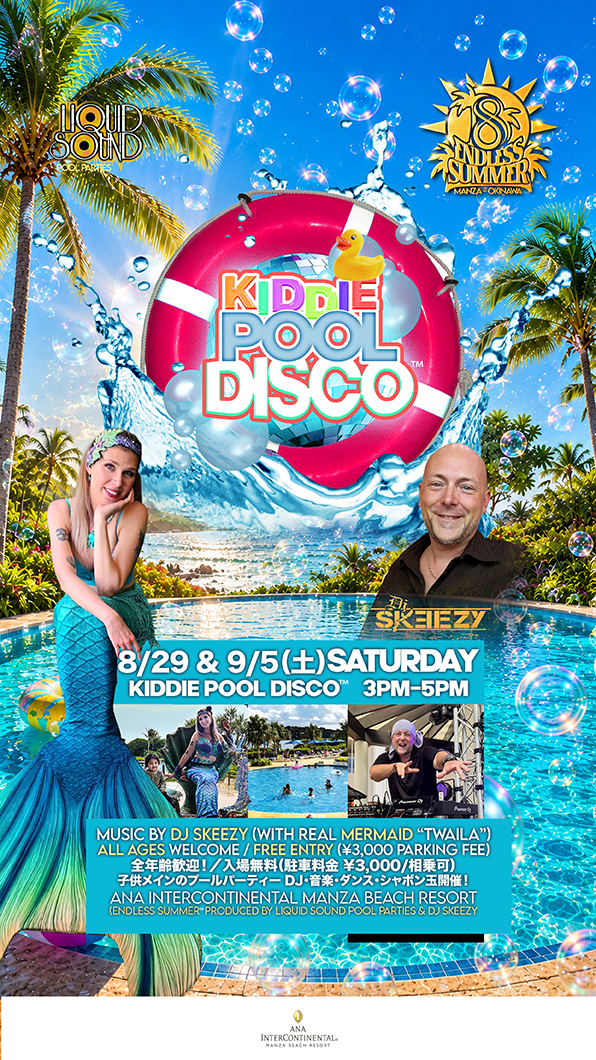
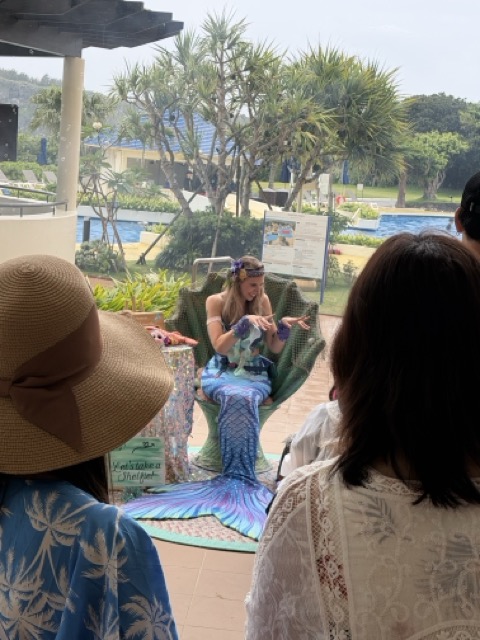
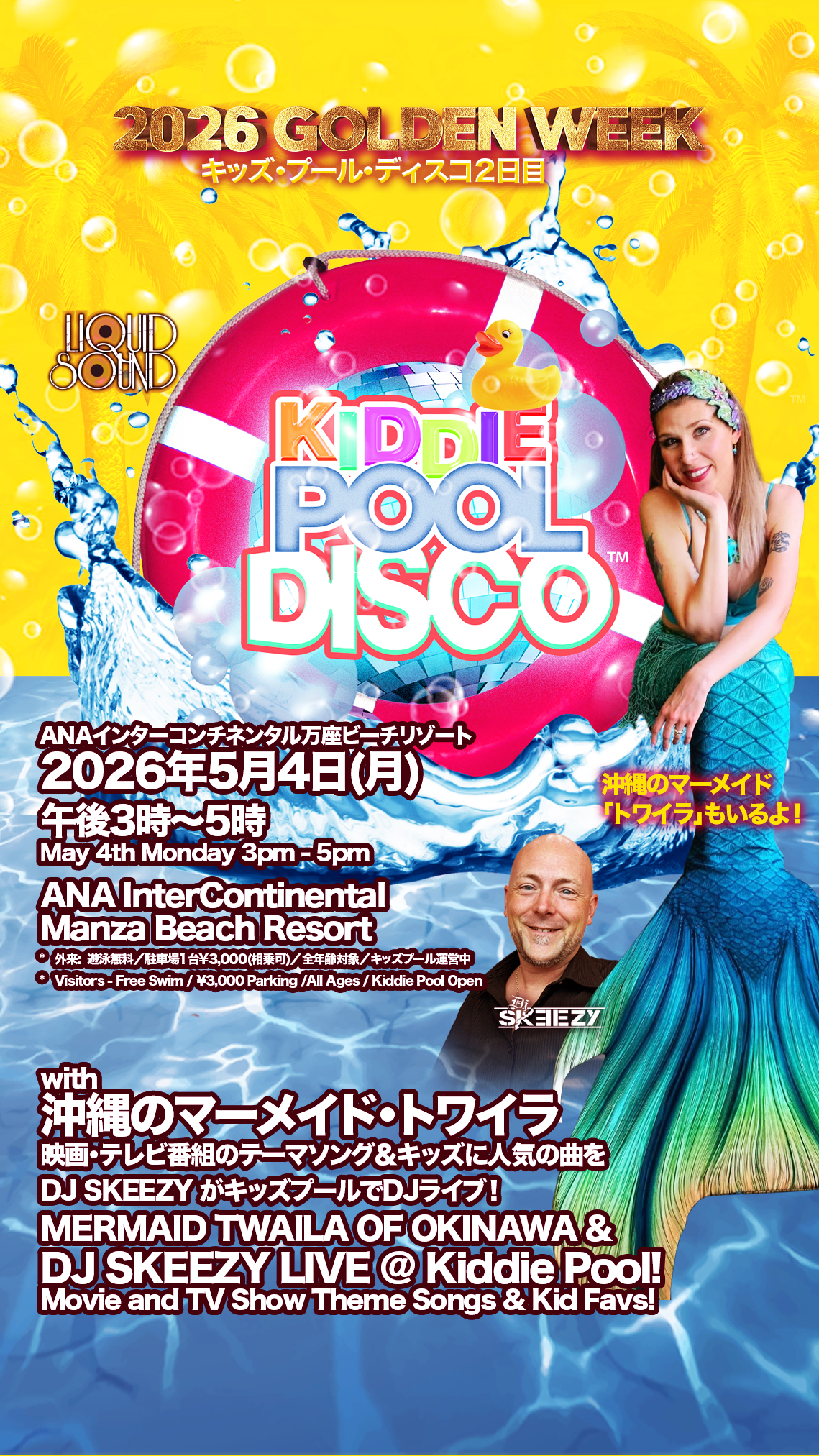
One of the most memorable moments of the weekend came during Kiddie Pool Disco™, where children filled the shallow pool dancing to kids’ favorites while bubbles floated endlessly across the Garden Pool. The appearance of real mermaid performer Twaila created magical interactions with families, as children gathered poolside to sing, take photographs, and eventually jump into the water to swim alongside the mermaid herself. Combined with fireworks displays, synchronized music moments, and immersive visual production, the weekend became a true resort entertainment experience designed for all generations.
特に印象的だったのは「Kiddie Pool Disco™」での光景だった。子どもたちは人気キッズソングに合わせて浅瀬のプールで踊り続け、ガーデンプール上空には無数のバブルが漂った。さらに、本物のマーメイドパフォーマー“Twaila”が登場すると、子どもたちは歌や写真撮影を楽しみ、その後は一緒にプールへ入って泳ぐという夢のような時間を体験した。花火と音楽のシンクロ演出、本格的な照明・映像演出も加わり、世代を超えて楽しめる新しい形のリゾートエンターテインメントが完成した。
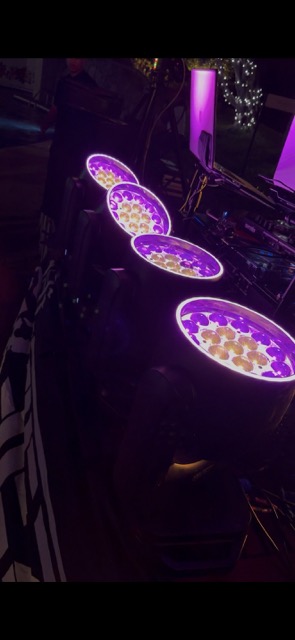
The Golden Week 2026 event series at ANA InterContinental Manza Beach Resort was produced by Liquid Sound on behalf of the resort, with full staging, sound, and lighting support provided by Vivid Dreams Okinawa. Both brands are directed and operated by Dj Skeezy, whose creative vision shaped the entire four-day experience from concept to execution.
From daytime family entertainment to large-scale nighttime pool productions, every detail of the weekend was carefully curated to create an immersive luxury resort atmosphere that blended music, visuals, emotion, and community into one unified experience. The result was not simply a holiday event series, but a complete entertainment environment designed to elevate Okinawa’s evolving resort culture.
Dj Skeezy is an internationally experienced DJ, producer, and entertainment director based in Okinawa, Japan. Known for blending high-level sound production with immersive visual staging and crowd-focused musical programming, he has become recognized for developing exotic resort-style pool party experiences that merge nightlife energy with luxury hospitality environments. Through Liquid Sound and Vivid Dreams Okinawa, Dj Skeezy continues pushing the boundaries of resort entertainment by combining professional club-level production with family-friendly accessibility and destination-focused experiences.
Dj Skeezyは沖縄を拠点に活動する国際的DJ、プロデューサー、そしてエンターテインメントディレクターである。高品質なサウンドプロダクション、没入感ある照明演出、そして観客との一体感を重視した音楽構成を得意とし、ラグジュアリーリゾート空間とナイトライフカルチャーを融合させた“エキゾチック・プールパーティー”スタイルで注目を集めている。Liquid SoundおよびVivid Dreams Okinawaを通じて、クラブレベルの本格演出とファミリー層にも開かれたリゾート体験を融合させながら、沖縄における新時代のリゾートエンターテインメントを追求し続けている。
The success of the Golden Week 2026 series demonstrated how a single creative vision, supported by strong production execution and community engagement, can transform a resort environment into a multi-generational entertainment destination. For many guests, the weekend was more than an event — it became a memory-defining experience that captured the atmosphere, creativity, and evolving energy of Okinawa itself.
Golden Week 2026シリーズの成功は、明確なクリエイティブビジョンと本格的な制作力、そしてコミュニティとの繋がりによって、リゾート空間そのものを世代を超えて楽しめるエンターテインメント空間へ変えられることを証明した。多くの来場者にとって、この週末は単なるイベントではなく、沖縄の魅力と進化するカルチャーを体感する“記憶に残る体験”となった。
This Golden Week 2026, Okinawa’s coastline becomes the stage for one of the most dynamic resort event series of the year. LIQUID SOUND, the signature production brand led by DJ Skeezy, brings a multi-day takeover to ANA InterContinental Manza Beach Resort, blending music, performance, and immersive atmosphere into a seamless day-to-night experience.
Designed for both hotel guests and visitors, the event series transforms the resort into a vibrant destination where tropical energy meets world-class entertainment.
From sunset sessions to high-energy night pools, and family-friendly daytime activations, each event is carefully curated to deliver a complete Golden Week 2026 escape.
Endless Summer Heated Pool Party November 2025
CURATED BY DJ SKEEZY
With over 25 years of international DJ experience, DJ Skeezy leads the vision behind LIQUID SOUND. Known for his ability to read diverse crowds and craft the perfect atmosphere, he brings a unique blend of turntablism, MCing, and event production expertise.
Specializing in resort-style events, Skeezy creates experiences that flow naturally from daytime relaxation to sunset ambiance and into high-energy nightlife, making him a standout force in Okinawa’s evolving entertainment scene.
Beyond the decks, he plays a key role in coordinating artists, production design, and overall event flow, ensuring every moment feels intentional and memorable.
LIVE MUSIC, CULTURE, AND PERFORMANCE
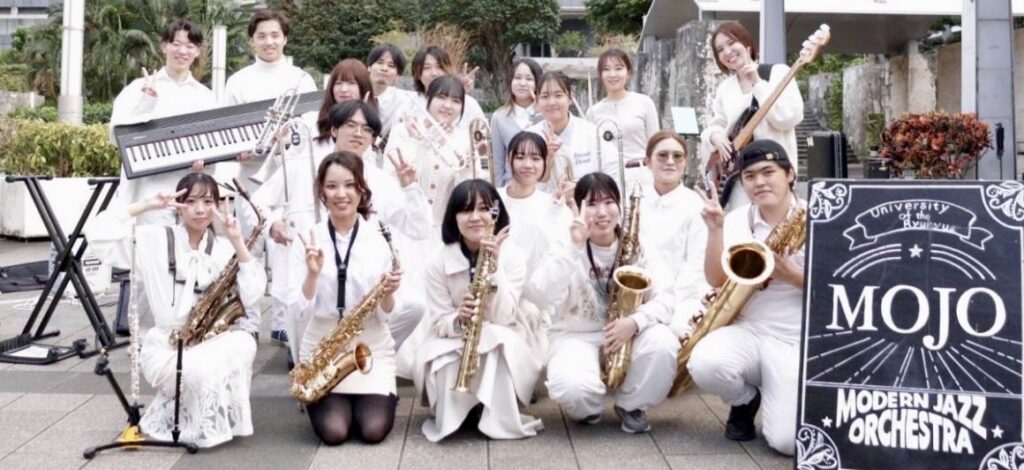
MOJO – Modern Jazz Energy
The Ryukyu University Modern Jazz Orchestra (MOJO) is the only student big band in Okinawa Prefecture. Based at the University of the Ryukyus, they perform at events and street performances throughout Okinawa.
Their repertoire includes big band jazz such as Count Basie and Tropical Jazz Orchestra styles, delivering energetic and uplifting performances that showcase the brightness and spirit unique to university musicians. They are especially known for dynamic performances suited for celebrations, ceremonies, and parties.
The band features a full big band setup, with a horn section consisting of saxophones, trombones, and trumpets, along with a rhythm section of bass, guitar, keyboard, and drums.
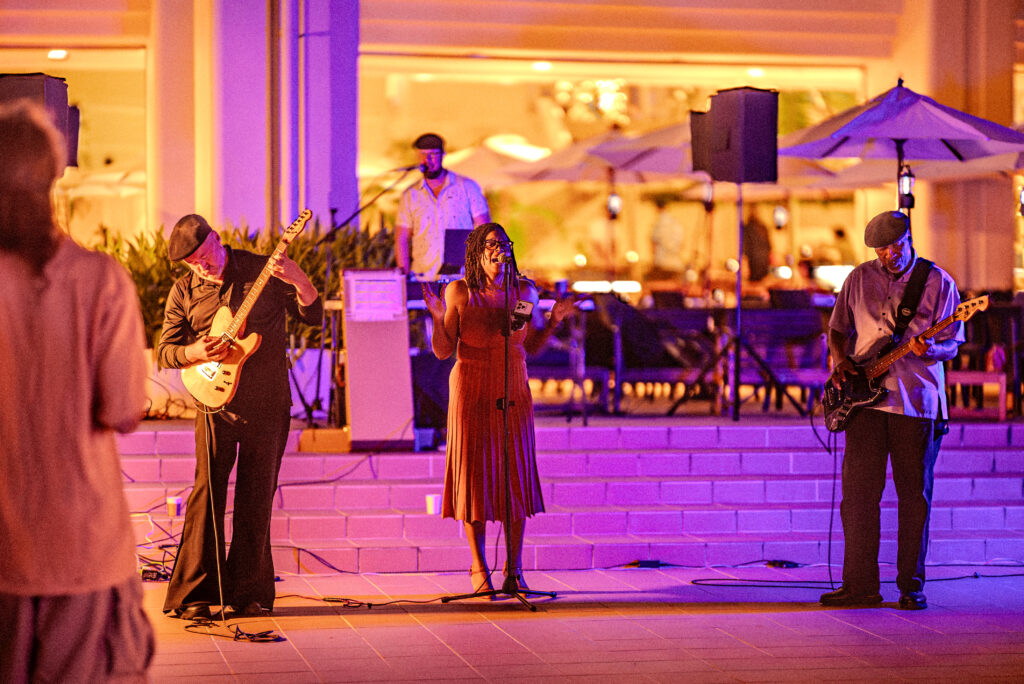
DaijouBoogie – Live Funk and Soul
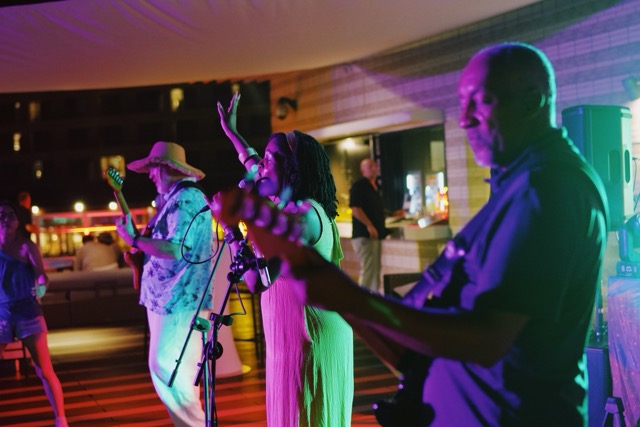
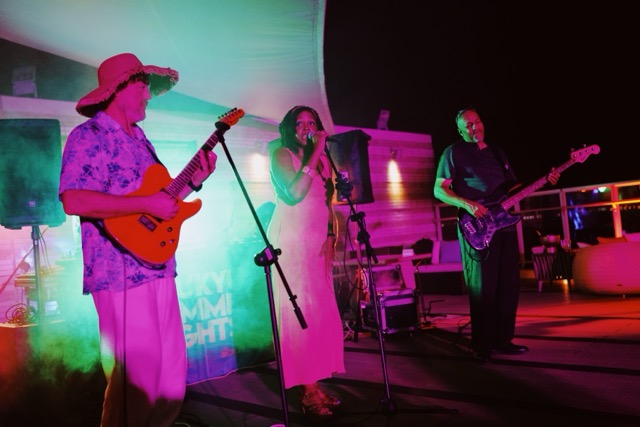
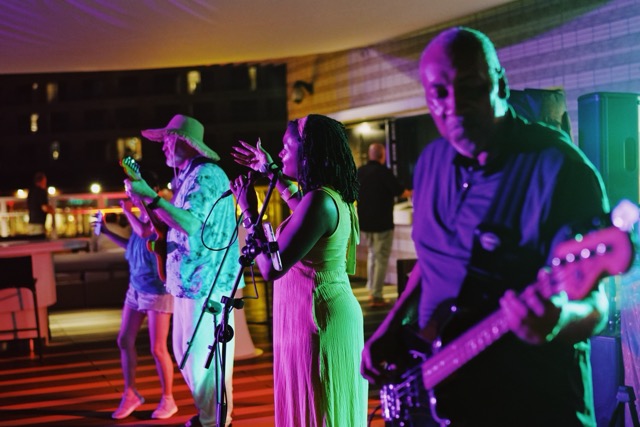
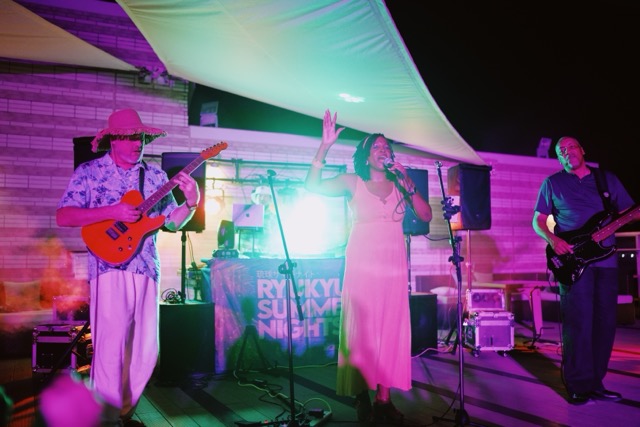
DaijouBoogie blends R&B, reggae, soul, and disco, performing well-known songs with their own unique interpretation. The group is made up of three public school teachers and one psychologist, all of whom share a passion for performing live and creating a soulful atmosphere.
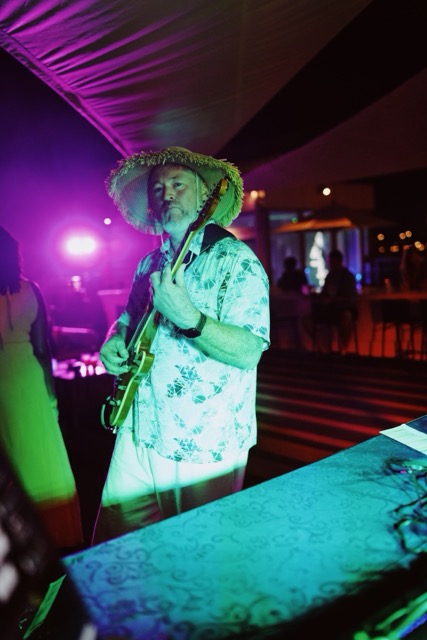
The lineup features Scott “Sticky Fingers” on guitar, John Q on bass, Wonderbread J on turntables, and soulful lead vocals by Sara. Their performances bring a warm, groove-driven energy that connects naturally with audiences.
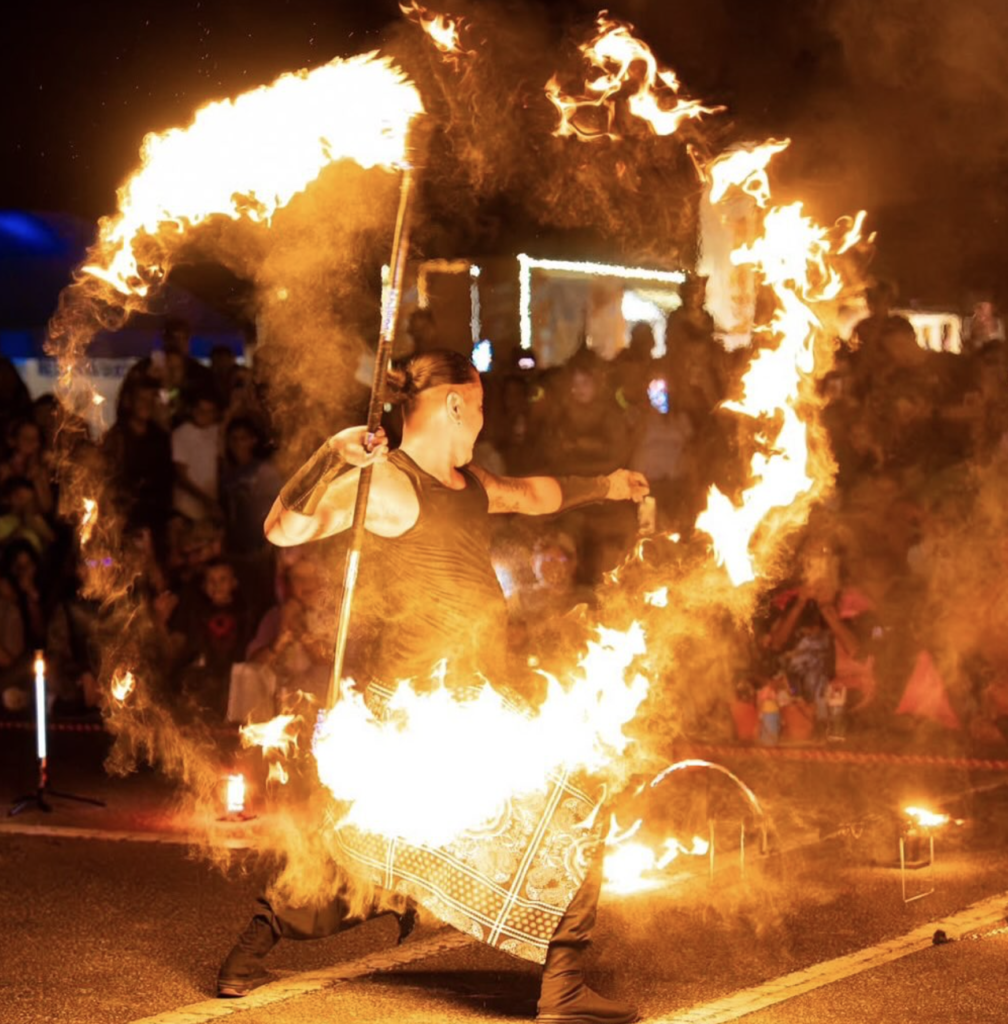
Ryoma Shiba – Fire Performance
With the motto of delivering inspiration and hope to people’s hearts through performance and becoming a source of energy for tomorrow, Ryoma Shiba continues to dedicate himself to his craft and performs both across Japan and internationally.
His fire performances combine precision, emotion, and visual intensity, creating powerful moments that elevate the atmosphere of any event.
FEATURED DJs
K-FIVE – Official DJ for OZworld
An Okinawa-born DJ, K-FIVE serves as the official DJ for OZworld. He has been involved in album releases, international performances, and appearances at some of Japan’s largest hip-hop events and festivals.
With over 250 bookings per year, he is not limited to hip-hop, delivering versatile sets that include the latest Top 40 and club music while maintaining a consistent and adaptable style across genres.
DJ ANDY – Crowd-Focused Club Energy
DJ ANDY is a resident DJ in Okinawa, primarily performing in clubs in Okinawa City and Naha, where he handles main-time sets. Expanding his reach beyond the prefecture, he plays for a wide audience including tourists and U.S. military residents.
Focusing on new hip-hop and R&B releases, he incorporates scratching and wordplay into his sets, creating smooth, groove-driven mixes that have been gaining attention.
FAMILY EXPERIENCE: MERMAID TWAILA
default
Mermaid Twaila’s story is that she comes from the lost city of Atlantis. She is 127 years old and enjoys swimming around visiting her sea friends. Her best friend is a seahorse named Sam, and the two often attend underwater cave parties together.
Seeking more adventure, Twaila discovered an island called Okinawa and has been staying along its shores for the past three years, enjoying meeting many new people. Her presence brings a unique, imaginative element to the daytime pool experience for families and children.
EVENT SCHEDULE
Golden Week 2026 unfolds across multiple themed events:
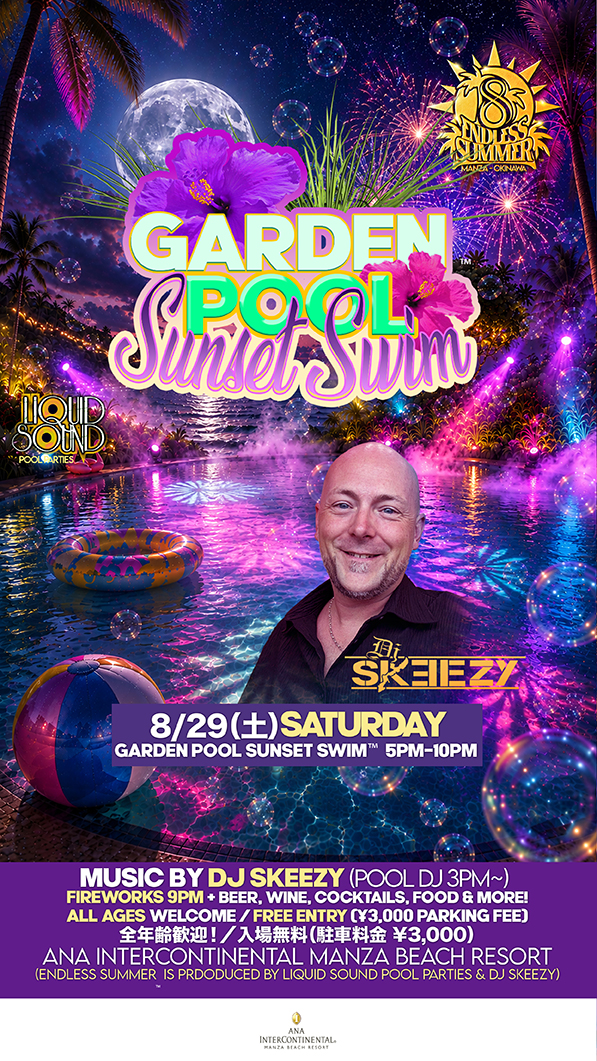
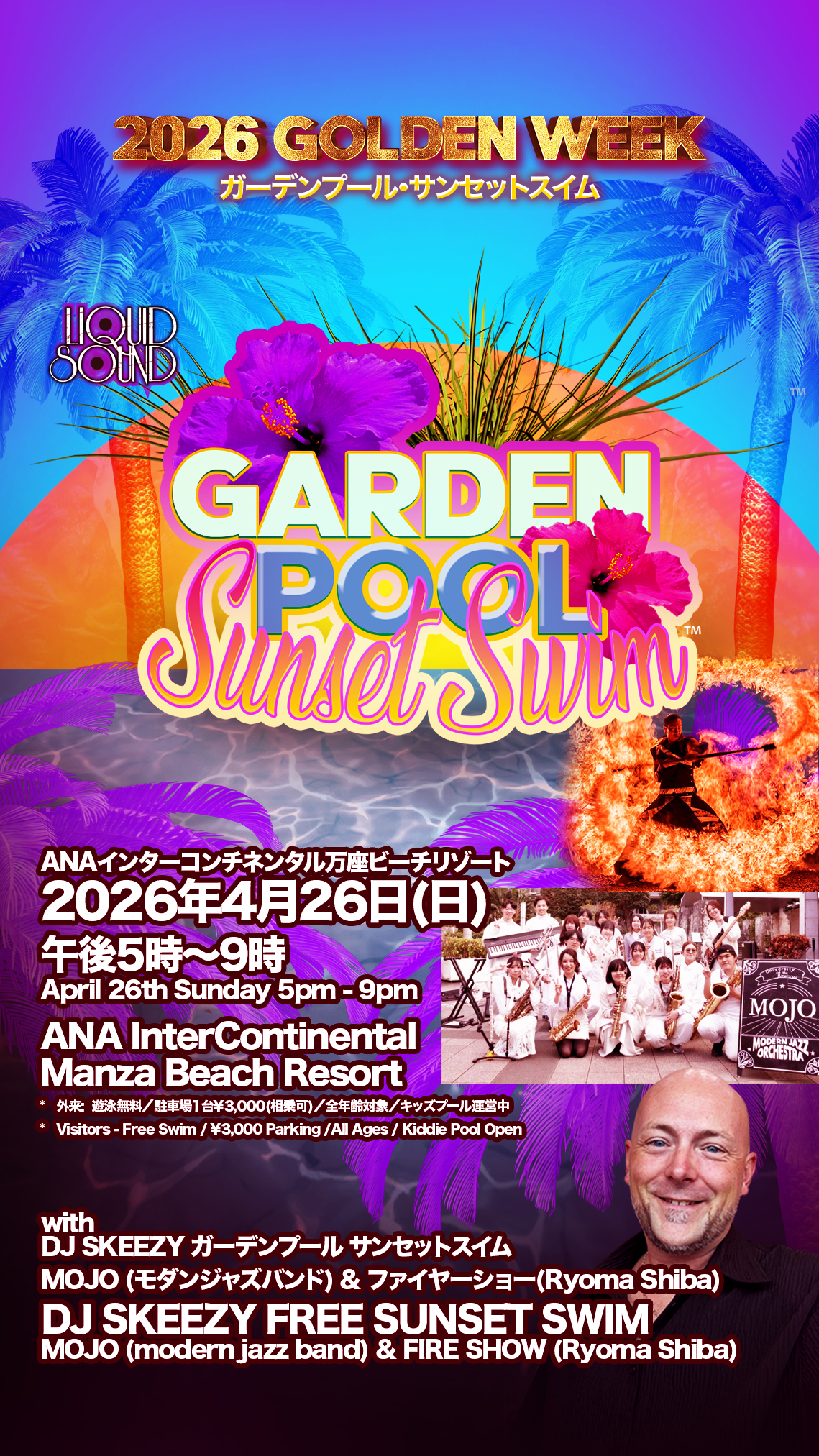
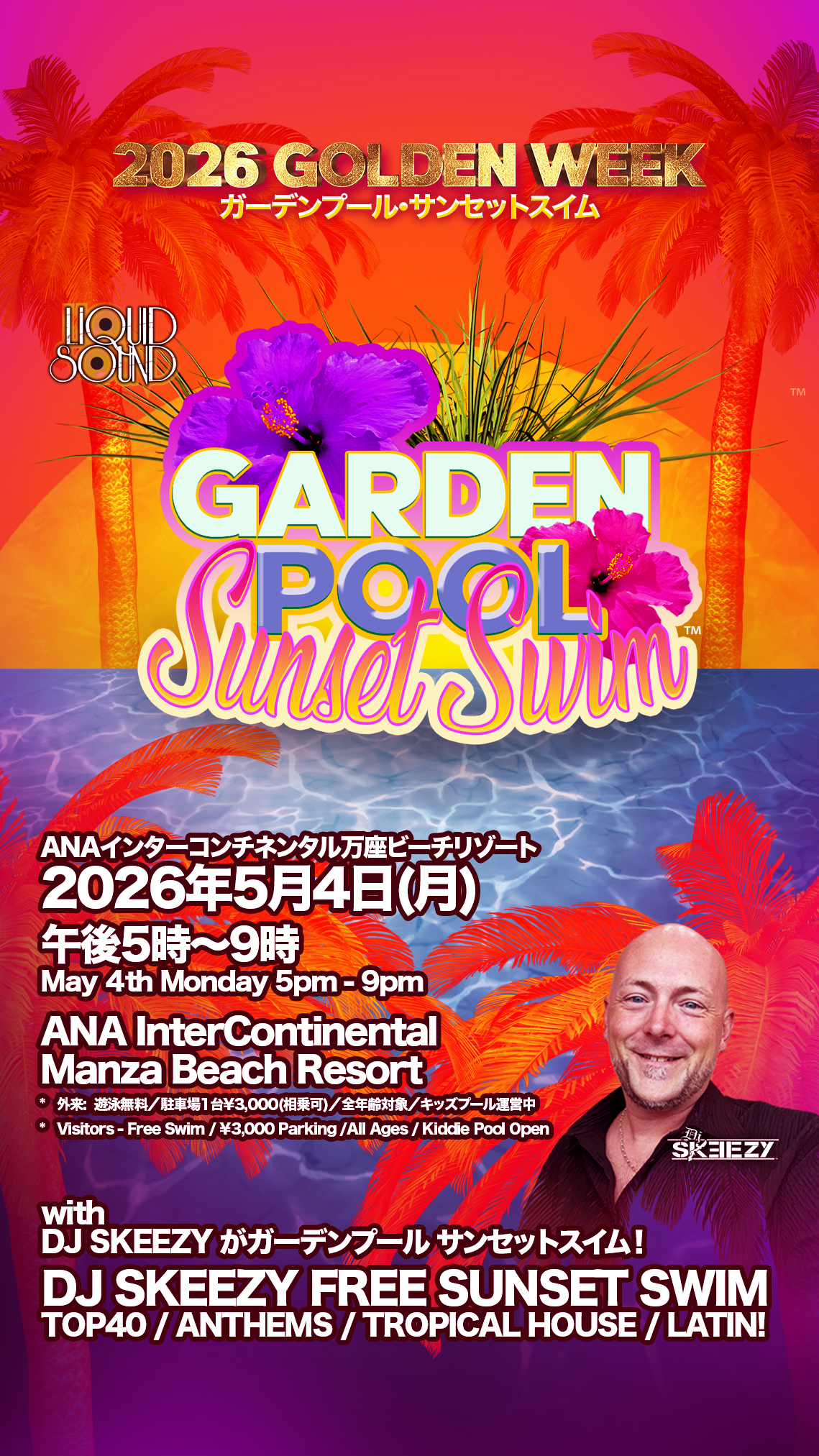
4/26 (Sat) – Garden Pool Sunset Swim™
DJ Skeezy / MOJO / Ryoma Shiba Fire Show
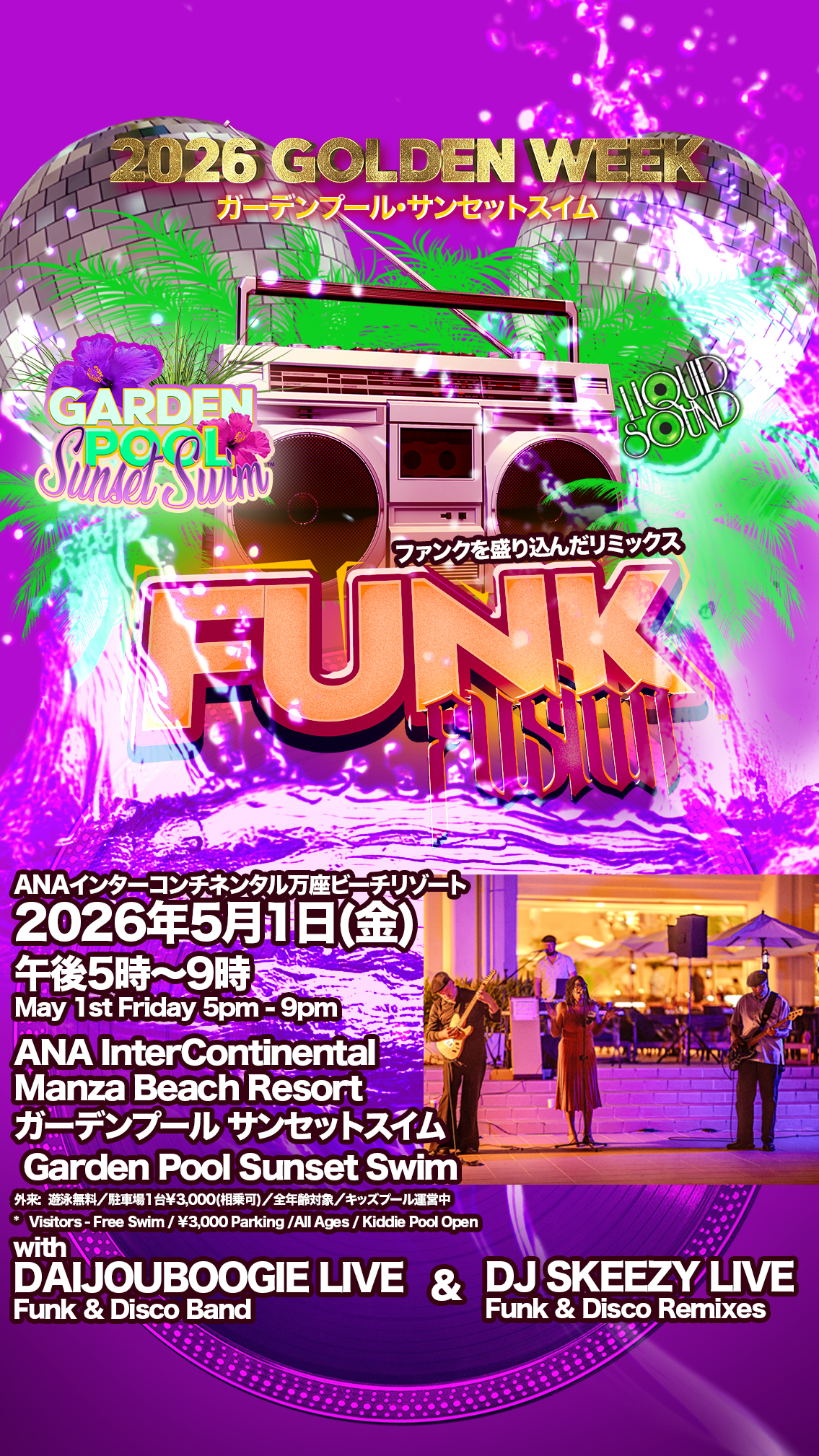
5/1 (Thu) – Funk Fusion™
DJ Skeezy + DaijouBoogie (Live Disco/Funk)
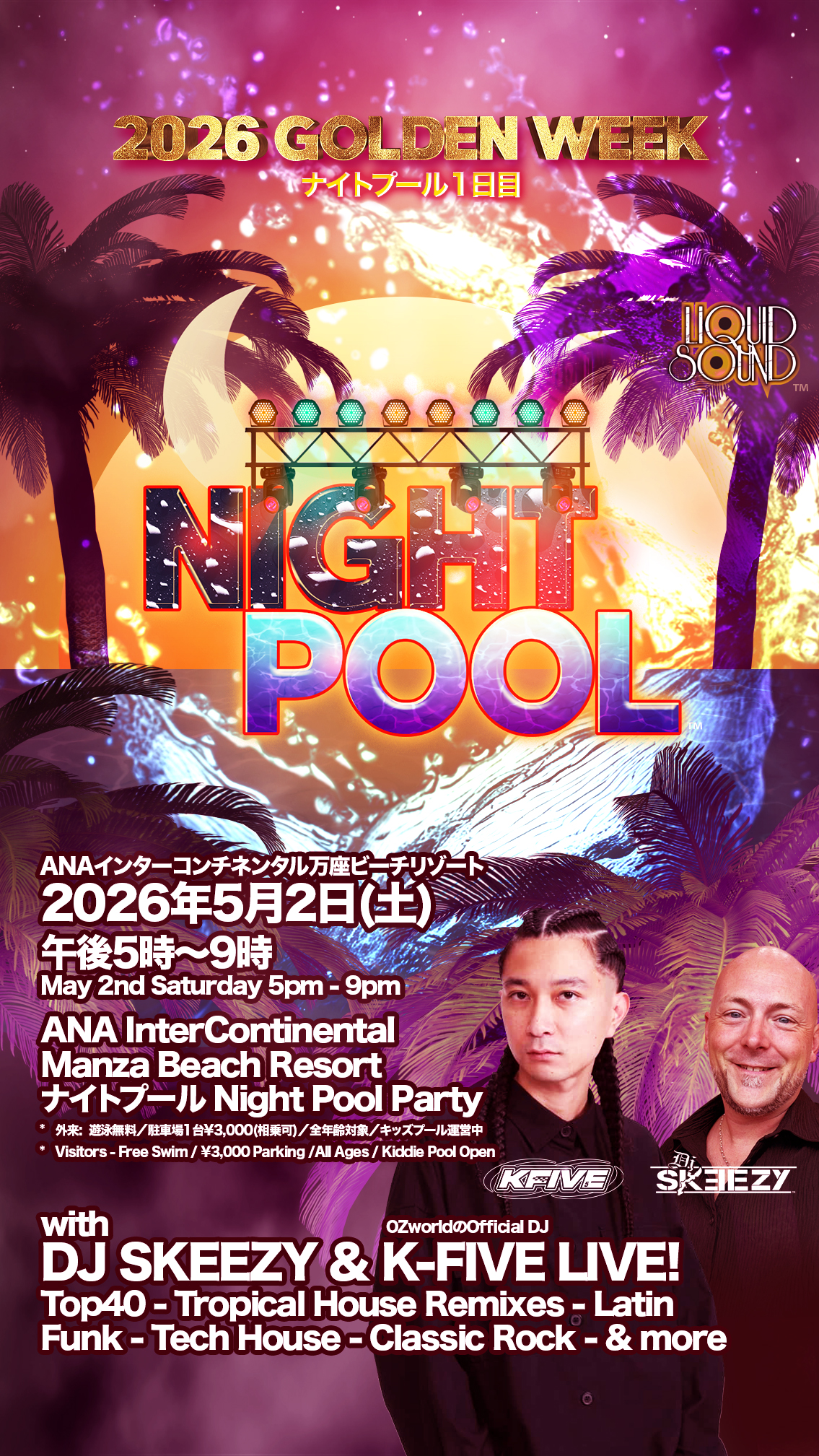
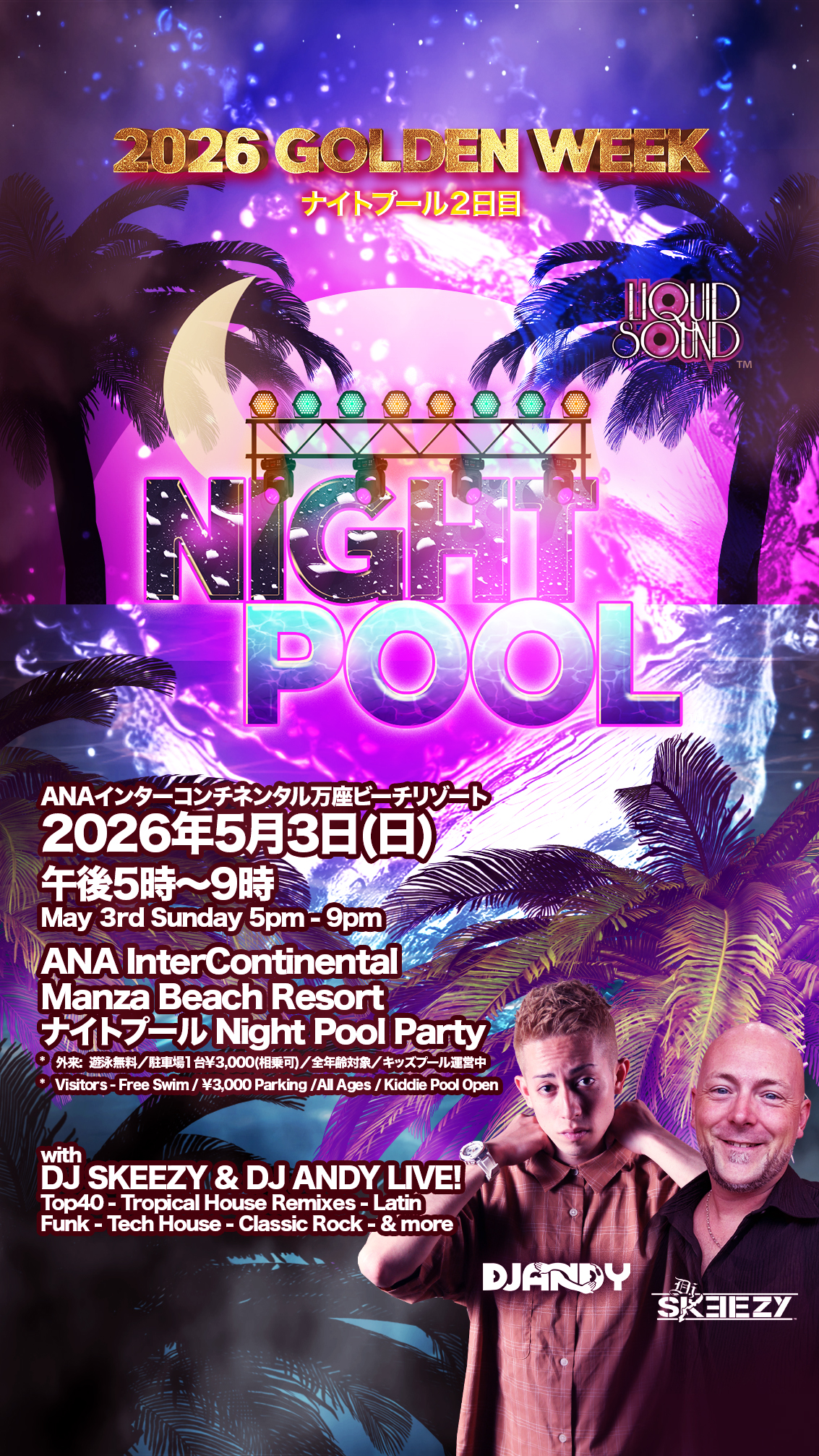
5/2 (Fri) – Night Pool (MainStage)
K-FIVE + DJ Skeezy
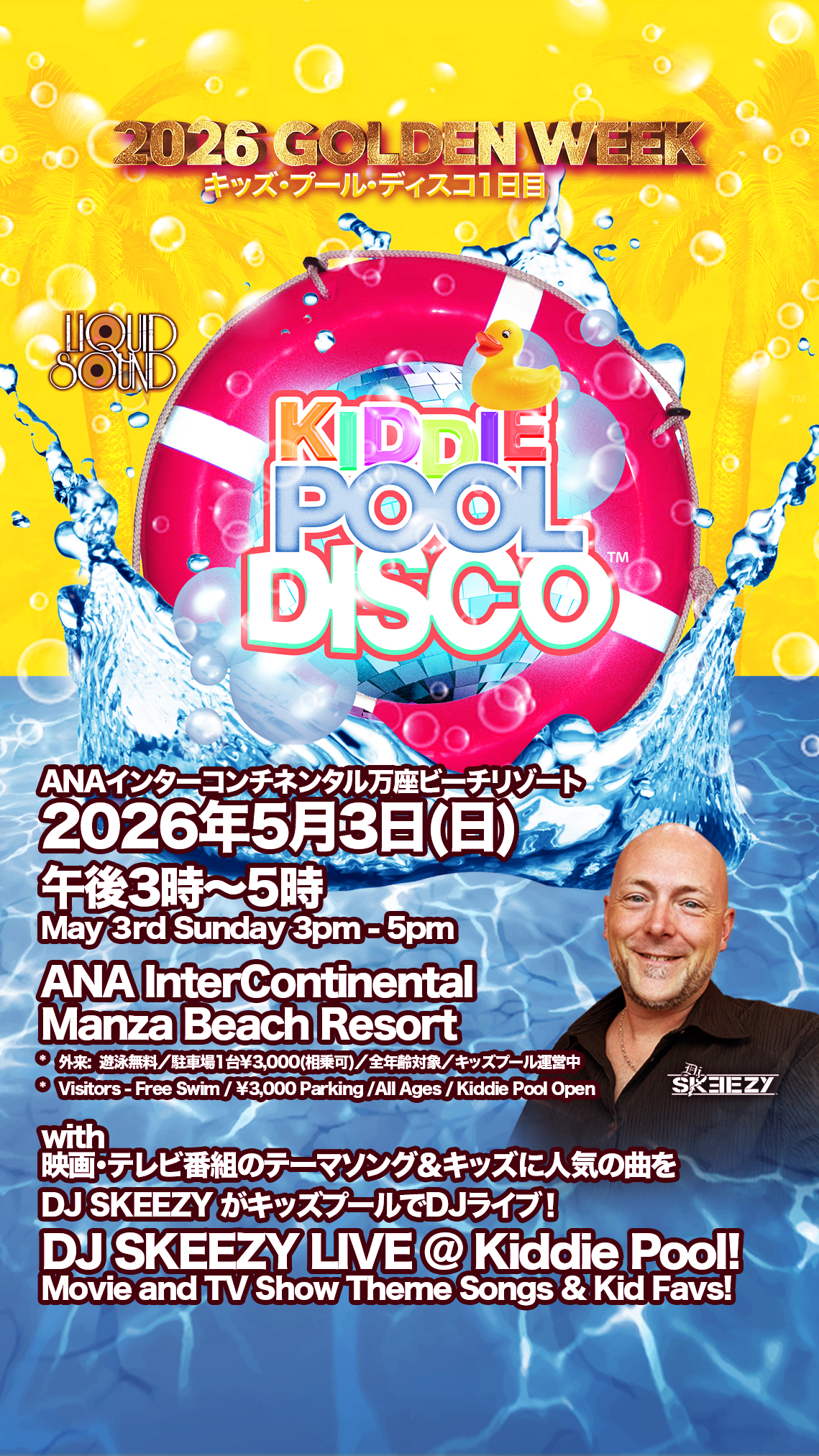
5/3 (Sat) – Kiddie Pool Disco™
DJ Skeezy
Night Pool Guest: DJ ANDY (5PM–9PM)
5/4 (Sun) – Kiddie Pool Disco™
Mermaid Twaila
Garden Pool Sunset Swim™ (5PM–9PM)
THE EXPERIENCE
This is more than a series of events. It is a full resort experience designed to bring together music, performance, and atmosphere in a seamless flow from day to night.
Guests can enjoy curated music programming, professional sound and lighting production, and a balance of family-friendly daytime activities alongside high-energy night pool experiences.
Swimming is free for all visitors. Parking is 3,000 yen per vehicle, and carpooling is encouraged.
A NEW STANDARD FOR RESORT ENTERTAINMENT
LIQUID SOUND continues to push the boundaries of resort entertainment in Okinawa, blending music, culture, performance, and environment into a unified experience.
Golden Week 2026 at Manza is designed not just to be attended, but to be remembered.
【注意事項 / NOTICE】 PLEASE DRINK RESPONSIBLY or risk removal
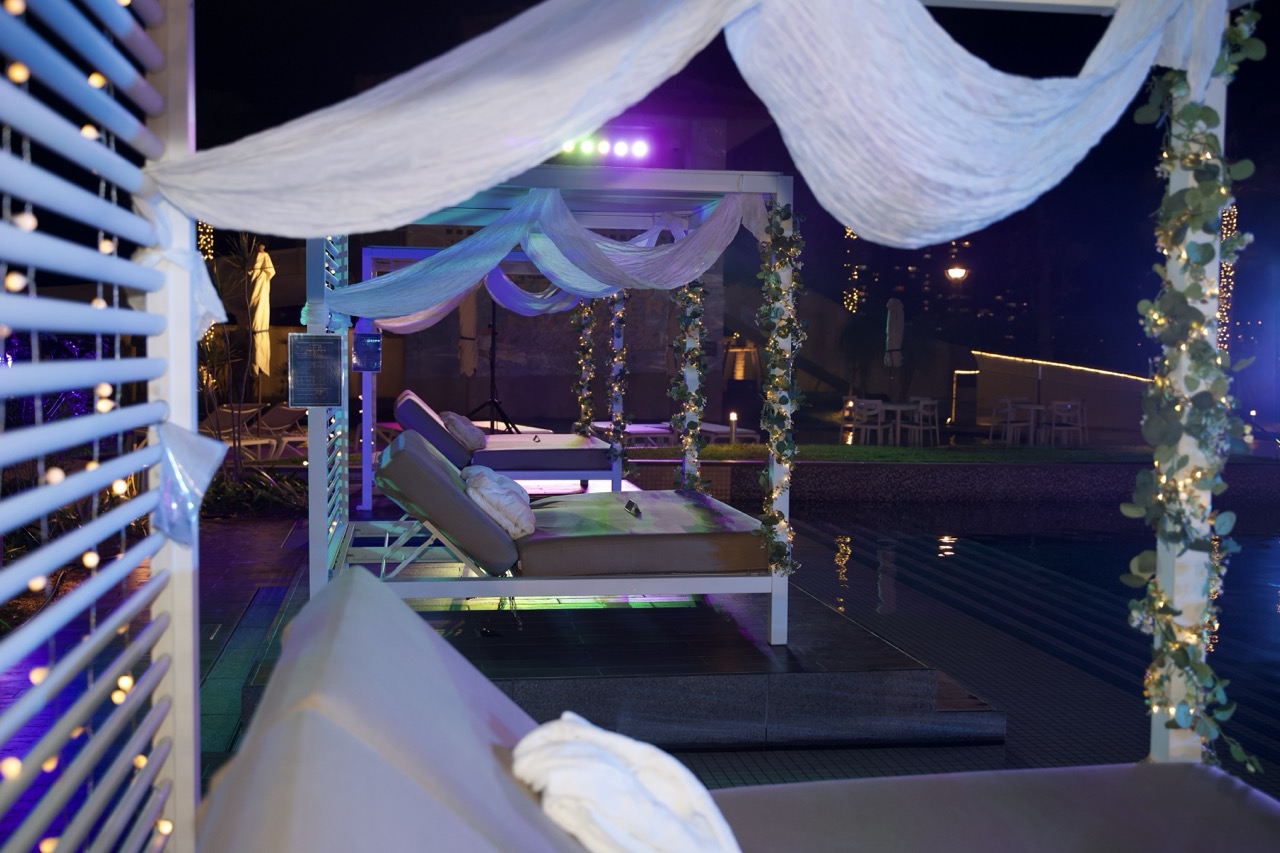
悪天候時中止の可能性あり / Subject to cancellation (typhoon, lightning, extreme weather) 喫煙は指定エリアのみ / Smoking only in designated area ロッカー・シャワーあり / Lockers & showers available バスローブは返却必須 / Return bathrobes after event
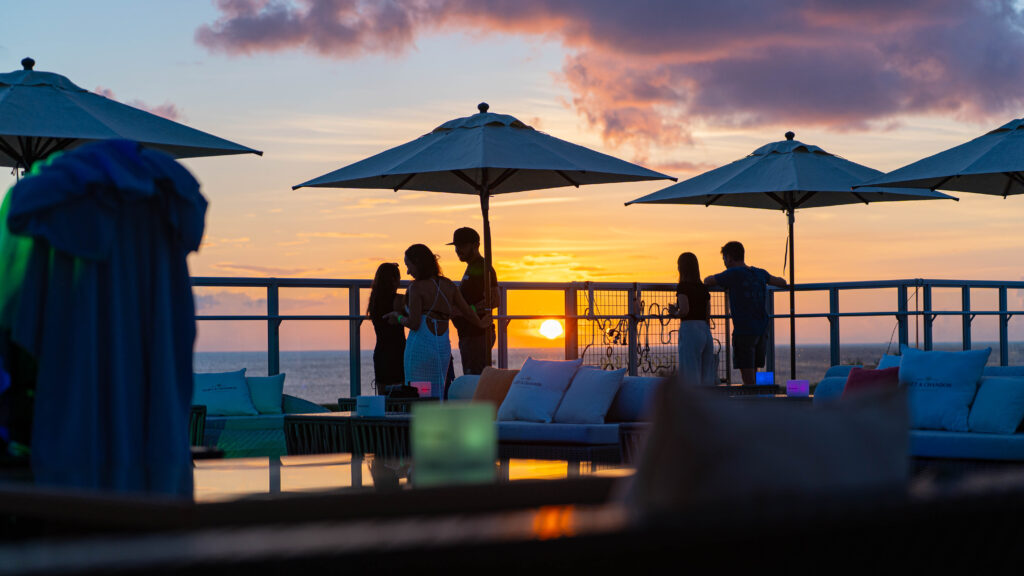
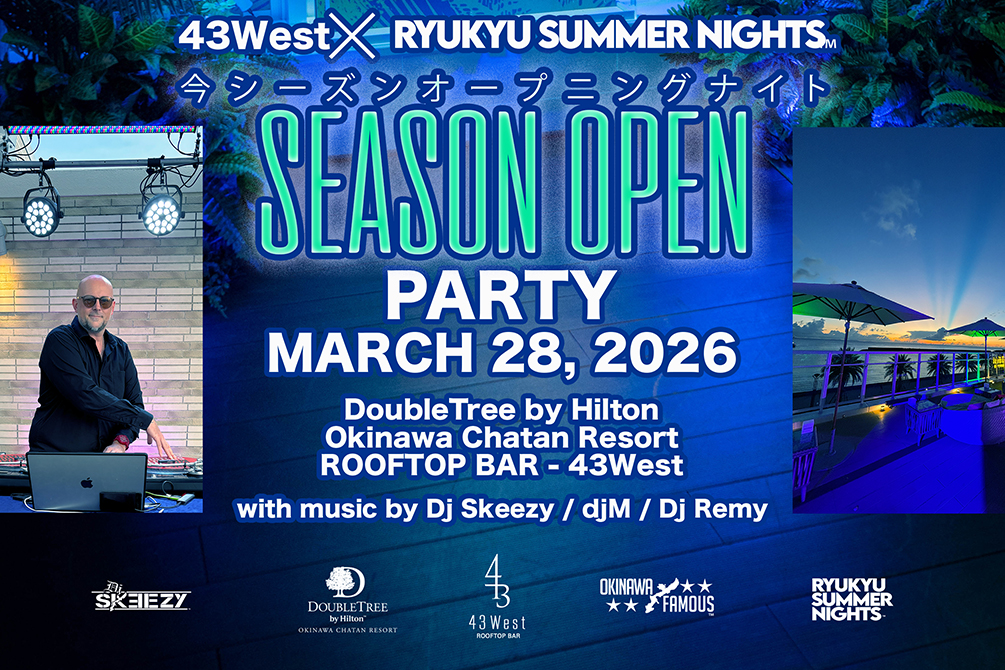
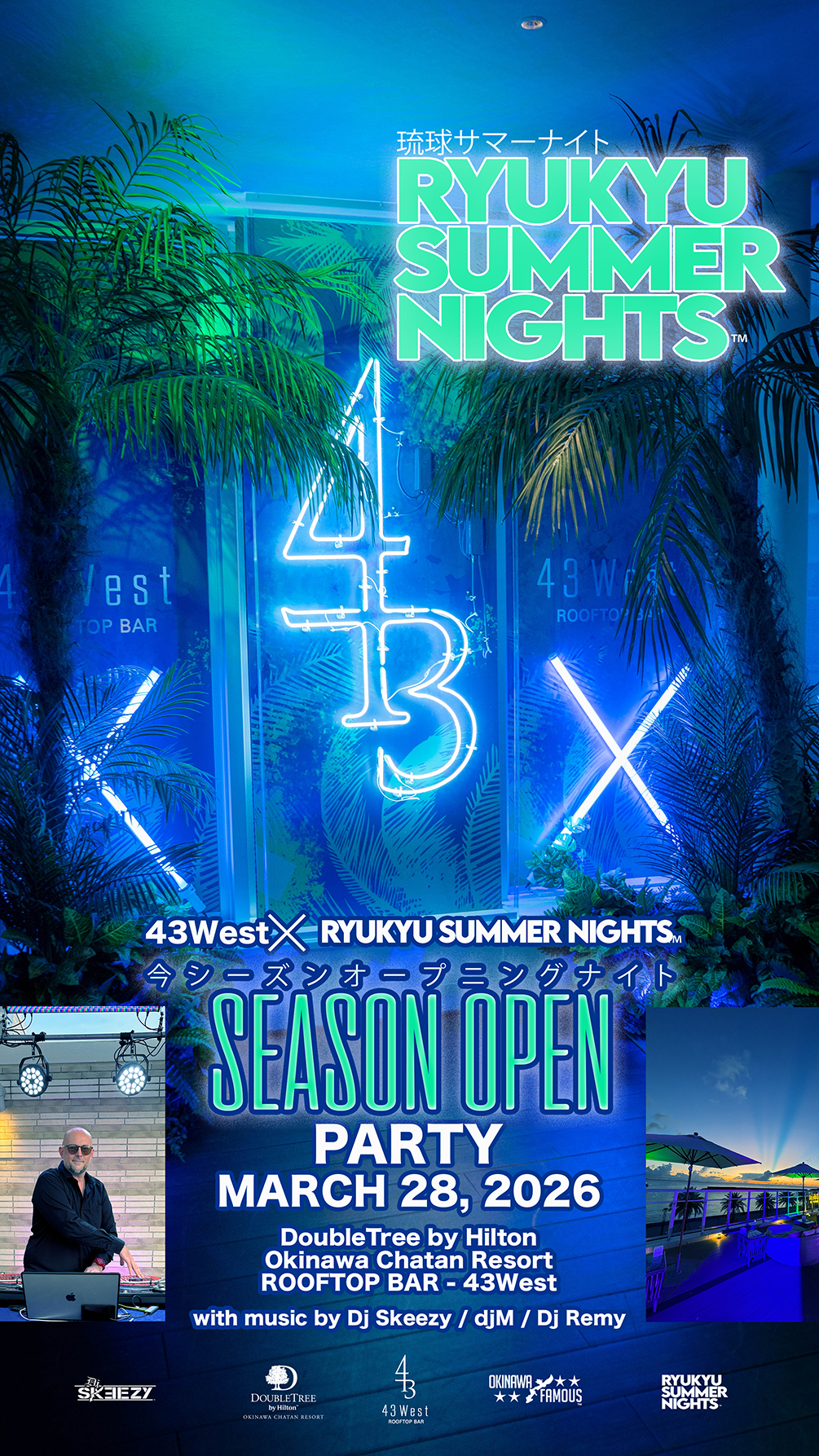
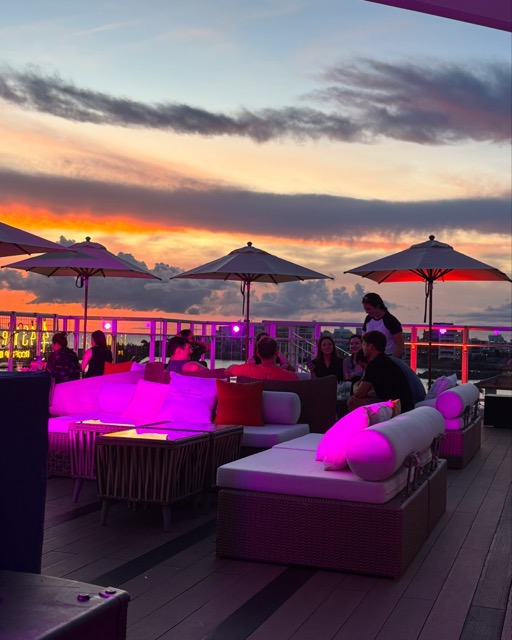
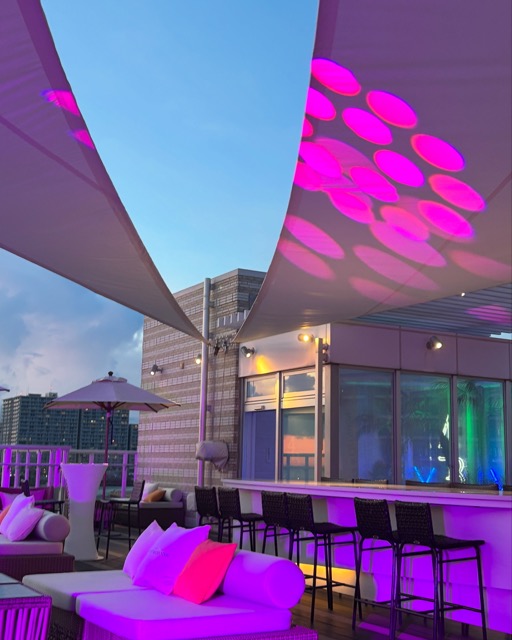
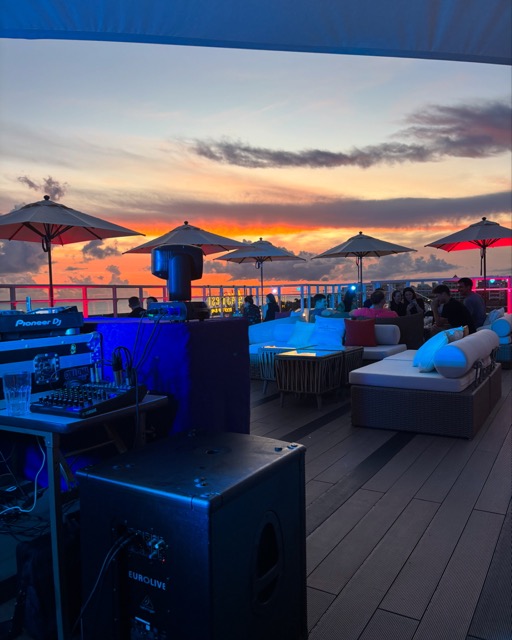
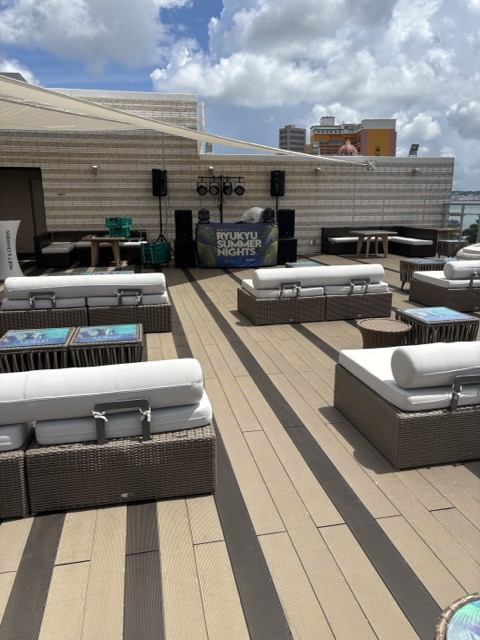
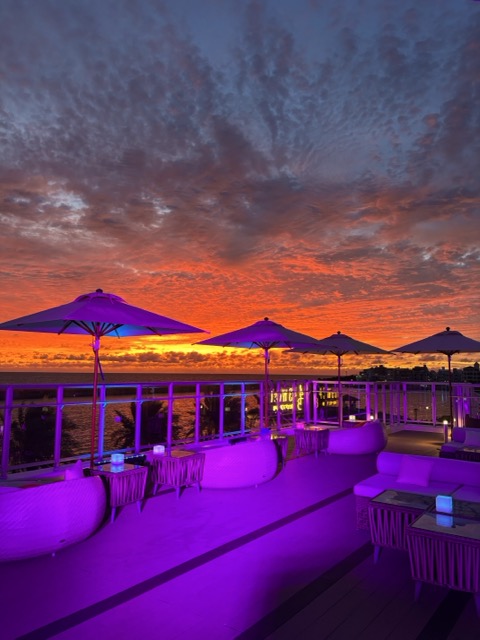
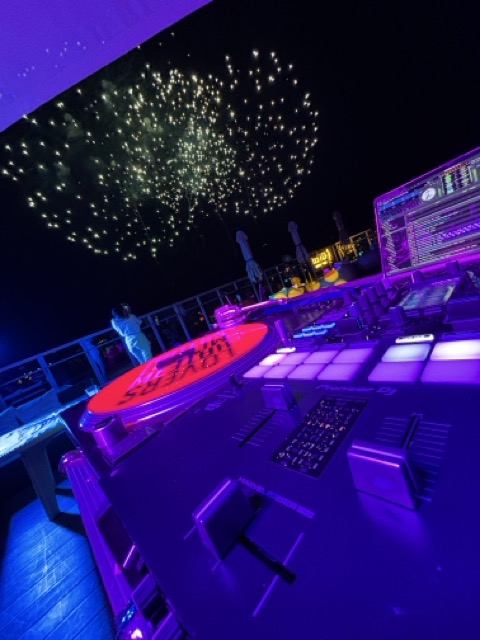
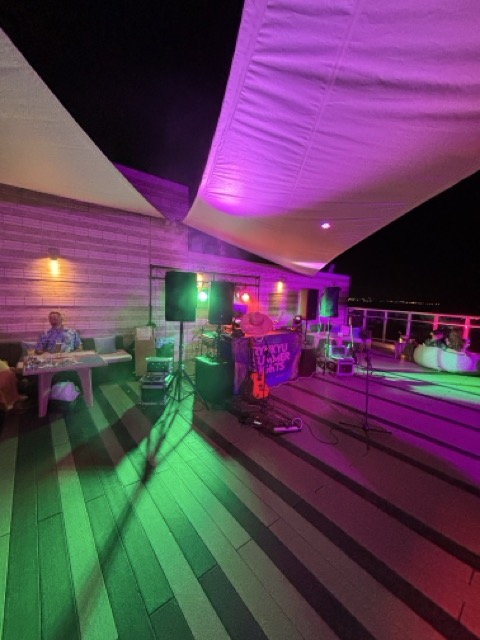
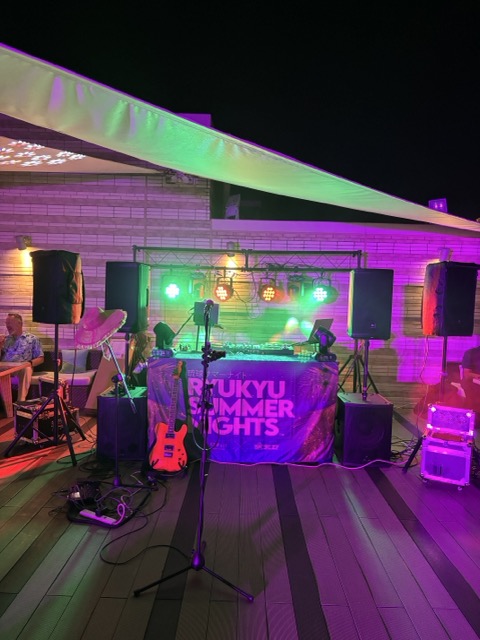
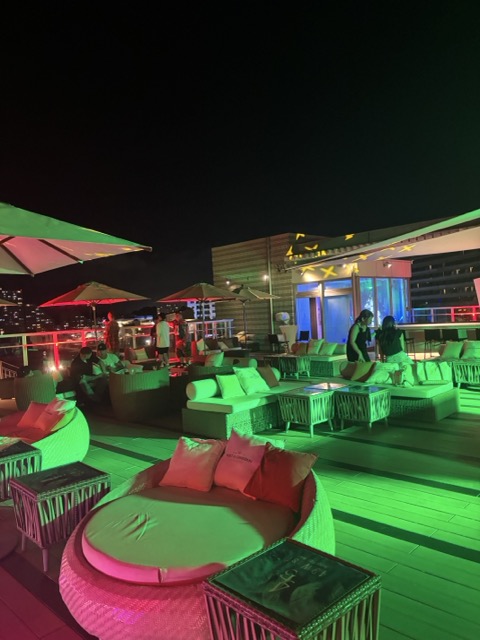
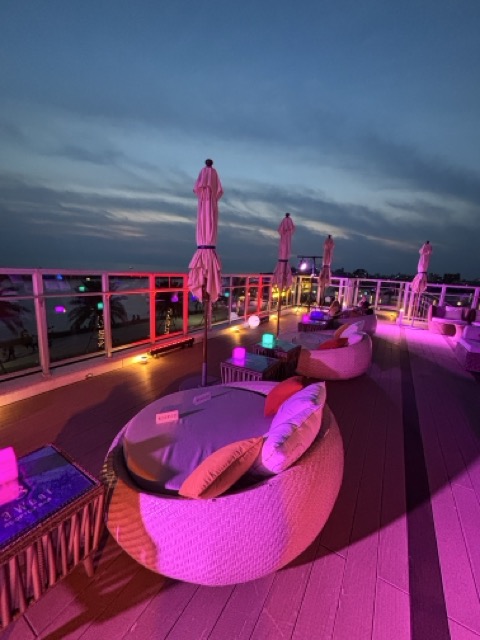
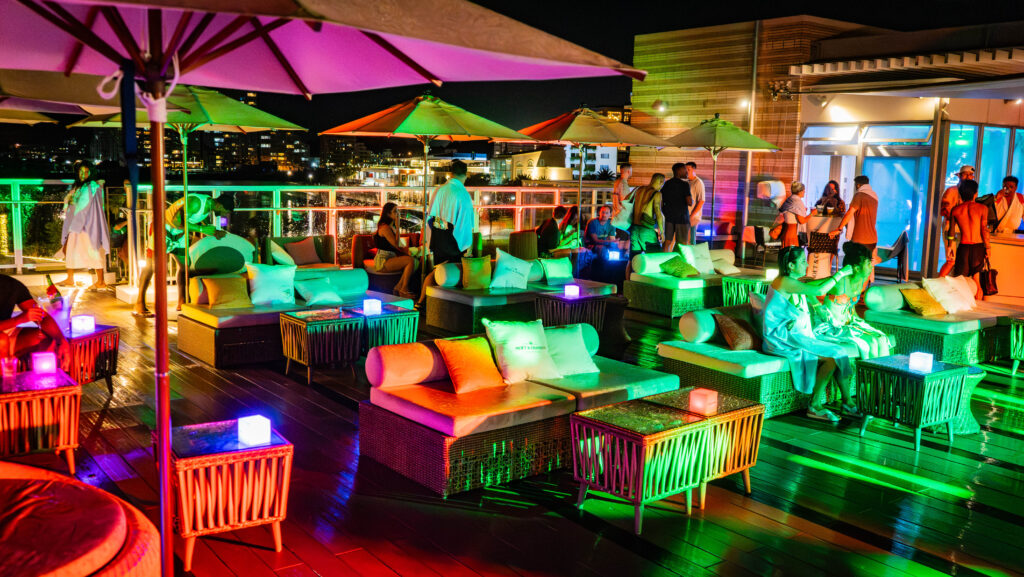
Kicking things off 3/28 with 43West opening for the season! Really excited. Will be balancing the venue all season with djM, Dj Remy, and Dj Skeezy. We have the whole schedule now, and it looks amazing! RYUKYU SUMMER NIGHTS every Saturday with a monthly Night Pool party downstairs and 43West acting as our official night pool after party, as well parallel free option for those that want to just hang out and not swim or be in the big wildness downstairs. Also coming new this summer are monthly BAND dates from May 5th with the LIVE African band – Konkoba and many other live bands monthly, ending the 2026 season Halloween night with a big special event! Come up and check in with us as we enjoy the luxury vibe of 43West rooftop bar at @doubletreechatan with @ryukyusummernights and fireworks every Saturday 8pm! We will party with live DJs from 7pm-11pm (closing at 12am).
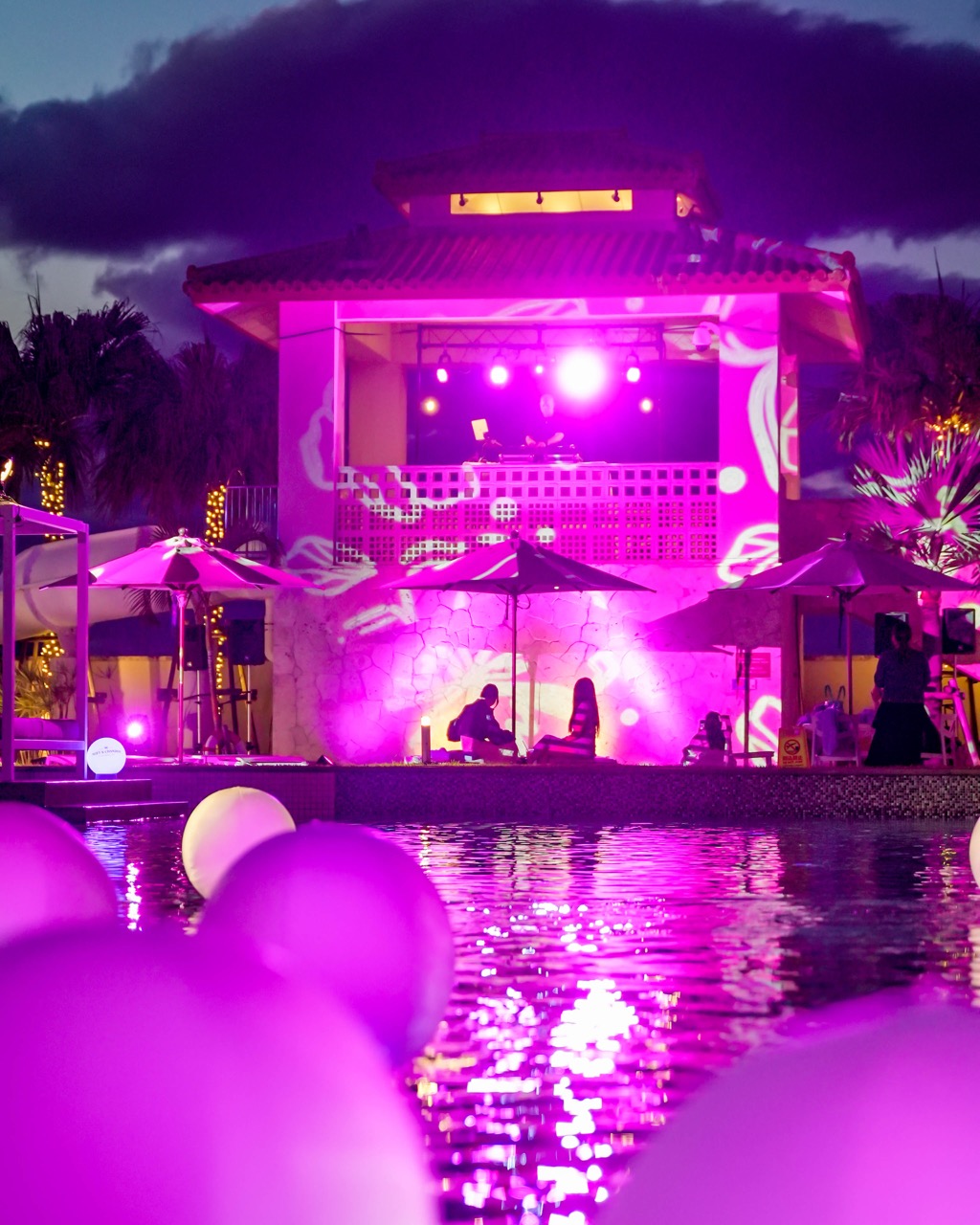
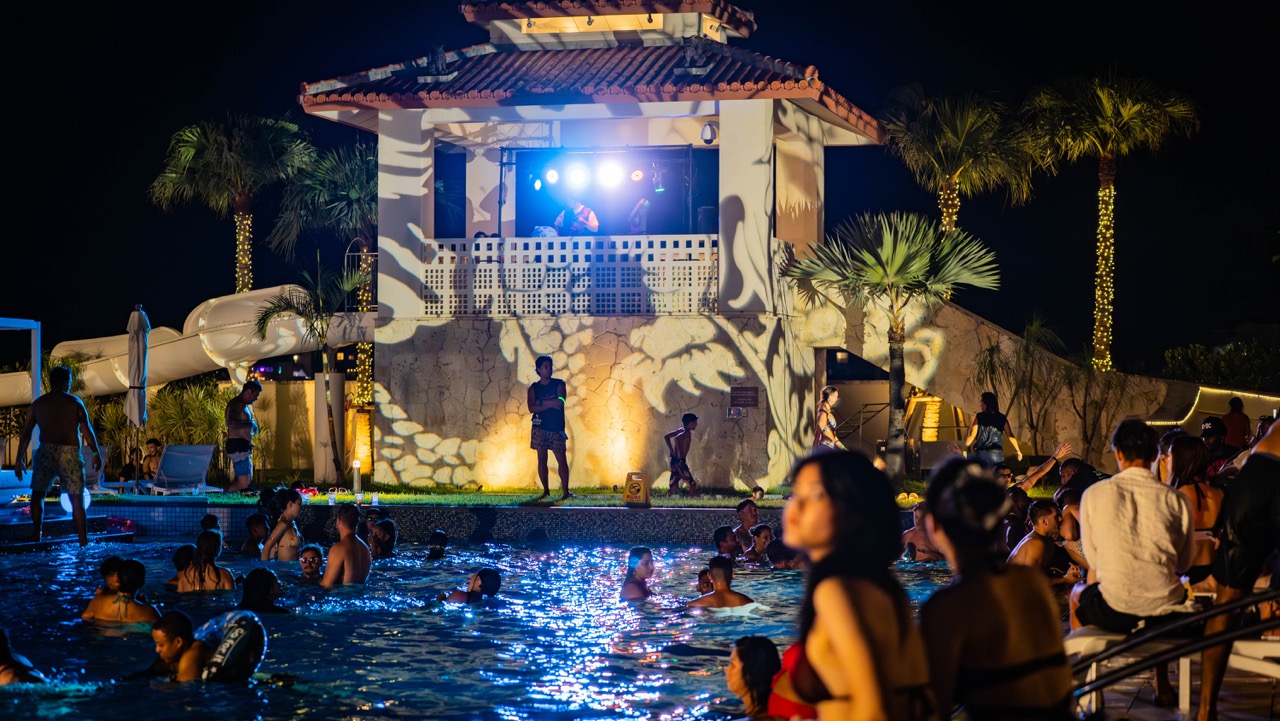
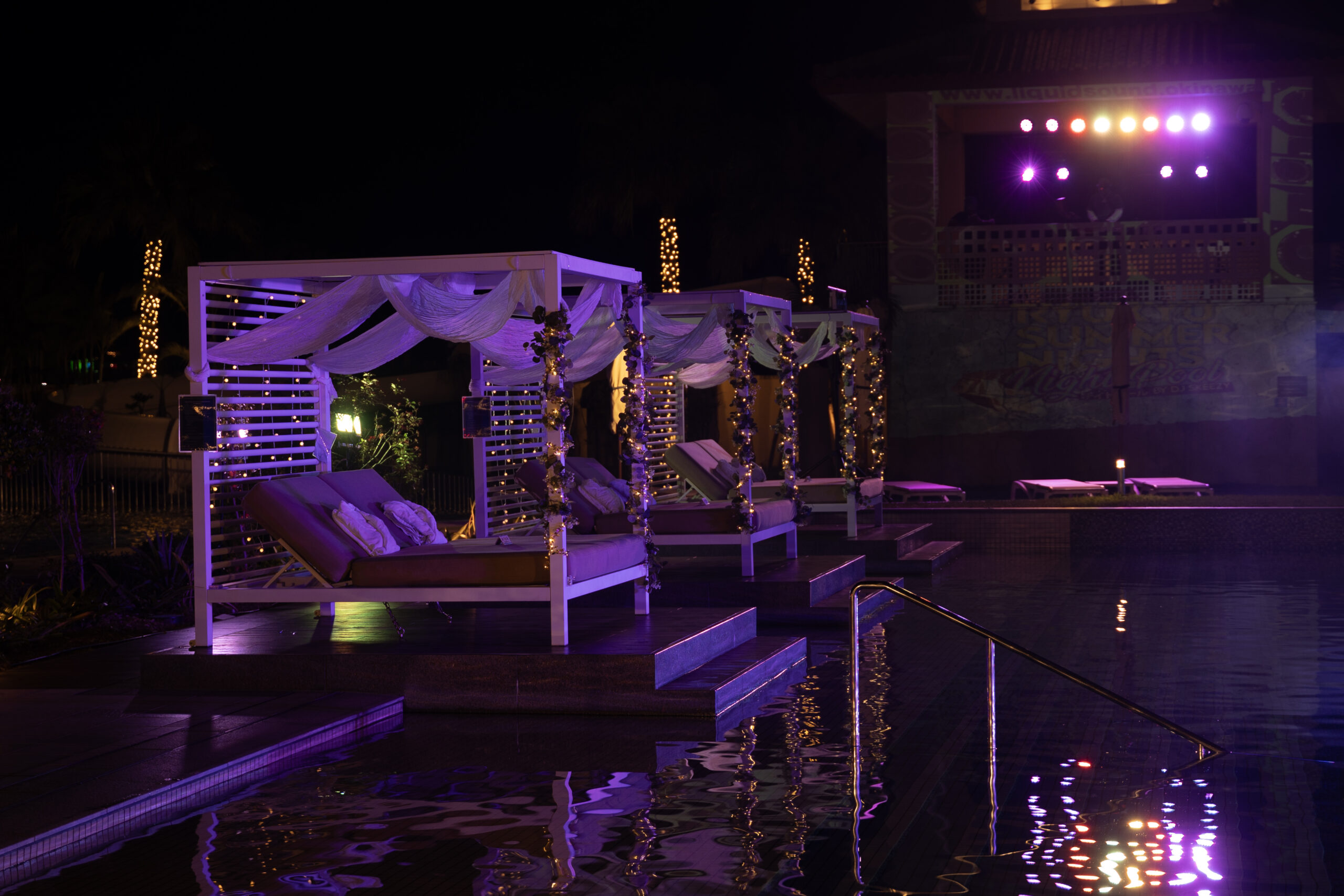
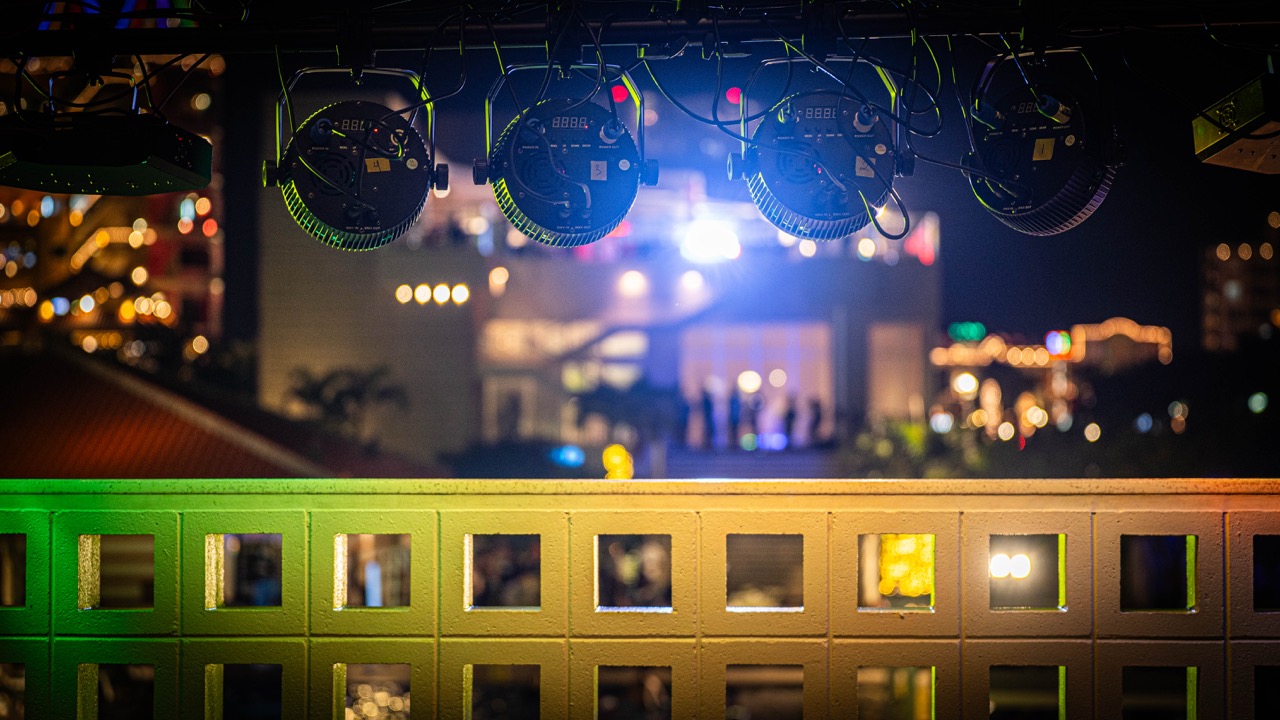
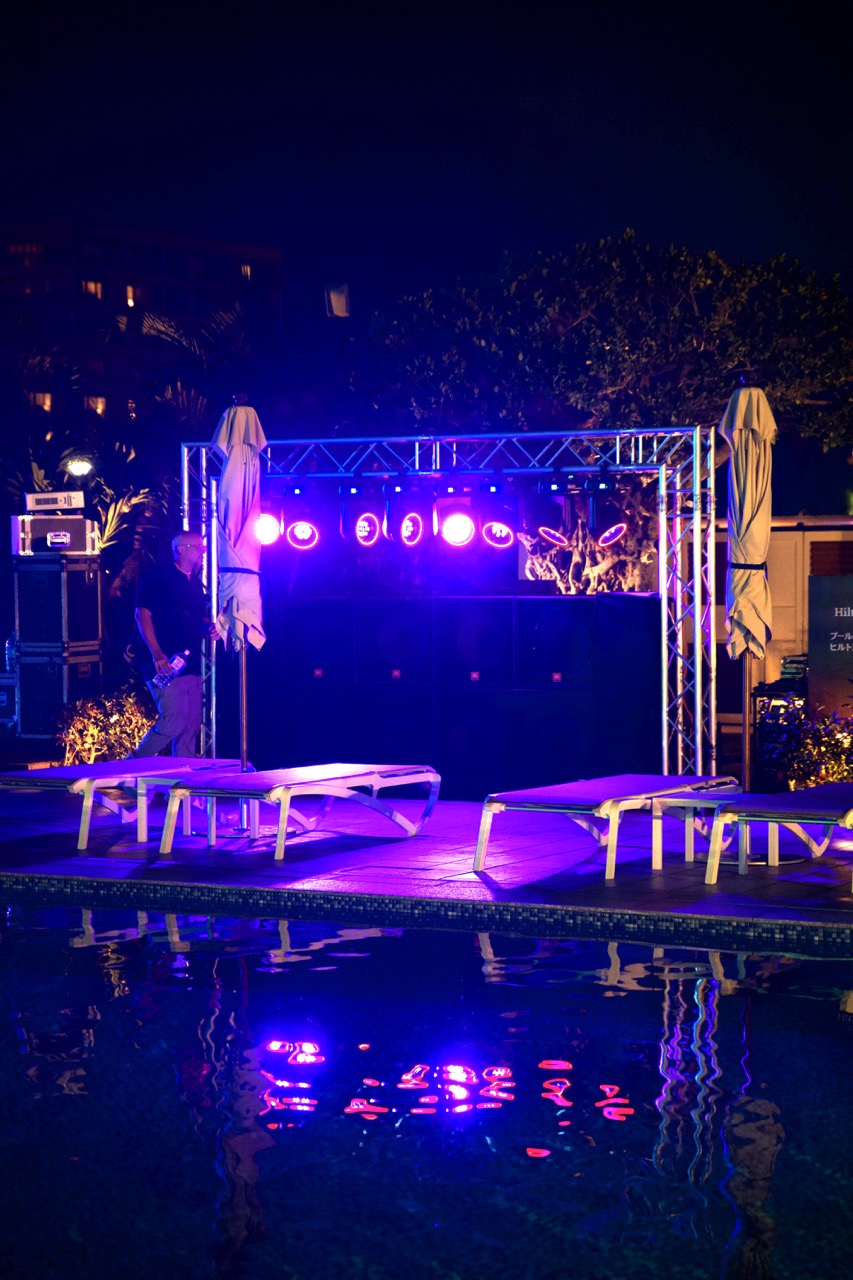
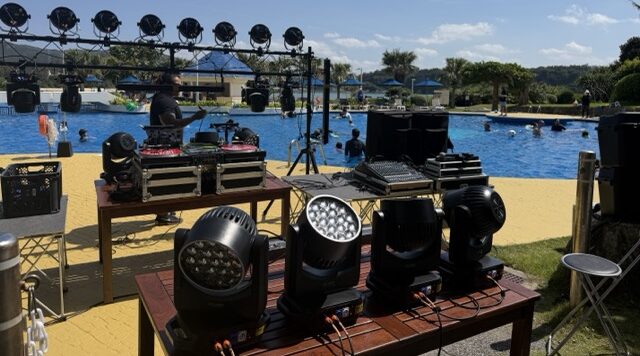
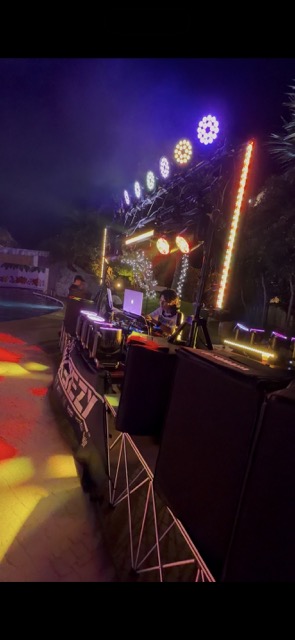
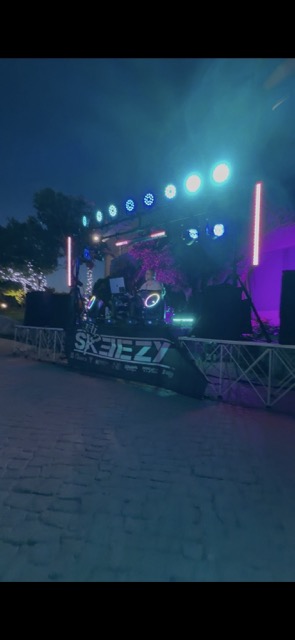
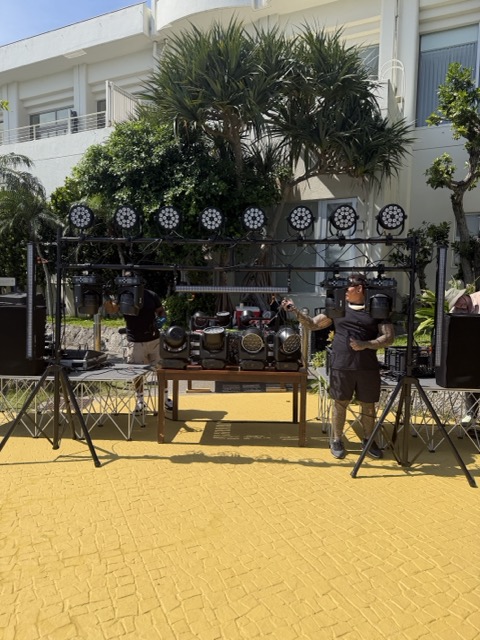
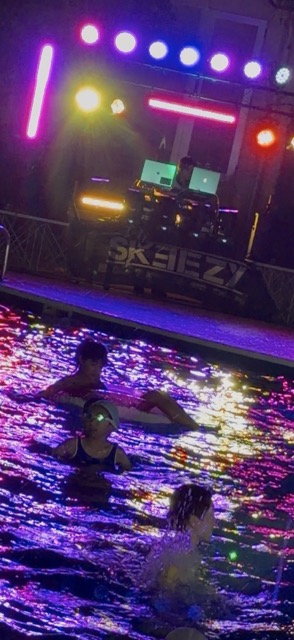
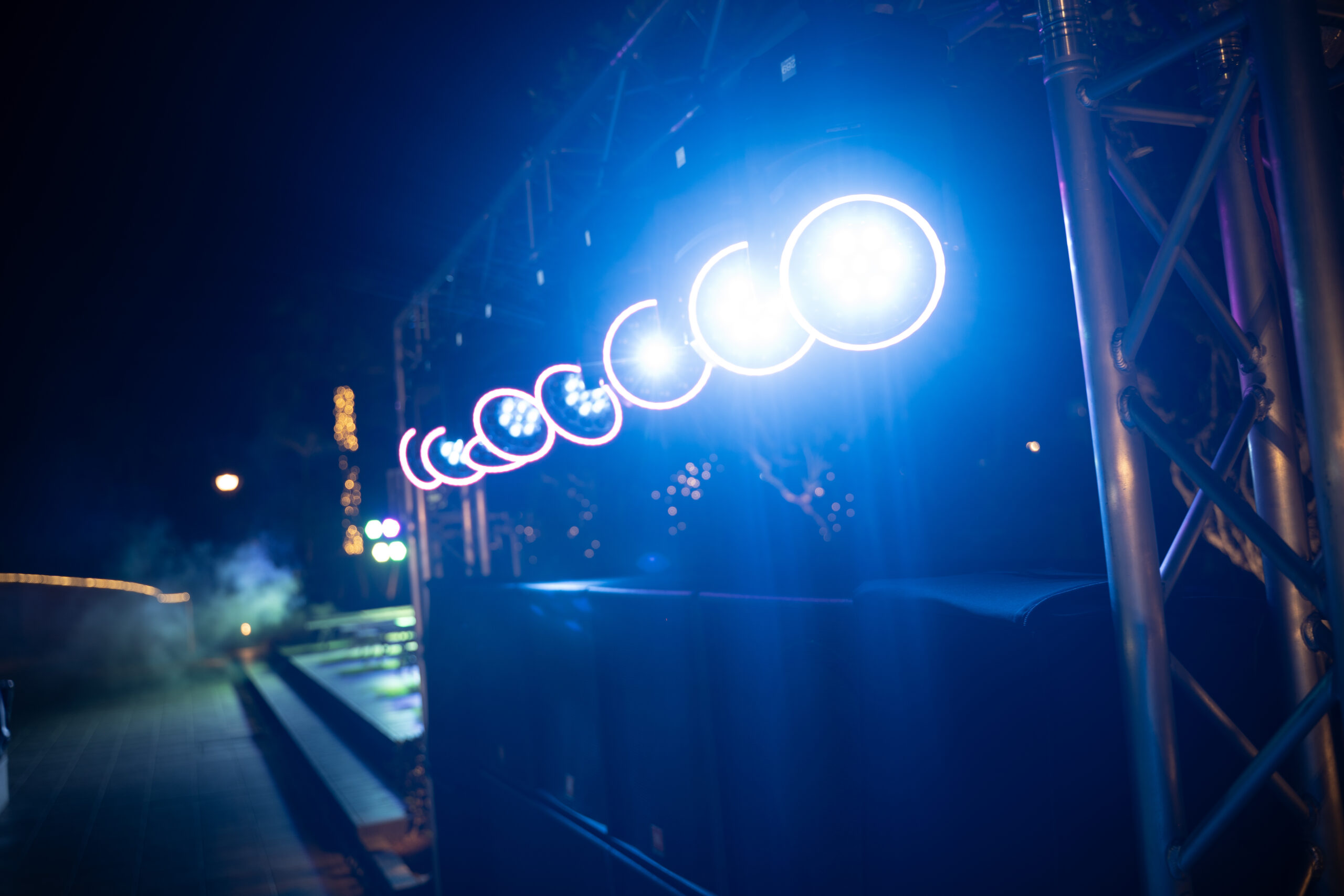
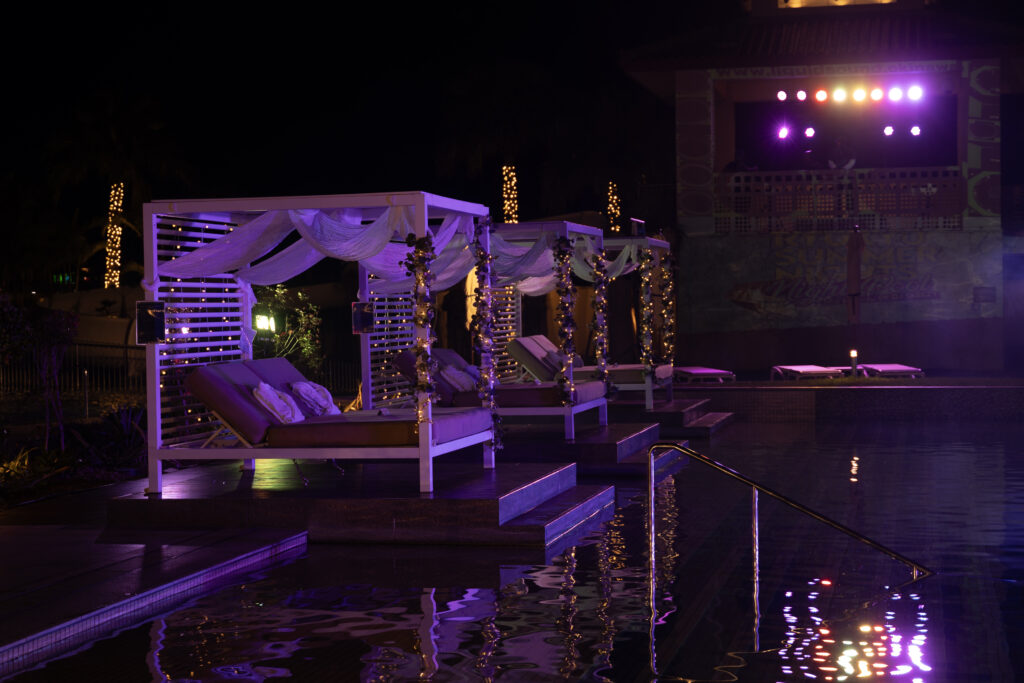
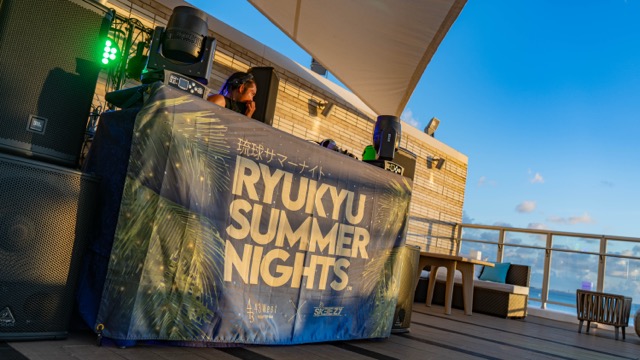
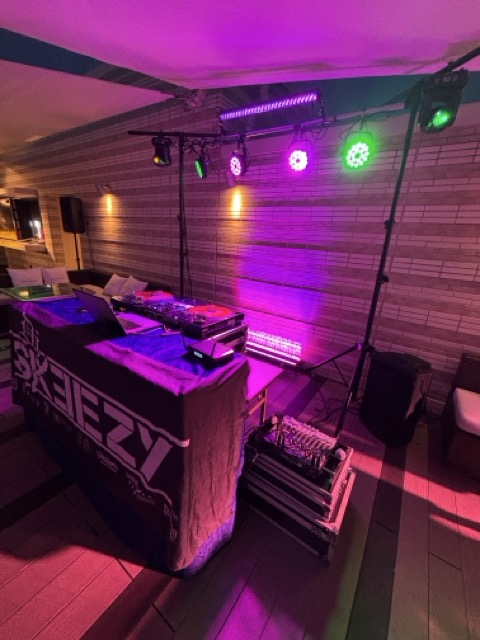
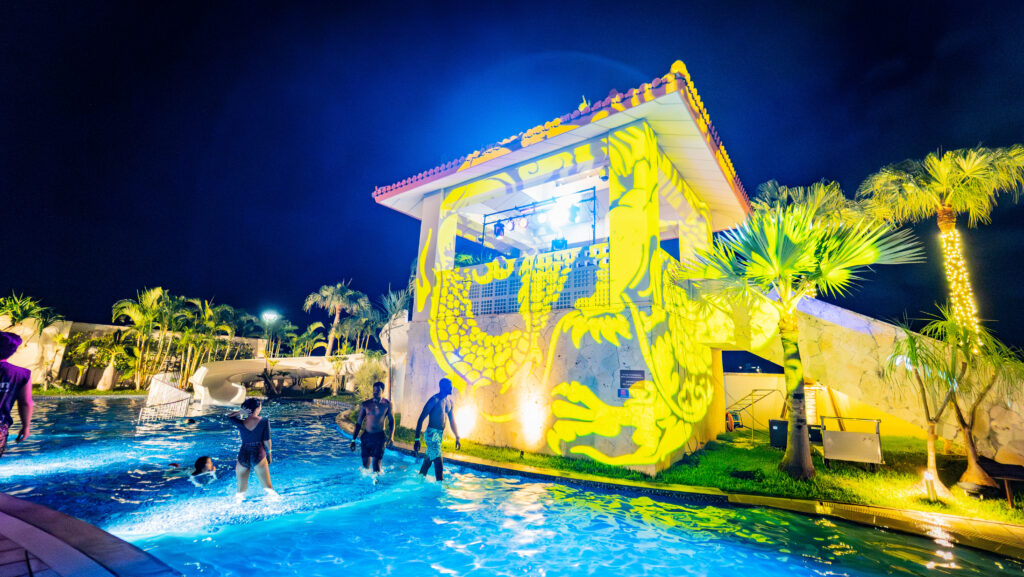
Pool Tower stage at RSN “Night Pool” by Liquid Sound
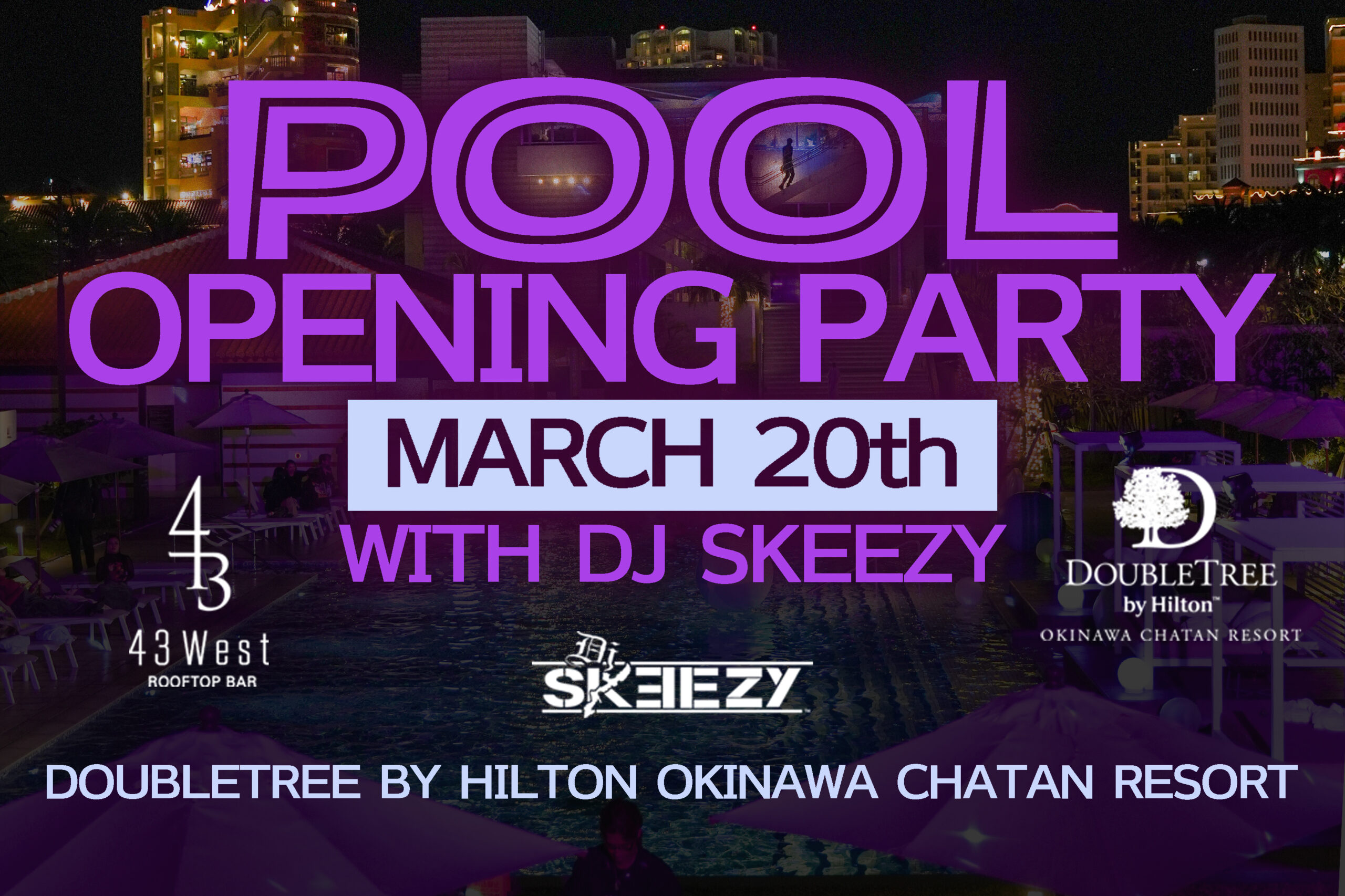
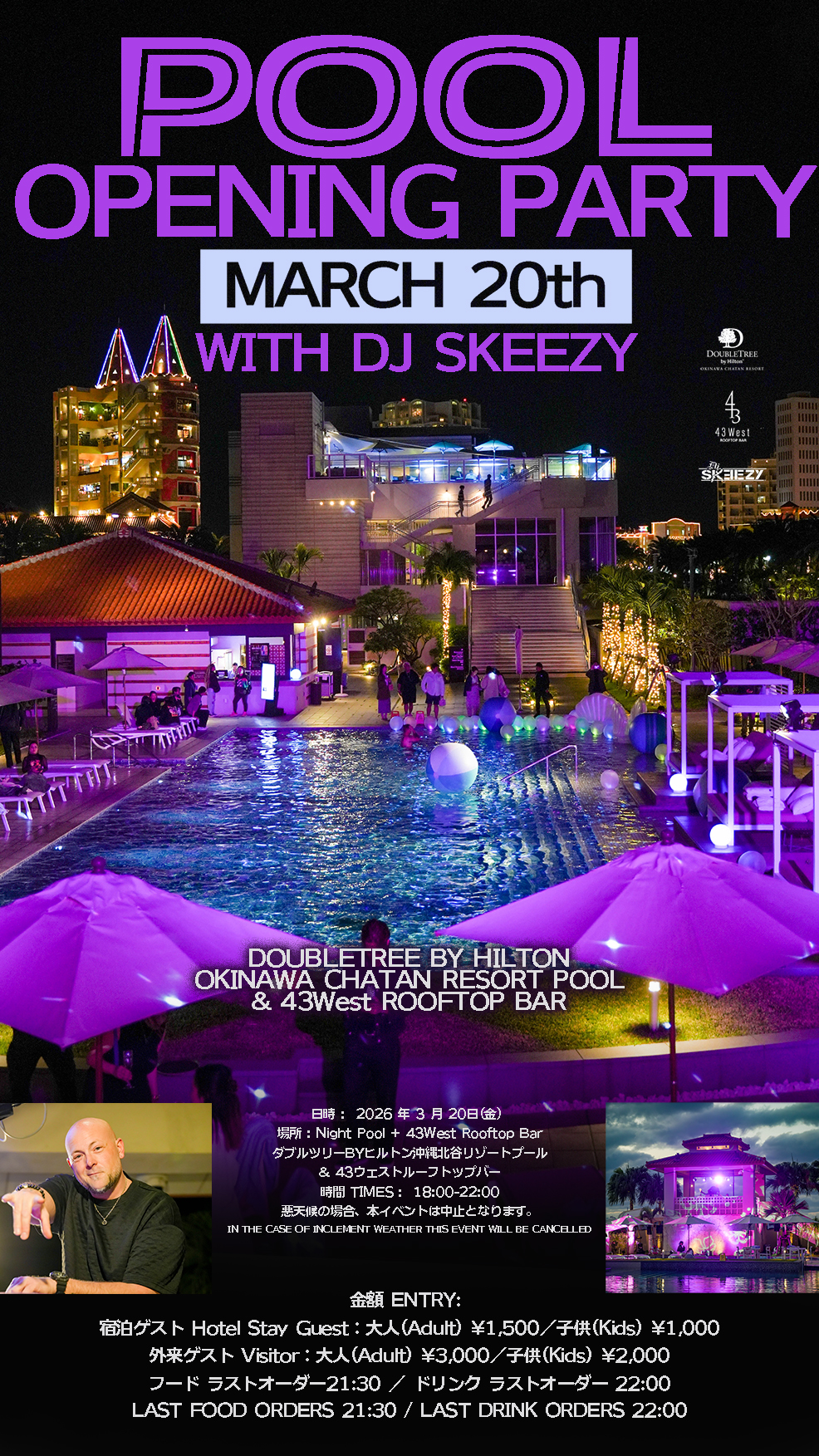
POOL OPENING PARTY!!! This is it! The beginning of the 2026 #PoolParty Season starts from 3/20/2026! Exclusively with @djskeezy for @doubletreechatan by #Hilton#Okinawa#Chatan#Resort 1800-2200 | Hotel guests ¥1,500 (Kids ages 6-13 years old ¥1,000) / NonHotel Guests ¥3,000 (Kids ages 6-13 years old ¥2,000) Kids under 6 years old may enter Free with an Adult and must be accompanied at all times.